Wastewater Lagoon Retention Time Explained (Why It Fails in Real Systems)
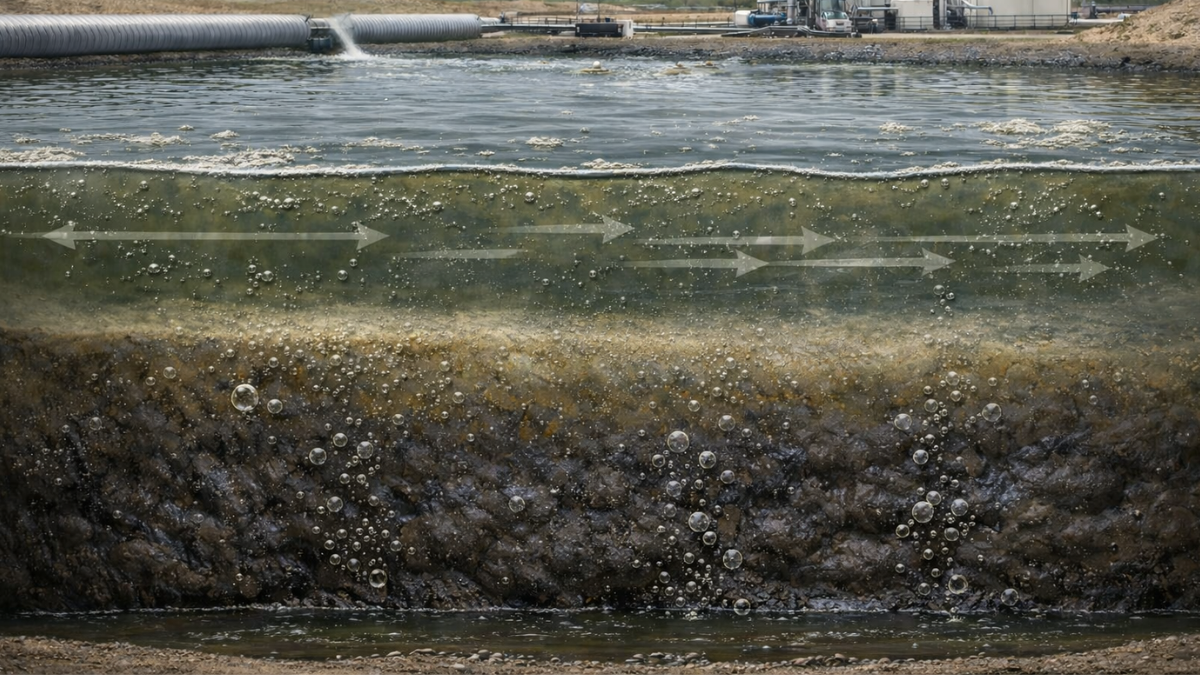
Wastewater lagoon retention time, or hydraulic retention time (HRT), is the average time wastewater remains in a lagoon based on volume and flow. While lagoons are designed to operate within specific retention time ranges, real-world conditions such as sludge accumulation, variable flow, and increased organic loading often reduce effective retention time.
In municipal systems, retention time typically declines gradually as solids accumulate and reduce lagoon volume. In industrial systems, retention time can fluctuate significantly due to production variability and high-strength wastewater. When retention time is reduced below required levels, treatment efficiency declines, resulting in higher effluent BOD, increased odors, and rising operating costs.
Understanding the difference between design retention time and actual operating conditions is critical for maintaining lagoon performance.

What Retention Time Actually Represents in a Lagoon System
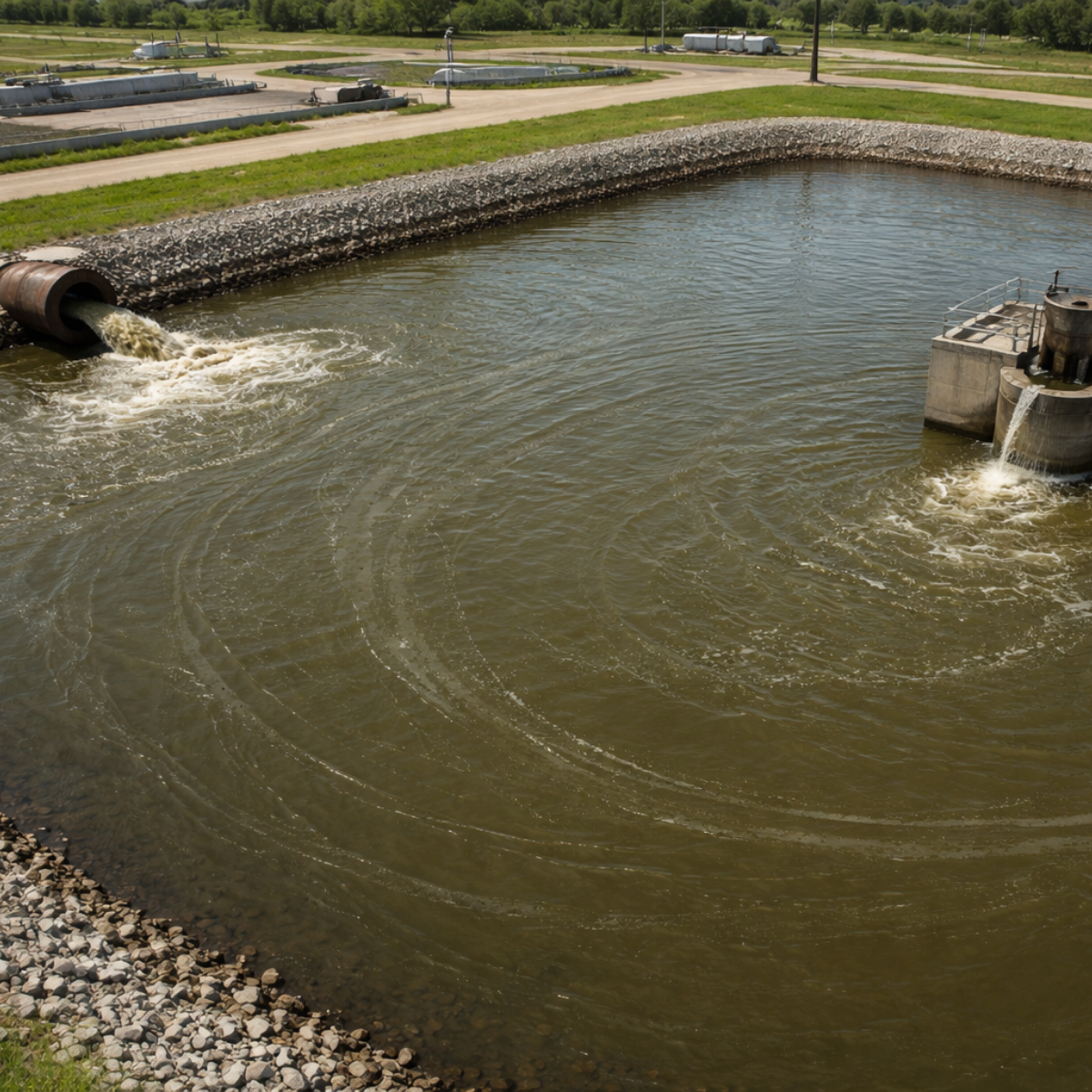
Hydraulic retention time is often introduced as a simple volumetric relationship between lagoon capacity and influent flow. In practice, it represents the available reaction time for biological degradation under real loading conditions.
Design calculations assume:
- Full basin volume is available for treatment
- Flow is relatively stable
- Organic loading remains within expected ranges
These assumptions allow engineers to size lagoons appropriately. However, once a system is in operation, retention time becomes a moving target, not a fixed parameter.
The Disconnect Between Design and Operation
Most lagoons are not operating under their original design conditions within a few years of startup.
The primary issue is not typically poor design—it is the gradual divergence between assumed conditions and actual system behavior. Two factors drive this divergence:
First, effective volume is reduced over time as sludge accumulates across the lagoon bottom. This reduction is not uniform and often goes unmeasured, leading to overestimation of available treatment capacity.
Second, hydraulic and organic loading rarely remain consistent. Even in municipal systems, population growth and infiltration can increase flow beyond original assumptions. In industrial systems, variability is significantly more pronounced due to production cycles and waste stream composition.
The result is a steady reduction in actual retention time, even if operators continue to rely on original design values.
Retention Time Loss in Municipal Lagoons
In municipal lagoons, the decline in retention time is typically gradual and often masked by seasonal variability.
As solids accumulate, the lagoon loses effective depth and volume. This process can continue for years without triggering immediate operational alarms. Performance degradation may be attributed to temperature, influent variability, or aging infrastructure, when the underlying issue is reduced treatment capacity.
This is why point measurements alone are often insufficient. Without understanding the full sludge profile, retention time calculations are based on incomplete data.
In most systems, sludge accumulation is underestimated until performance loss becomes visible.
Read more: How to Measure Sludge Depth in Wastewater Lagoons
Retention Time Instability in Industrial Lagoons
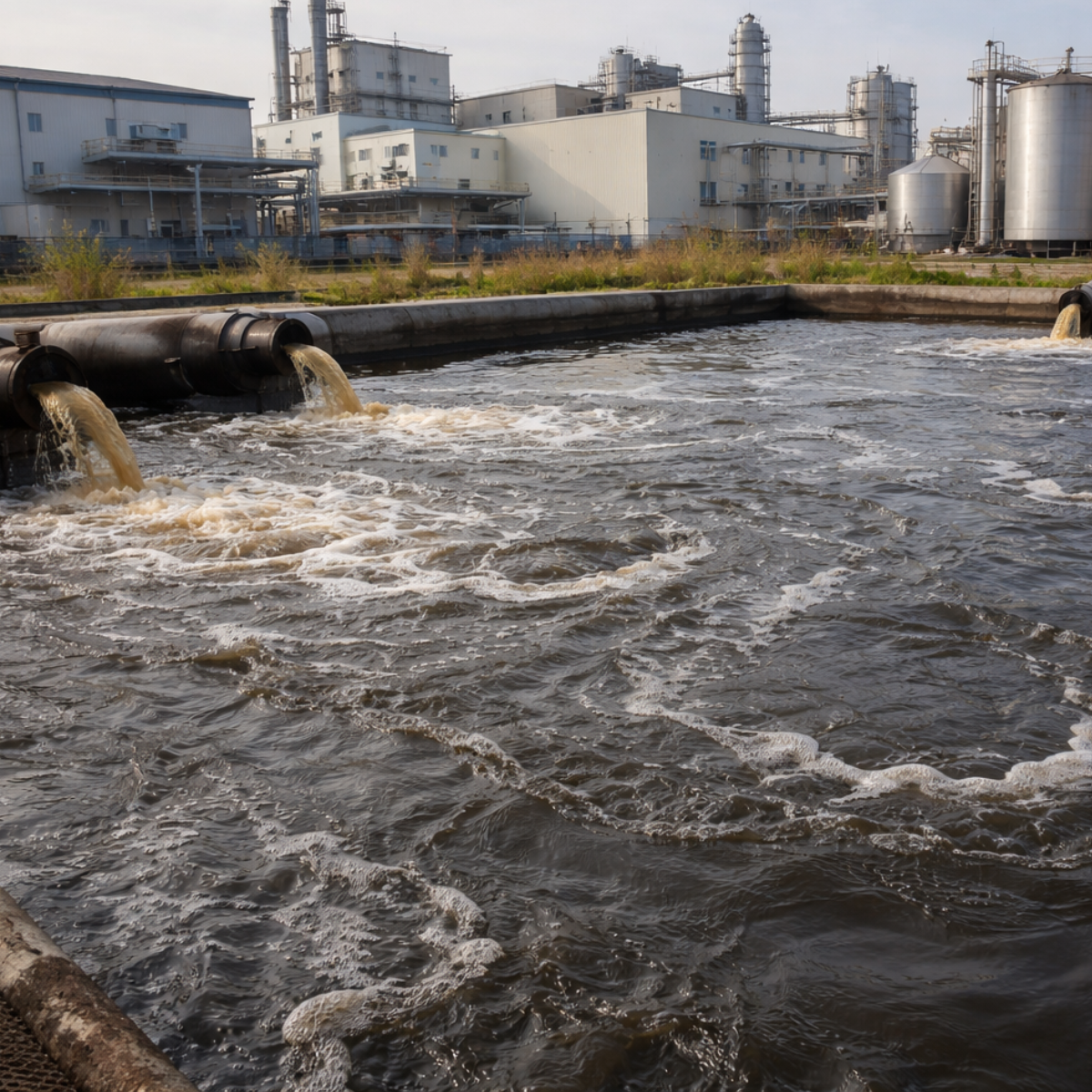
Industrial lagoons operate under fundamentally different conditions. Retention time is not only reduced—it is often unstable.
Unlike municipal systems, industrial facilities frequently experience:
- Rapid changes in flow rates tied to production schedules
- Elevated organic loading that exceeds design assumptions
- Waste streams containing fats, oils, grease, and suspended solids
These factors compress the available biological treatment window. Even if hydraulic retention time appears acceptable on paper, the effective biological retention time may be insufficient for the applied load.
In these environments, performance issues tend to appear quickly. Operators may observe declining effluent quality, increased chemical demand, or persistent odor conditions without a clear mechanical failure.
These are not isolated issues. They are indicators that the system is operating with insufficient retention time relative to its loading conditions.
Sludge Accumulation as the Primary Driver of Retention Time Loss
The most consistently overlooked variable in retention time calculations is sludge volume.
As sludge accumulates, it displaces active treatment volume and alters flow patterns within the lagoon. This results in:
- Reduced effective depth
- Short-circuiting of flow paths
- Decreased contact time between biomass and wastewater
It is not uncommon for lagoons to lose a substantial portion of their effective volume without a corresponding adjustment in operating assumptions.
This is where many systems begin to underperform while still appearing structurally sound.
Accurate volume assessment requires more than surface observation.
Read more: Lagoon Sludge Mapping and Survey Methods
Operational Consequences of Reduced Retention Time
When retention time falls below what is required for the applied load, treatment performance declines in predictable ways.
Biological processes become incomplete, leading to elevated BOD and TSS in the effluent. Settling efficiency decreases, and suspended solids begin to carry through the system. Odor generation increases as anaerobic zones expand in areas that were previously aerobic or facultative.
Operators often respond by increasing aeration or chemical usage. While these adjustments may provide short-term improvement, they do not address the underlying issue of reduced effective volume and insufficient retention time.
Over time, operating costs increase while overall system performance continues to decline.
Evaluating Actual Retention Time in the Field
Accurate evaluation of retention time requires moving beyond design assumptions and examining current system conditions.
This includes understanding:
- The actual volume available for treatment
- The distribution and depth of accumulated solids
- Variability in influent flow and loading
Without this information, retention time calculations are theoretical and may not reflect real operating conditions.
👉 For a structured approach to identifying performance limitations:
See: Wastewater Lagoon Troubleshooting Guide
Restoring Retention Time Without Capital Expansion
Increasing retention time by expanding lagoon capacity is rarely practical due to cost and permitting constraints.
In most cases, restoring retention time is a function of recovering lost volume and improving biological efficiency.
This is why sludge management plays a central role in lagoon performance. By reducing accumulated solids, systems can regain effective treatment volume and restore the conditions required for proper biological activity.
Approaches to sludge reduction and management:
How to Reduce Sludge in Wastewater Lagoons
Wastewater Lagoon Sludge Removal Methods
Alternatives to Lagoon Dredging
Key Takeaway
Retention time is not a static design parameter. It is a dynamic condition that reflects the current state of the lagoon, including available volume, loading conditions, and biological activity.
When lagoon performance declines, the system is often operating with less retention time than assumed—not because the design was incorrect, but because conditions have changed.
Understanding and correcting that gap is essential to restoring treatment performance.
If your lagoon is experiencing declining performance, rising sludge levels, or increasing operational costs, it may be operating with significantly reduced retention time.
A technical evaluation can determine:
- Actual treatment volume versus design capacity
- Sludge distribution and impact on performance
- Opportunities to restore retention time without dredging or expansion
Request a Technical Assessment
FAQ: Wastewater Lagoon Retention Time
What is hydraulic retention time in a wastewater lagoon?
Hydraulic retention time (HRT) is the average time wastewater remains in a lagoon, calculated based on lagoon volume and influent flow rate. It represents the available time for biological treatment processes to occur under current operating conditions.
Why does retention time decrease over time in lagoon systems?
Retention time decreases as effective lagoon volume is reduced by sludge accumulation and as flow or loading increases beyond original design assumptions. In many systems, both factors occur simultaneously, leading to a gradual loss of treatment capacity.
How does sludge accumulation impact retention time?
Sludge occupies space within the lagoon, reducing the volume available for active treatment. This shortens the actual retention time and can alter flow patterns, leading to short-circuiting and reduced treatment efficiency.
Why is retention time more difficult to maintain in industrial lagoons?
Industrial lagoons are subject to variable flow rates, high-strength wastewater, and inconsistent loading conditions. These factors can rapidly reduce effective retention time and limit the biological system’s ability to respond to changes.
What are the signs that retention time is too low?
Common indicators include declining effluent quality, increased biochemical oxygen demand (BOD) or total suspended solids (TSS), persistent odors, and rising chemical or operational costs. These symptoms often appear before retention time is formally evaluated.
Can retention time be restored without building a new lagoon?
Yes. In many cases, restoring retention time involves recovering lost volume through sludge reduction or removal. Improving biological activity can also increase treatment efficiency within the available retention time.
How do you accurately evaluate retention time in an existing lagoon?
Accurate evaluation requires measuring actual lagoon volume, including sludge accumulation, and comparing it to current flow and loading conditions. Methods such as sludge mapping provide a more complete understanding than point measurements alone.