Wastewater Lagoon Troubleshooting Guide: Identifying and Fixing Common Problems
Why Wastewater Lagoons Lose Performance
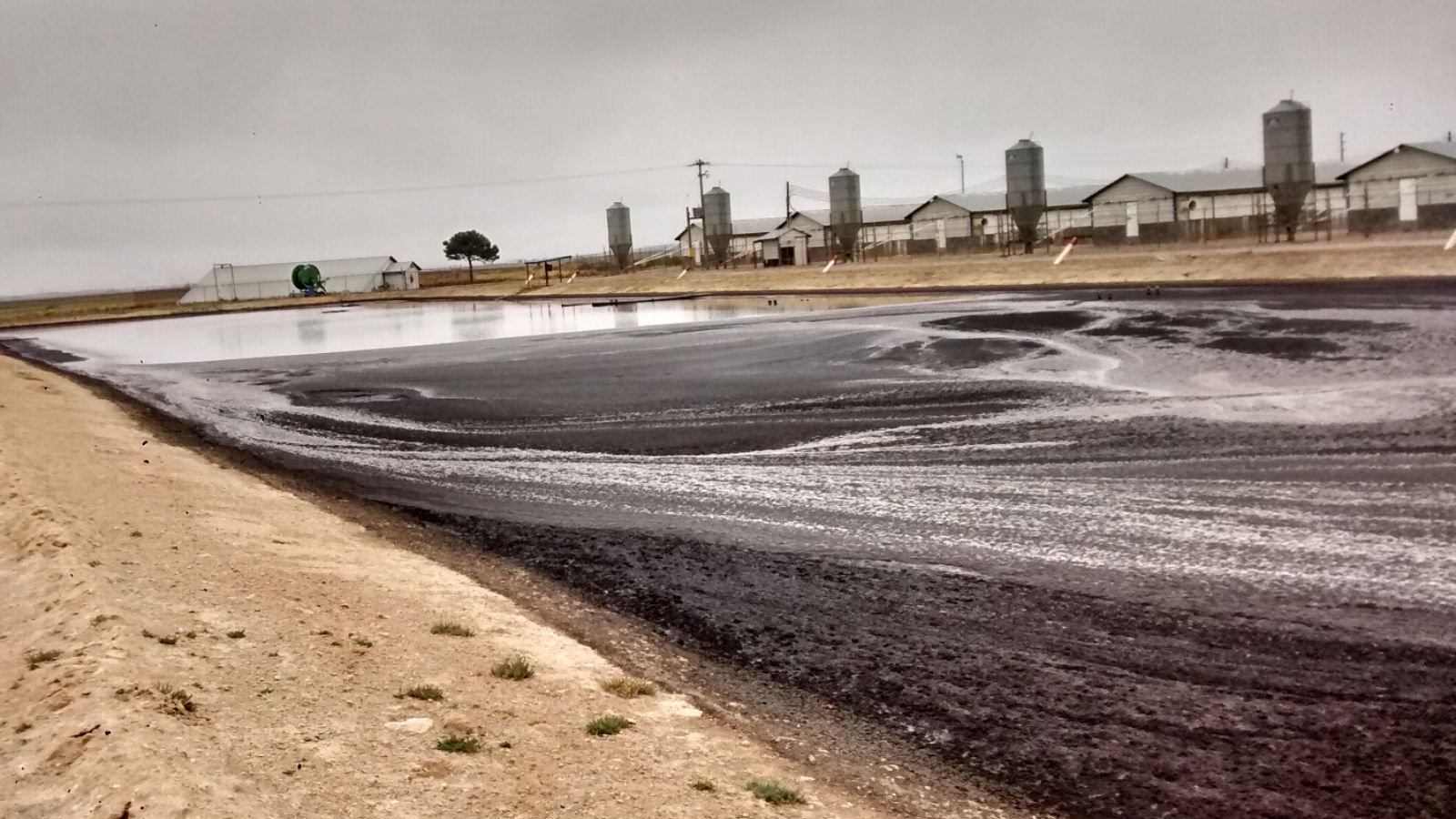
Wastewater lagoons are designed to provide stable, long-term treatment with relatively low operational complexity. However, when performance begins to decline, the causes are rarely sudden or isolated. Most lagoon failures develop gradually as biological, hydraulic, and operational conditions fall out of balance.
In most cases, operators are not dealing with a single issue. Instead, they are seeing the combined effects of sludge accumulation, reduced oxygen transfer efficiency, and changing loading conditions. These factors interact over time, reducing treatment efficiency and increasing the likelihood of odors, poor effluent quality, and compliance risks.
Wastewater lagoon performance declines when biological treatment processes are disrupted by sludge accumulation, insufficient oxygen, or reduced retention time.
Many of these issues develop gradually and are often first identified through changes in sludge levels. Understanding how to measure sludge depth in wastewater lagoons is one of the most important first steps in diagnosing performance problems.
Not sure what’s really happening in your lagoon?
Flow, loading, sludge levels, and aeration all interact—and small changes can have a major impact.
Request a Technical Assessment to get a clear understanding of what’s happening in your lagoon and what steps will have the biggest impact.
Early Warning Signs of Lagoon Problems
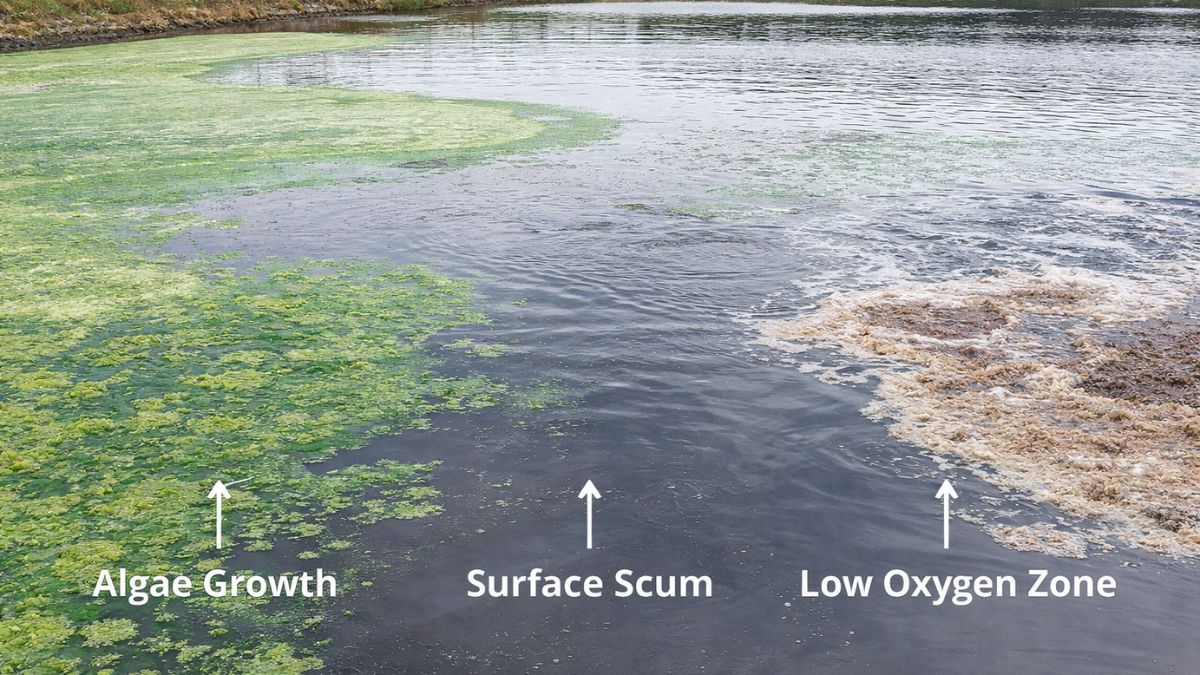
Lagoon systems rarely fail overnight. Instead, they provide warning signs that performance is starting to decline. Recognizing these early indicators allows operators to take corrective action before problems become costly.
Persistent odors are often the first noticeable issue, especially in warmer months when biological activity increases. At the same time, operators may observe darker water, floating solids, or excessive algae growth. These visual changes are typically accompanied by measurable shifts, including lower dissolved oxygen levels and rising effluent BOD or TSS.
Individually, these symptoms may not seem critical. However, when multiple signs appear together, they indicate that the lagoon is no longer operating under balanced conditions.
These warning signs are often early indicators that the lagoon is losing treatment capacity. Recognizing the signs your wastewater lagoon is losing treatment capacity can help operators take action before performance declines further.
Sludge Accumulation: The Most Common Root Cause

Sludge accumulation is the most common and most overlooked cause of lagoon performance decline. Over time, solids settle and form a dense layer on the bottom of the lagoon. As this layer thickens, it reduces the effective treatment volume and alters the biological environment within the system.
The impact is not just physical. As sludge builds, it creates anaerobic zones that produce hydrogen sulfide and other odor-causing compounds. At the same time, reduced depth shortens hydraulic retention time, meaning wastewater moves through the system more quickly with less treatment.
Many operators underestimate how much sludge has accumulated because it is not always visible from the surface. By the time sludge buildup becomes obvious, the lagoon has often already lost a significant portion of its treatment capacity. Sludge buildup is one of the primary drivers of long-term lagoon performance issues. Understanding what causes sludge buildup in wastewater lagoons is critical for preventing capacity loss and maintaining stable treatment
Dissolved Oxygen and Aeration Challenges
Dissolved oxygen (DO) plays a critical role in maintaining aerobic biological activity within a lagoon. When dissolved oxygen (DO) levels decline, the system begins to shift toward anaerobic conditions, which are far less efficient and more likely to produce odors.
Low DO levels can result from several factors, including insufficient aeration capacity, equipment failure, or increased organic loading. In some cases, thermal stratification prevents oxygen from reaching deeper portions of the lagoon, creating dead zones where sludge continues to accumulate unchecked.
The relationship between sludge and oxygen is important. As sludge increases, oxygen demand also rises. At the same time, reduced depth limits effective oxygen transfer and distribution. This creates a feedback loop where declining conditions accelerate further deterioration.
The Sludge–Oxygen Relationship
As sludge accumulates in a lagoon, oxygen demand increases significantly because more organic material is being broken down within a smaller effective volume. At the same time, reduced depth limits how efficiently oxygen can be transferred and distributed throughout the system.
This creates a compounding effect. Higher oxygen demand combined with reduced oxygen availability leads to the development of anaerobic zones, where treatment efficiency declines and odor-producing conditions begin to dominate.
In many lagoon systems, what appears to be an aeration problem is actually driven by underlying sludge accumulation. Understanding common wastewater lagoon aeration problems can help operators identify whether the issue is mechanical or biological.
Odor Is a Symptom, Not the Problem
Odor complaints are one of the most visible and urgent lagoon issues, but they are often misunderstood. Odors are not the root problem—they are the result of underlying biological imbalance.
When lagoons become oxygen-limited or overloaded with solids, anaerobic bacteria begin to dominate. These organisms produce gases such as hydrogen sulfide and ammonia, which create strong, unpleasant odors.
Addressing odor without correcting the underlying conditions will only provide temporary relief. Long-term odor control requires restoring proper oxygen levels, reducing sludge accumulation, and rebalancing the microbial environment.
Hydraulic Overloading and Reduced Retention Time
Another common issue in lagoon systems is hydraulic overloading. This occurs when the volume of incoming wastewater exceeds the design capacity of the lagoon, either due to increased flow, infiltration, or changes in upstream processes.
As flow increases, retention time decreases. Wastewater moves through the lagoon more quickly, reducing the time available for biological treatment. In systems already impacted by sludge buildup, this effect is amplified because the actual treatment volume has already been reduced.
Short-circuiting can also occur, where water flows directly from inlet to outlet without proper mixing. This further reduces treatment efficiency and can lead to sudden declines in effluent quality.
The Role of Temperature in Lagoon Performance

Temperature has a direct impact on biological activity within wastewater lagoons. During colder months, microbial processes slow significantly, reducing the system’s ability to break down organic material.
While this seasonal slowdown is expected, it often leads to increased sludge accumulation during winter. When temperatures rise in the spring, the system can become overloaded as biological activity resumes and begins processing the accumulated solids.
This cycle can create performance instability if not properly managed, especially in lagoons that are already operating near capacity. Seasonal performance changes can significantly impact lagoon efficiency. Understanding how temperature affects wastewater treatment helps operators anticipate and manage these shifts.
A Practical Approach to Lagoon Troubleshooting
Effective troubleshooting requires a structured approach that focuses on identifying root causes rather than reacting to symptoms.
The first step is to understand how much of the lagoon’s volume has been lost to sludge. Measuring sludge depth provides a baseline for evaluating system capacity. From there, dissolved oxygen levels should be assessed to determine whether the system is maintaining aerobic conditions.
Operators should also review hydraulic loading, recent changes in flow or influent characteristics, and the condition of aeration equipment. These factors together provide a clear picture of how the lagoon is functioning and where corrective action is needed.
Rather than addressing each issue in isolation, the goal should be to restore overall system balance.
Restoring Lagoon Performance
Once the underlying issues have been identified, restoring lagoon performance typically involves a combination of mechanical, operational, and biological strategies.
Mechanical solutions such as aeration upgrades or mixing systems can improve oxygen transfer and circulation. Operational adjustments, including flow management and load balancing, help prevent further stress on the system.
In many cases, biological approaches can play a key role in reducing accumulated solids and restoring microbial balance. By accelerating the breakdown of organic material, these programs can improve treatment efficiency without the cost and disruption associated with dredging.
The most effective solutions are those that address both the symptoms and the underlying causes of performance decline.
When to Take Action
Waiting too long to address lagoon issues can significantly increase costs and limit available options. As sludge levels rise and treatment capacity declines, operators may be forced into expensive capital projects such as dredging or lagoon expansion.
Action should be taken when sludge begins to occupy a significant portion of the lagoon, when odors become persistent, or when effluent quality shows signs of deterioration. Early intervention allows for more flexible and cost-effective solutions.
If your lagoon is showing signs of reduced performance, now is the time to act.
Waiting can lead to higher costs, odor complaints, and potential compliance issues.
Talk with Our Team Today to evaluate your system and identify practical solutions to restore performance and extend lagoon life.
Key Takeaways for Operators
Wastewater lagoon problems are rarely isolated events. They develop over time as conditions within the system gradually shift out of balance.
Sludge accumulation remains the most common underlying issue, affecting everything from oxygen levels to retention time. Odors and poor effluent quality are typically symptoms of deeper biological and operational challenges.
By focusing on early detection, accurate diagnosis, and integrated solutions, operators can restore lagoon performance and extend the life of their systems without major capital investment.