What Causes Sludge Buildup in Wastewater Lagoons?

Wastewater lagoons are widely used for municipal and industrial wastewater treatment because they are reliable, simple to operate, and capable of handling large fluctuations in flow and loading. Many lagoon systems operate successfully for decades with minimal mechanical equipment. However, nearly all wastewater lagoons eventually face the same operational challenge: sludge buildup on the lagoon bottom.
Over time, organic solids settle and accumulate, gradually forming a sludge layer that reduces the lagoon’s effective treatment volume. As this sludge layer thickens, lagoon performance can decline and operators may begin noticing odors, reduced treatment efficiency, or increased maintenance requirements.
Understanding what causes sludge accumulation in wastewater lagoons is the first step toward managing solids effectively and extending lagoon lifespan.
This article explains:
- Why sludge accumulates in wastewater lagoons
- The most common sources of lagoon solids
- How sludge buildup affects treatment performance
- Operational strategies for managing lagoon solids
Why Sludge Accumulates in Wastewater Lagoons

Wastewater lagoons rely on natural biological processes to stabilize organic waste. As wastewater enters the lagoon, suspended solids begin to settle toward the bottom where bacteria slowly break them down.
Ideally, microorganisms digest a large portion of the organic material entering the lagoon. However, this biological digestion process is rarely perfect.
Several factors can cause solids to accumulate faster than they are broken down, including:
- High organic loading
- Low biological activity
- Industrial wastewater inputs
- Temperature fluctuations
- Poor lagoon circulation
When solids settle faster than bacteria can digest them, the lagoon gradually develops a thick sludge layer along the bottom.
Over many years, this sludge layer can occupy a significant portion of the lagoon’s total volume, reducing the space available for treatment.
This is one of the primary reasons operators eventually begin to notice operational symptoms such as those described in Signs Your Wastewater Lagoon Is Losing Treatment Capacity.
The Main Sources of Lagoon Sludge
Although sludge accumulation is a natural part of lagoon operation, several sources can significantly accelerate solids buildup.
Understanding where these solids originate helps operators better manage lagoon performance.
Organic Wastewater Solids
The largest contributor to lagoon sludge is simply organic solids present in incoming wastewater.
These solids may include:
- Human waste
- Food particles
- Paper products
- Organic debris
- Biological biomass
As these materials settle, bacteria begin breaking them down through aerobic or anaerobic digestion processes.
However, some portion of these solids remains undigested and gradually accumulates as sludge.
Over time, this buildup can become substantial, particularly in lagoons that have operated for decades without sludge removal.
Grease, Oils, and Fats
Grease and fats entering a wastewater lagoon can significantly contribute to sludge accumulation.
Sources may include:
- Restaurants and food processing facilities
- Commercial kitchens
- Meat processing plants
- Food manufacturing operations
Grease and fats are more difficult for bacteria to break down than many other organic materials. As a result, they often accumulate within the sludge layer.
In lagoons receiving high levels of fats, oils, and grease (FOG), solids accumulation can occur much more rapidly.
Industrial Waste Streams
Industrial wastewater can also introduce solids that are difficult for lagoon biology to digest.
Examples include wastewater from:
- Food processing plants
- Rendering facilities
- Dairy processing
- Protein production
These waste streams often contain high concentrations of organic material, proteins, or fats that increase the solids loading entering the lagoon.
When these materials settle, they contribute to faster sludge accumulation and increased treatment demand.
Industrial lagoons experiencing high organic loading may eventually require more active solids management strategies.
Slow Biological Digestion
Another common reason sludge accumulates in lagoons is slow microbial digestion of organic solids.
Biological activity in lagoons can be influenced by several factors, including:
- Temperature
- Nutrient balance
- Oxygen availability
- Toxic compounds
For example, colder temperatures often slow bacterial metabolism and reduce the rate at which organic solids are broken down. This is why many lagoon systems experience seasonal changes in treatment performance. Facilities interested in how temperature affects lagoon treatment should review How Cold Weather Impacts Wastewater Lagoon Performance. When digestion slows for extended periods, sludge begins to accumulate faster than it can be stabilized.
How Sludge Buildup Reduces Lagoon Capacity
As sludge accumulates, it gradually reduces the lagoon’s effective treatment depth. Even a relatively thin sludge layer spread across a large lagoon can remove a significant amount of treatment volume.
For example:
- A sludge layer of 12–24 inches across a lagoon can reduce treatment capacity by 10–20 percent or more
- Reduced lagoon depth shortens hydraulic retention time
- Organic loading on the remaining treatment volume increases
As treatment capacity declines, operators may begin noticing changes in lagoon performance such as:
- Increased odors
- Poor settling
- Higher effluent BOD or TSS
- Floating sludge or solids
These operational symptoms often indicate that sludge accumulation has already reached a significant level. Facilities experiencing these issues often begin evaluating solids accumulation using the methods described in How to Measure Sludge Depth in Wastewater Lagoons.
How Operators Measure Lagoon Sludge
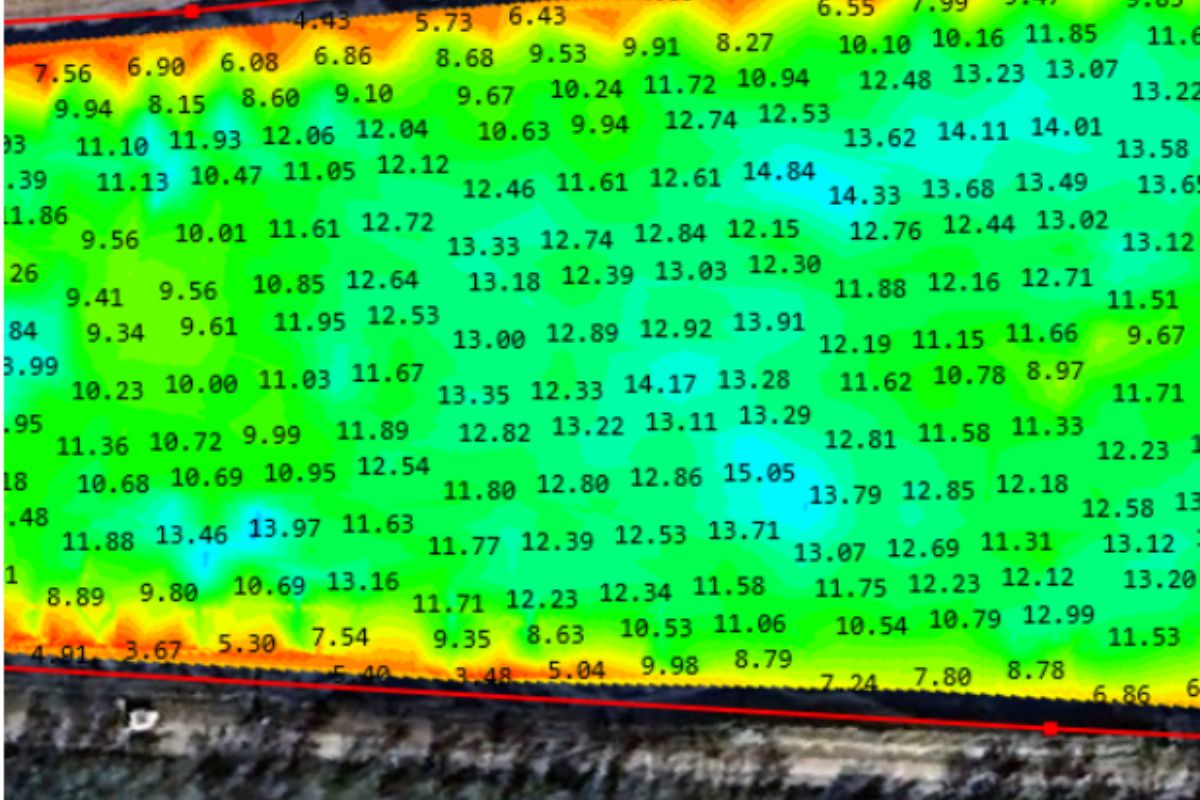
Because sludge accumulation occurs slowly over time, it can be difficult to estimate sludge levels through visual observation alone. Many lagoon systems operate for decades without a complete sludge survey, even though solids may already occupy a substantial portion of the lagoon floor.
Operators typically measure lagoon sludge using several techniques, including:
- Sludge judge poles
- Core sampling
- Sonar or bathymetric mapping surveys
Among these methods, sonar mapping provides the most complete understanding of sludge distribution because it produces a detailed map of sludge depth across the lagoon.
This allows operators to:
- Identify sludge hotspots
- Estimate total sludge volume
- Track accumulation trends over time
- Plan future maintenance or dredging projects
Regular sludge measurement is one of the most important steps in managing long-term lagoon performance.
Strategies for Managing Lagoon Sludge
Although sludge accumulation cannot be completely eliminated, several strategies can help operators slow solids buildup and maintain treatment capacity.
These strategies may include:
- Monitoring sludge depth regularly
- Managing industrial loading
- Improving biological digestion
- Maintaining balanced lagoon conditions
Improving biological activity inside the lagoon can help accelerate the breakdown of organic solids and reduce the rate of sludge accumulation.
Facilities exploring long-term solids management strategies often look at operational approaches designed to extend the life of wastewater lagoons, as discussed in How to Extend the Life of Wastewater Lagoons.
When Lagoon Dredging Becomes Necessary
In some cases, sludge accumulation eventually reaches levels that significantly reduce lagoon treatment capacity.
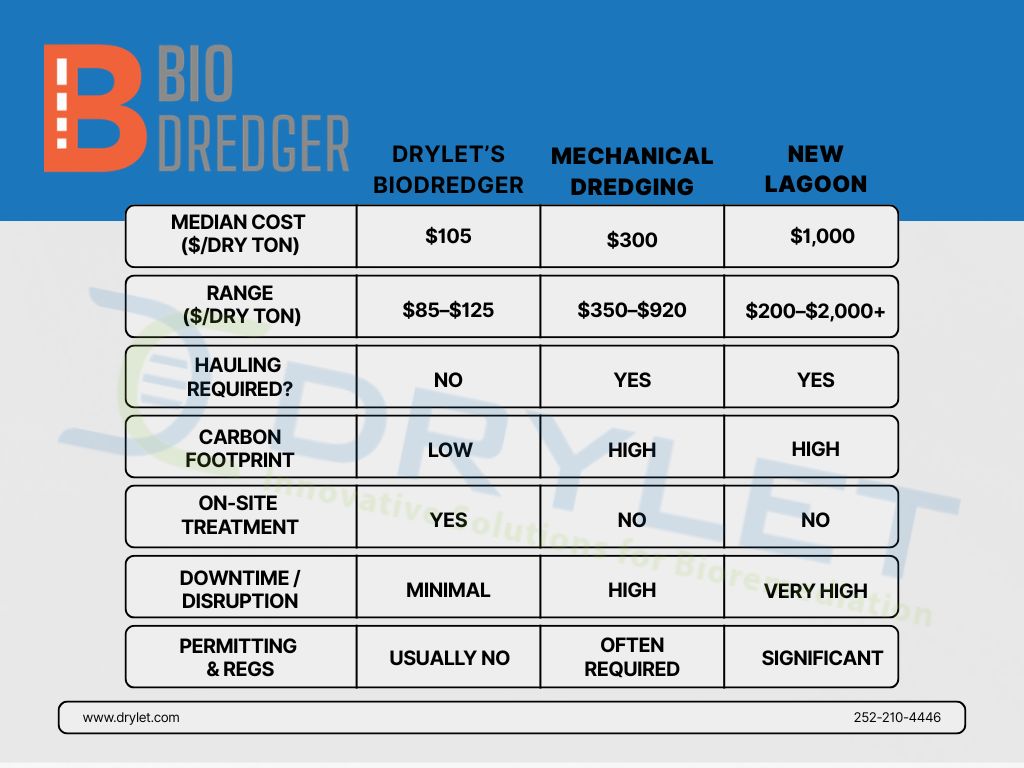
When this occurs, mechanical sludge removal or dredging may become necessary.
Lagoon dredging projects can be expensive and complex, often involving:
- Specialized dredging equipment
- Sludge dewatering
- Transportation and disposal of solids
- Temporary operational adjustments
Depending on lagoon size and sludge volume, dredging projects can cost hundreds of thousands to several million dollars. Because of these costs, many facilities attempt to manage sludge accumulation proactively through monitoring and biological management before dredging becomes unavoidable.
Key Takeaways for Lagoon Operators
Sludge accumulation is a natural process in wastewater lagoons, but it must be actively managed to maintain treatment performance.
Operators seeking to manage lagoon solids effectively should focus on several key practices:
- Monitor sludge depth regularly
- Identify sources of excess solids
- Maintain strong biological digestion
- Track lagoon performance indicators
- Address sludge buildup before treatment capacity is significantly reduced
With proper monitoring and management, many wastewater lagoons can continue operating efficiently for decades.
FAQ
How fast does sludge accumulate in wastewater lagoons?
Sludge accumulation rates vary depending on wastewater loading, lagoon design, and biological activity. Some lagoons may accumulate several inches of sludge over a period of years, while others may accumulate solids more quickly if loading conditions are high.
What happens if lagoon sludge is not managed?
If sludge accumulation is not managed, the lagoon gradually loses treatment capacity. This can lead to increased organic loading, reduced hydraulic retention time, odors, and declining treatment performance.
How can lagoon sludge accumulation be reduced?
Sludge accumulation can be managed through regular sludge monitoring, improved biological digestion, proper loading control, and proactive solids management strategies. Learn more about How to Reduce Sludge in Wastewater Lagoons.
Evaluate Sludge Accumulation in Your Lagoon
Every wastewater lagoon accumulates solids at a different rate depending on loading conditions, lagoon design, and biological activity. Over time, sludge buildup can gradually reduce treatment capacity and create operational challenges for lagoon operators.
A technical evaluation can help identify:
- Sludge accumulation levels
- Potential treatment capacity loss
- Opportunities to improve biological digestion
- Strategies to extend lagoon lifespan without costly dredging
If you're interested in evaluating sludge conditions in your lagoon system, Drylet offers a technical lagoon assessment to help facilities better understand solids accumulation and treatment performance.