Managing High BOD Wastewater in Industrial Lagoons

Managing High BOD Wastewater in Industrial Lagoons
Industrial wastewater lagoons are designed to handle significant organic loading, but even well-designed systems have limits. When Biological Oxygen Demand (BOD) levels become excessive, treatment performance often begins to decline long before operators see permit violations or major operational failures.
High BOD wastewater is common in food processing, meat processing, rendering, dairy, beverage manufacturing, and agricultural industries. These facilities generate large quantities of biodegradable organic material that must be stabilized through biological treatment. When organic loading exceeds the lagoon's treatment capacity, the result is often increased sludge accumulation, reduced retention time, odor generation, and rising operating costs.
Understanding how BOD affects industrial lagoons is one of the most important steps operators can take to maintain treatment efficiency and avoid costly corrective actions.
Key Takeaways
- High BOD wastewater increases oxygen demand and biological loading.
- Excessive organic loading can accelerate sludge accumulation and reduce lagoon capacity.
- Odors, declining treatment performance, and increasing solids are often early indicators of BOD-related stress.
- Monitoring BOD trends helps operators identify problems before compliance issues develop.
- Biological optimization can improve degradation of organic solids and support long-term lagoon performance.
What Is BOD and Why Does It Matter?
Biological Oxygen Demand is a measurement of the amount of oxygen microorganisms require to break down biodegradable organic matter in wastewater. In simple terms, BOD indicates how much "food" is available for bacteria within a treatment system.
Industrial facilities often generate wastewater containing proteins, fats, carbohydrates, sugars, blood products, food residues, and other organic compounds. As these materials enter a lagoon, microorganisms consume oxygen while breaking them down.
The higher the BOD concentration, the greater the oxygen demand placed on the biological treatment system.
Facilities managing industrial wastewater frequently monitor both BOD and COD to evaluate treatment performance. While these measurements are related, they provide different information about wastewater strength. Operators interested in understanding the difference should review our article on COD vs BOD in Industrial Wastewater: What Operators Actually Need to Know.
Why High BOD Wastewater Creates Problems in Industrial Lagoons
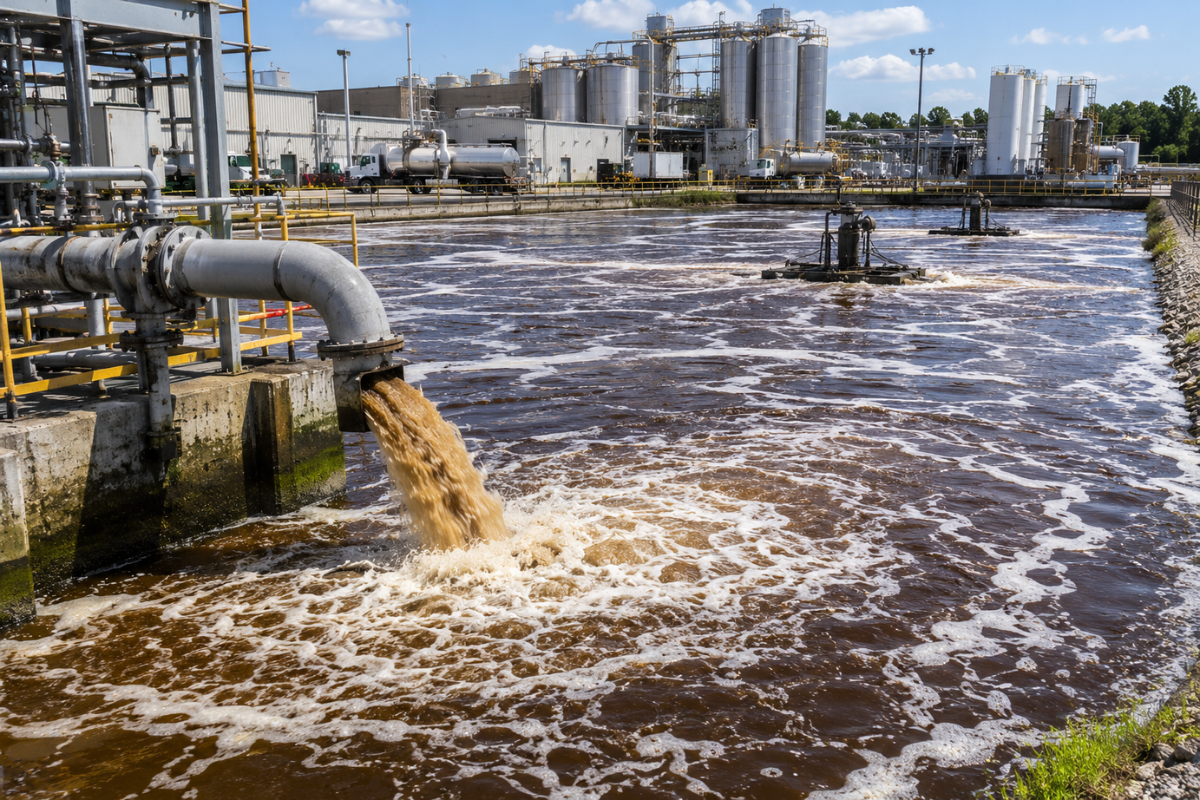
Industrial lagoons function as biological treatment systems. Their effectiveness depends on maintaining a balance between incoming organic loading and the microbial population responsible for degradation.
When BOD loading rises beyond the lagoon's treatment capacity, that balance begins to break down.
The first symptom is often increased oxygen demand. In aerated lagoons, microorganisms consume oxygen more rapidly as organic loading increases. If the aeration system cannot keep pace, dissolved oxygen concentrations decline and treatment efficiency begins to suffer. Facilities experiencing chronic low oxygen conditions may also encounter many of the issues discussed in Wastewater Lagoon Aeration Problems.
As treatment efficiency declines, more organic material settles to the lagoon bottom before it can be fully degraded. This accelerates sludge accumulation and gradually reduces the lagoon's effective treatment volume.
The process is often self-reinforcing. As sludge accumulates, available lagoon volume decreases. Reduced volume shortens retention time, limiting the amount of time microorganisms have to break down incoming waste. Lower retention time frequently leads to additional solids accumulation, creating a cycle of declining performance.
Operators may not notice these changes immediately because they typically occur over months or years rather than days.
Common Sources of High BOD Wastewater
While nearly every industrial facility experiences fluctuations in organic loading, certain industries are particularly susceptible to elevated BOD concentrations.
Food processors often generate wastewater containing sugars, starches, proteins, and suspended organic solids. Meat and poultry processors contribute blood, fats, proteins, and tissue residues that create exceptionally high organic loads. Rendering facilities frequently manage some of the highest-strength wastewater streams in the industrial sector.
Even relatively small process losses can significantly increase BOD loading. Product spills, washdown operations, equipment cleaning procedures, and inefficient production practices can introduce large quantities of biodegradable material into the wastewater stream.
In many facilities, production growth becomes another contributing factor. Treatment systems designed years ago for lower production volumes may struggle to keep pace as manufacturing output increases. The wastewater system itself may not have changed, but the organic loading entering the lagoon has increased substantially.
Facilities that also struggle with grease accumulation should consider how fats, oils, and grease contribute to overall loading. As discussed in Why FOG (Fats, Oils, and Grease) Disrupts Wastewater Treatment Systems, excessive grease can interfere with biological treatment and contribute to long-term solids accumulation.
The Relationship Between High BOD and Sludge Accumulation
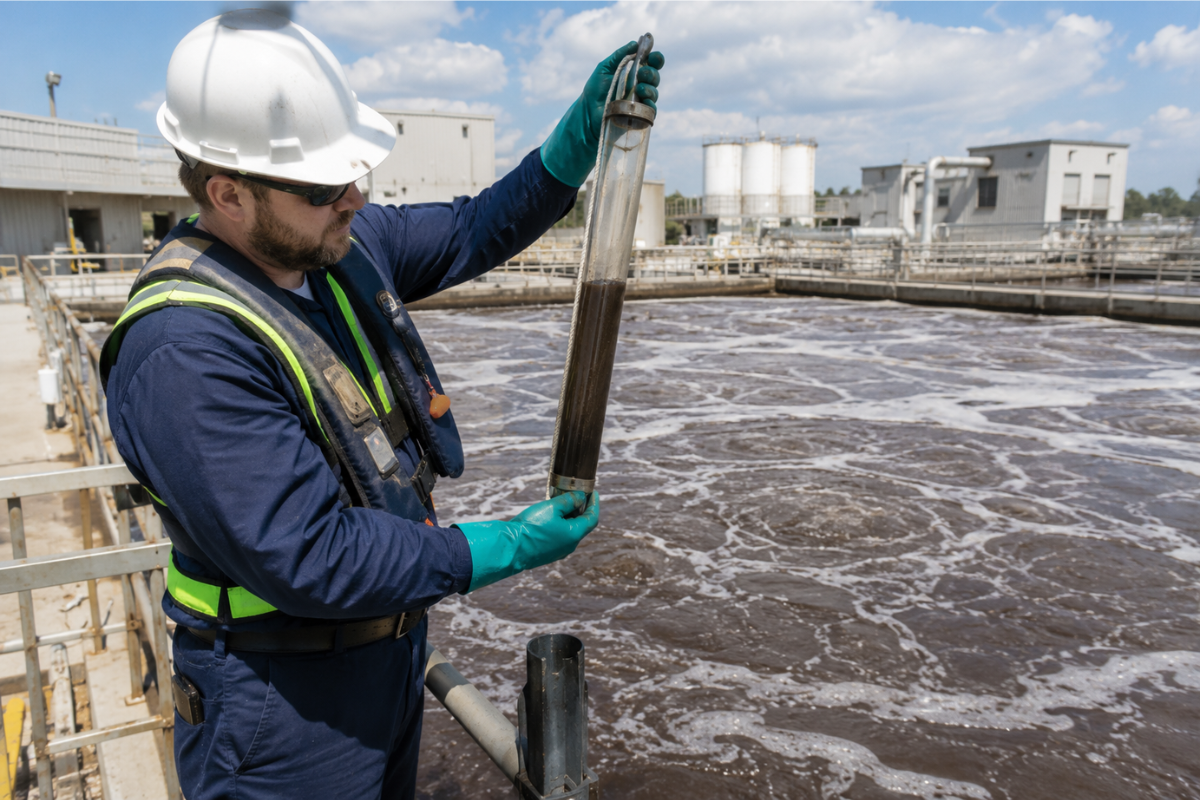
One of the most overlooked consequences of elevated BOD is its impact on sludge generation.
Many operators focus on effluent quality or aeration performance while overlooking what is happening at the bottom of the lagoon.
When incoming organic loading exceeds the rate of biological degradation, solids begin accumulating faster than they can be consumed. Over time, this creates a growing sludge blanket that reduces available treatment volume and limits future capacity.
This relationship explains why many industrial facilities eventually experience rising dredging costs, increasing sludge hauling requirements, and declining lagoon performance despite no major changes in equipment.
Understanding how biological treatment can influence solids accumulation is critical for long-term lagoon management. Facilities evaluating alternatives to mechanical sludge removal should review How Biological Sludge Reduction Works in Wastewater Lagoons.
How Operators Can Identify High BOD Loading Problems
By the time permit violations occur, a lagoon has often been struggling with excessive loading for an extended period.
Fortunately, several operational indicators can help identify developing problems before they become severe.
Declining dissolved oxygen concentrations often signal increasing biological stress. Operators may also observe stronger odors, increased foam formation, slower solids digestion, or gradual reductions in treatment efficiency.
Another common warning sign is accelerated sludge accumulation. Facilities that previously required infrequent solids management may suddenly notice increasing sludge depths or decreasing available treatment volume.
Tracking sludge accumulation trends is often one of the most effective ways to evaluate long-term lagoon performance. Retention time calculations can also reveal whether sludge buildup is reducing available treatment capacity. Operators can learn more about this relationship in Wastewater Lagoon Retention Time Explained.
Strategies for Managing High BOD Wastewater
Successfully managing high BOD wastewater requires a combination of operational awareness and biological treatment optimization.
The most effective approach often begins upstream. Identifying product losses, improving housekeeping practices, reducing spills, and minimizing unnecessary organic loading can significantly reduce stress on the treatment system.
At the lagoon level, maintaining healthy biological activity becomes critical. A robust microbial population is better able to respond to fluctuations in loading and maintain treatment performance during periods of increased demand.
Regular monitoring of BOD, dissolved oxygen, sludge depth, and lagoon performance provides valuable insight into system health and helps operators identify developing problems before they become expensive emergencies.
Facilities should also evaluate whether increasing sludge accumulation is driving higher operating expenses. As sludge volumes increase, costs associated with hauling, dredging, and maintenance often rise as well. Our article on How to Reduce Sludge Hauling Costs in Industrial Wastewater Systems explores these financial impacts in greater detail.
Why Biological Optimization Is Often More Cost-Effective Than Expansion

When industrial lagoons begin struggling with high BOD loading, the initial reaction is often to consider mechanical upgrades, expanded aeration systems, or even new treatment infrastructure.
While these solutions may be necessary in some cases, many facilities have untapped treatment potential within their existing systems.
Biological optimization focuses on improving the efficiency of the microbial community already responsible for wastewater treatment. By improving degradation of organic solids and reducing sludge accumulation, facilities can often recover lost capacity and improve performance without major capital expenditures.
For many operators, the goal is not simply reducing BOD. The objective is maximizing treatment capacity, maintaining compliance, controlling sludge accumulation, and extending the useful life of existing assets.
Frequently Asked Questions
What is considered high BOD wastewater?
The answer varies by industry, but food processing, meat processing, rendering, dairy, and beverage facilities often generate wastewater with BOD concentrations significantly higher than municipal wastewater.
How does high BOD affect industrial lagoons?
High BOD increases oxygen demand, accelerates sludge accumulation, reduces retention time, and can contribute to odor generation and declining treatment efficiency.
Does high BOD increase sludge accumulation?
Yes. When organic loading exceeds biological degradation capacity, solids accumulate faster than they can be broken down, leading to larger sludge blankets and reduced treatment volume.
How can operators reduce BOD loading?
Reducing product losses, improving process controls, minimizing FOG contributions, monitoring wastewater strength, and optimizing biological treatment are all effective strategies.
Can biological treatment improve lagoon performance?
Biological treatment is the foundation of lagoon operation. Optimizing microbial activity can improve organic degradation, reduce sludge accumulation, and support long-term treatment performance.
Schedule a Free Technical Assessment
If your industrial lagoon is experiencing increasing sludge accumulation, reduced treatment performance, odor complaints, or elevated organic loading, Drylet's technical team can help evaluate your system.
Our specialists can review operating conditions, assess sludge accumulation, and determine whether biological treatment optimization may help improve lagoon performance while reducing long-term maintenance costs.
Schedule a Free Technical Assessment today to learn how biological optimization can help maximize lagoon capacity and improve wastewater treatment performance.