How Biological Sludge Reduction Works in Wastewater Lagoons
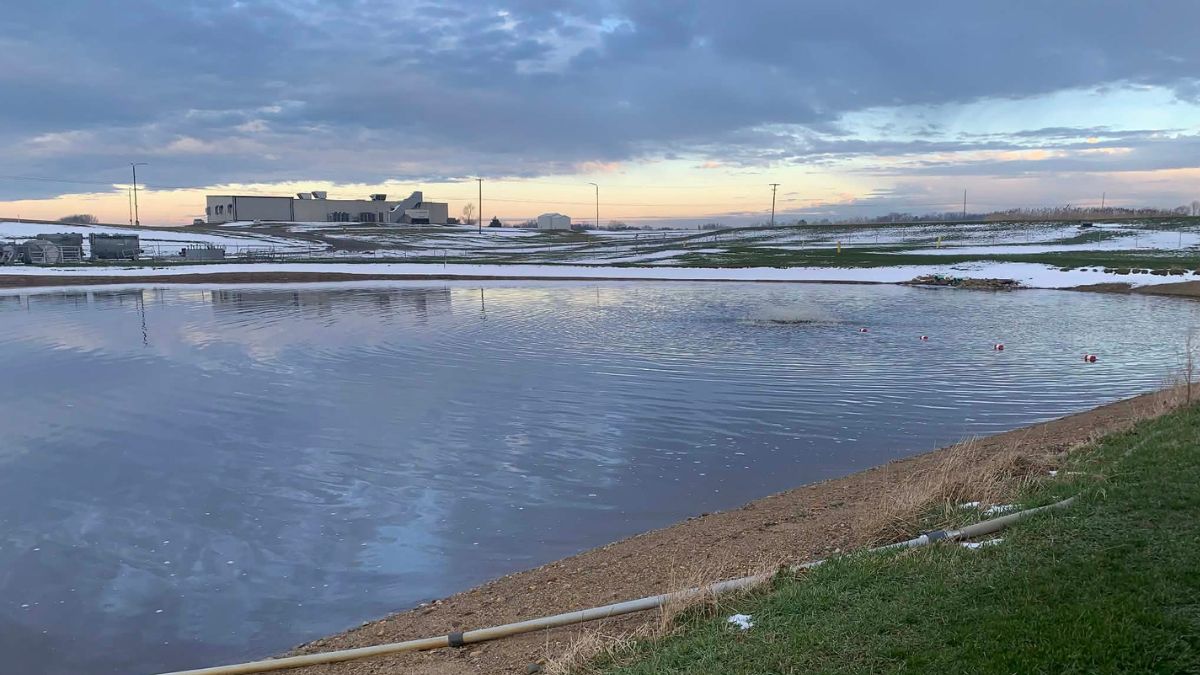
Biological sludge reduction in wastewater lagoons is the process of using bacteria to digest accumulated organic solids in the sludge layer, converting them into carbon dioxide, methane, water, and simpler compounds. This process—commonly referred to as bacterial sludge reduction in wastewater—restores lagoon capacity, improves treatment efficiency, and reduces the need for dredging or hauling.
Sludge accumulates when organic loading exceeds the natural rate of microbial digestion. By increasing bacterial activity directly within the sludge layer, operators can accelerate biological solids reduction in wastewater and rebalance lagoon performance without mechanical intervention.
Need help evaluating sludge buildup in your lagoon?
Talk to a Drylet specialist for a technical review of your system, sludge levels, and treatment options.
What Is Biological Sludge Reduction?
Biological sludge reduction is not a new technology—it is the same microbial process that all wastewater lagoons rely on every day. The difference is rate and location.
In a typical lagoon, organic solids settle to the bottom and form a sludge layer. Naturally occurring bacteria begin breaking down this material, but the process is slow and often limited by environmental conditions and poor microbial contact with the solids.
Over time, this imbalance leads to sludge accumulation, reduced treatment volume, and declining performance. Biological sludge reduction works by accelerating this natural digestion process, increasing the rate at which solids are converted into gases and dissolved compounds.
How Bacteria Reduce Sludge in Wastewater Lagoons
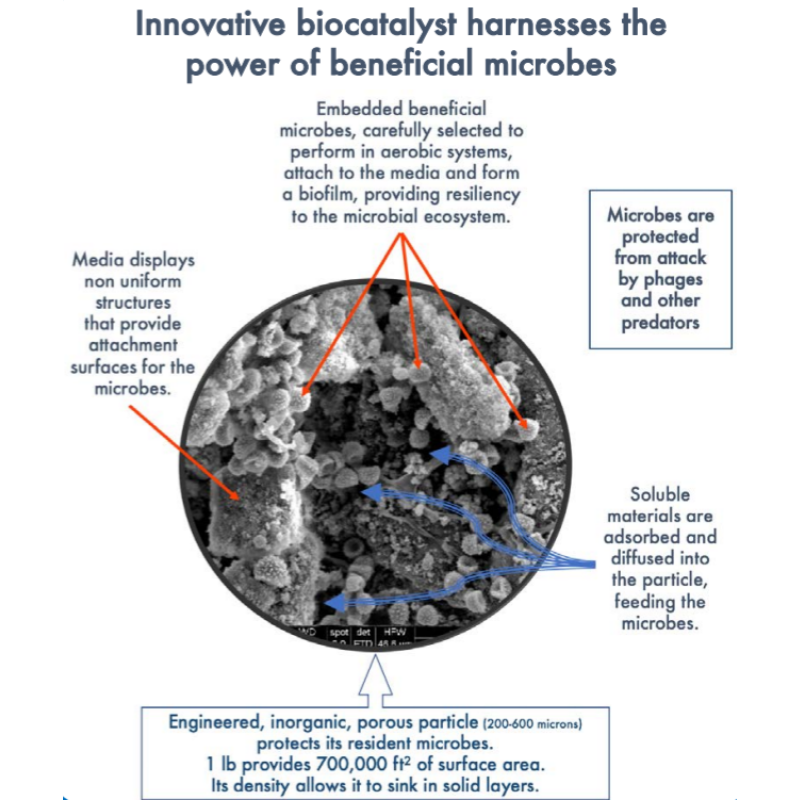
At a process level, bacteria reduce sludge in wastewater through a series of biological reactions that occur primarily under anaerobic conditions in the sludge layer. The process begins with hydrolysis, where complex organic materials such as fats, proteins, and carbohydrates are broken into smaller, soluble compounds. This step is essential because bacteria cannot directly consume large particulate solids.
These simpler compounds are then converted into volatile fatty acids, hydrogen, and carbon dioxide through acidogenesis. As the process continues, acetogenic bacteria further refine these compounds into acetate and other intermediates that can be utilized by methanogens. Methanogenesis is the final stage, where these intermediates are converted into methane and carbon dioxide. This is the point at which actual mass reduction occurs, as solids are transformed into gas and leave the system.
For operators, the key takeaway is simple: this process must occur within the sludge layer itself. If microbial activity is concentrated only in the water column, sludge will continue to accumulate regardless of surface treatment performance.
Why Sludge Continues to Accumulate in Lagoons
Even in well-designed systems, sludge accumulation is unavoidable without intervention. The issue is not the absence of bacteria, but the imbalance between organic loading and microbial digestion capacity.
In most lagoons, bacterial activity is strongest in the upper water column, where oxygen and mixing are more favorable. The sludge layer, however, is dense, often anaerobic, and relatively isolated. This limits microbial access to the very material that needs to be broken down.
As a result, solids accumulate faster than they are digested. Over time, this reduces lagoon depth, shortens retention time, and leads to declining treatment efficiency, which are common indicators outlined in What Causes Sludge Buildup in Wastewater Lagoons?
How Engineered Biological Treatment Accelerates Sludge Reduction
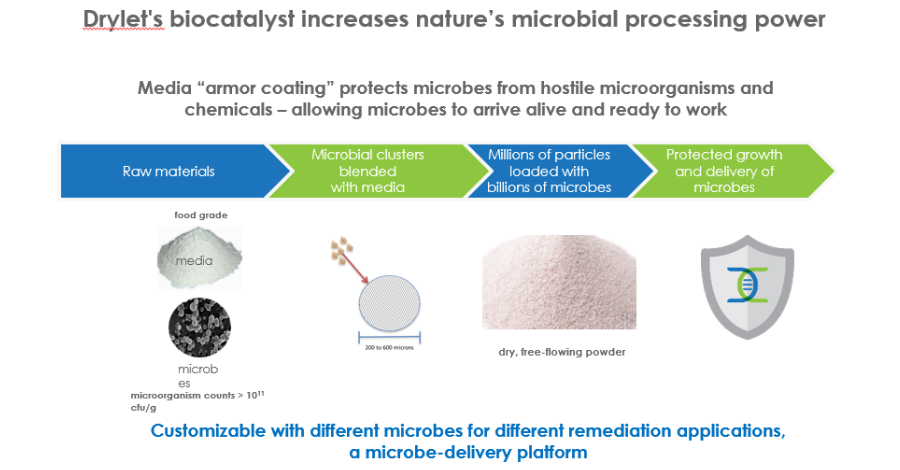
To effectively increase bacterial sludge reduction in wastewater, microbial activity must be concentrated where solids exist—in the sludge layer.
This is where most biological approaches fail. Many rely on free-floating bacteria that remain suspended in the water column, limiting their impact on accumulated sludge.
Drylet’s technology addresses this limitation through a patented porous silica carrier that delivers bacteria directly into the sludge layer. The carrier acts as both a transport mechanism and a protective structure, allowing bacteria to survive and remain active under harsh, often anaerobic conditions. From an engineering perspective, this changes the dynamics of sludge digestion. Instead of relying on passive contact, bacteria are physically introduced into the solids, increasing interaction and accelerating breakdown.
The result is improved microbial sludge digestion in wastewater, driven by higher bacterial density, better contact with organic material, and increased stability of microbial populations over time.
How Long Does Biological Sludge Reduction Take?
Biological sludge reduction follows biological kinetics, not mechanical timelines. While results are not immediate, they are predictable.
Most lagoon systems begin to show measurable sludge reduction within 90 to 120 days, depending on temperature, loading, and initial sludge depth. Early indicators often include improved effluent stability and reduced odor, followed by gradual decreases in sludge accumulation.
For operators comparing options, this timeline is critical. While dredging provides immediate removal, biological treatment offers a lower-cost, lower-disruption solution that continues to improve system performance over time.
For a real-world example of this process in action, review this Wastewater Biosolids Reduction Case Study: https://www.drylet.com/case-studies/wastewater-biosolids-reduction-case-study
Aerobic vs Anaerobic Digestion in Lagoons
Lagoon systems contain both aerobic and anaerobic zones, but their roles in sludge reduction are very different.
Aerobic bacteria dominate in the upper layers and are responsible for treating dissolved organics and improving effluent quality. However, their impact on settled sludge is limited.
Anaerobic bacteria operate within the sludge layer and are responsible for long-term solids stabilization and reduction. Effective biological solids reduction in wastewater depends on maintaining strong anaerobic activity where solids are concentrated.
Anaerobic vs Aerobic Wastewater Treatment
Operational Impact of Biological Sludge Reduction
When biological sludge reduction is properly implemented, the impact is gradual but significant. As sludge volume decreases, lagoon capacity is restored, allowing for improved hydraulic retention time and more stable treatment conditions.
Operators often observe improvements in effluent quality, particularly in BOD and TSS, as well as reduced frequency of sludge handling or hauling. In many cases, facilities are able to delay or avoid dredging projects altogether.
Common Misconceptions
A common assumption is that adding bacteria is unnecessary because lagoons already contain microbial populations. While technically correct, this overlooks the importance of microbial concentration and location. Native bacteria are often not present in sufficient numbers within the sludge layer to keep up with loading.
Another misconception is that biological solutions should produce immediate results. In reality, biological systems require time to establish and scale. Expecting instant outcomes from a microbial process leads to unrealistic expectations.
Finally, not all biological treatments are equal. The method of delivery, protection of bacteria, and ability to reach the sludge layer are critical factors that determine effectiveness.
When Should You Consider Biological Sludge Reduction?
Biological sludge reduction becomes a practical solution when sludge accumulation begins to impact lagoon performance. This may present as reduced capacity, declining effluent quality, or increasing maintenance and hauling costs.
It is also a strong alternative when evaluating dredging or expansion, particularly for facilities seeking a lower-cost and less disruptive approach.
Key Takeaways
Biological sludge reduction is fundamentally about restoring balance between organic loading and microbial digestion. Bacteria already perform this function in every lagoon—the challenge is ensuring they are active within the sludge layer and in sufficient concentrations to make a measurable impact.
When properly applied, wastewater bacteria solids reduction can restore lagoon capacity, improve treatment stability, and extend system life without major capital investment.
Frequently Asked Questions
How long does biological sludge reduction take?
Most systems show measurable results within 90–120 days, with continued improvement over time.
Can bacteria remove all sludge?
No. Only organic material can be biologically digested. Inorganic solids such as sand and grit will remain.
Does this replace dredging?
In many cases, it can delay or significantly reduce the need, though complete elimination depends on system conditions.
Is biological treatment safe for permits?
Yes. It enhances natural biological processes without introducing harmful chemicals. Every lagoon system is different, and sludge reduction performance depends on loading, depth, and operating conditions.
👉 Request a Technical Assessment
👉 Subscribe for more operator-focused wastewater insights