When to Upgrade vs Optimize Your Wastewater Treatment System
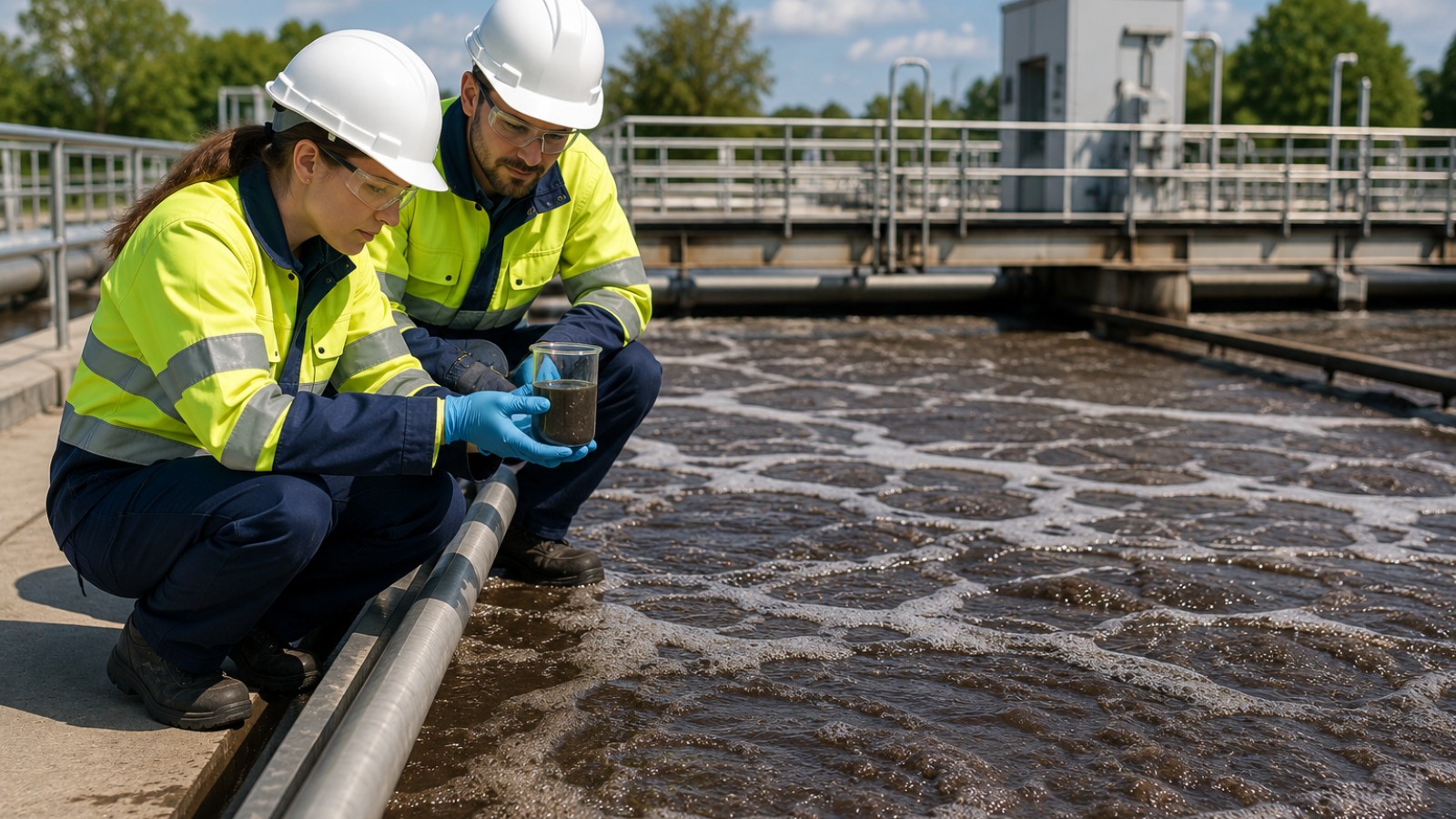
Struggling with sludge buildup, poor aeration efficiency, odors, or rising hauling costs?
Before investing millions into new wastewater infrastructure, many facilities can significantly improve treatment performance through biological optimization and solids reduction strategies.
Talk to a Drylet Specialist to evaluate whether your system can be optimized before capital expansion becomes necessary.
Across municipal and industrial wastewater treatment systems, operators are facing increasing pressure to improve treatment performance while controlling costs. Aging infrastructure, rising sludge hauling expenses, stricter discharge permits, labor shortages, and increased organic loading often push facilities toward expensive capital projects.
In many cases, however, system performance issues are not caused by inadequate infrastructure capacity alone. They are frequently driven by accumulated sludge, biological imbalance, FOG accumulation, reduced hydraulic retention time, oxygen transfer inefficiencies, or excessive solids loading.
This distinction matters financially.
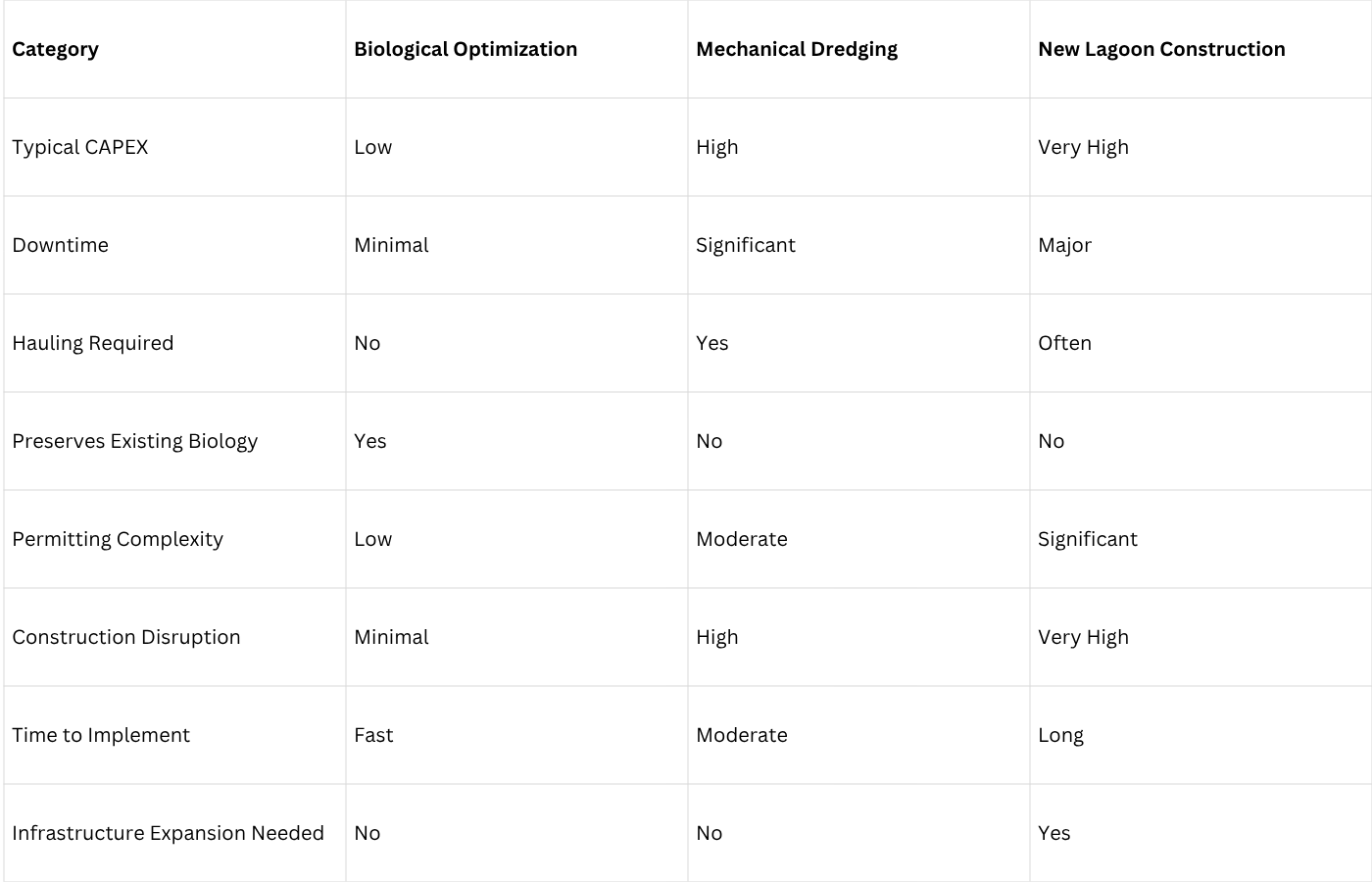
A wastewater treatment upgrade may require millions in capital expenditure, permitting, engineering, construction, downtime, and operational disruption. Optimization strategies, particularly biological treatment optimization and sludge reduction, can often restore significant system capacity without expanding physical infrastructure.
For municipal lagoons, industrial wastewater systems, food processing plants, meat processors, rendering operations, and agricultural facilities, optimization frequently represents the fastest and most cost-effective path to performance recovery.
Many facilities continue operating for years believing their treatment systems are undersized when, in reality, sludge accumulation has gradually consumed available treatment volume. Because this capacity loss occurs slowly, operators often normalize declining performance until hauling costs, aeration demand, odors, or permit exceedances force action.
In lagoon systems especially, several feet of accumulated sludge can dramatically reduce hydraulic retention time before operators fully recognize how much effective treatment volume has been lost.
The Difference Between Upgrading and Optimizing a Wastewater Treatment System
A true wastewater treatment upgrade typically involves physical infrastructure expansion or replacement. This may include:
- Additional aeration basins
- New clarifiers
- Lagoon expansion
- Mechanical dredging
- New blowers or diffusers
- DAF system expansion
- Digester additions
- Lift station reconstruction
- New sludge dewatering equipment
These projects often become necessary when hydraulic or organic loading permanently exceeds design limitations.
Optimization, however, focuses on improving the performance of existing infrastructure before expansion becomes necessary. This approach targets operational inefficiencies that reduce treatment capacity long before the system itself reaches its true design limits.
Common optimization strategies include:
- Biological sludge reduction
- Aeration efficiency improvement
- FOG and solids management
- Lagoon solids reduction
- Retention time recovery
- Influent conditioning
- Improved microbial activity
- Reduction of organic sludge accumulation
- Stabilization of anaerobic digestion
In many wastewater systems, years of sludge accumulation effectively reduce available treatment volume. Operators may believe they need additional infrastructure when the real issue is loss of usable hydraulic capacity.
The key distinction is determining whether the limitation is operational or structural.
Facilities evaluating expansion should first assess whether solids accumulation and biological inefficiencies are the actual bottlenecks.
For facilities evaluating sludge reduction strategies, understanding How Biological Sludge Reduction Works in Wastewater Lagoons is an important starting point before pursuing major infrastructure expansion.
Signs Your System May Be a Candidate for Optimization Instead of Expansion
Not every wastewater treatment problem requires construction.
Many systems continue operating with adequate infrastructure but reduced treatment efficiency due to accumulated solids and declining biological performance.
Common indicators include:
Rising Sludge Hauling Frequency
Increasing sludge hauling costs are often one of the earliest indicators of biological inefficiency. Excess solids accumulation reduces basin volume, increases oxygen demand, and creates unstable treatment conditions.
Facilities sometimes assume additional clarifiers or digesters are needed when solids reduction strategies could significantly restore capacity.
In one industrial lagoon system treating high-strength wastewater, biological optimization reduced more than 1.2 million pounds of accumulated solids while helping restore treatment performance without mechanical dredging or infrastructure expansion. Read the full case study here: Industrial Lagoon Solids Reduction Case Study: 42% Reduction Without Dredging
Lagoon Capacity Loss
Wastewater lagoons gradually lose effective depth and hydraulic retention time as sludge accumulates. This can lead to:
- Short-circuiting
- Increased TSS carryover
- Odor generation
- Reduced treatment efficiency
- Excessive algae or duckweed growth
- Permit compliance concerns
Many lagoon systems scheduled for dredging can extend operational life substantially through biological solids reduction.
Facilities evaluating dredging costs should first review Alternatives to Lagoon Dredging before committing to large-scale excavation projects.
Increasing Aeration Energy Costs
High blower runtime and declining dissolved oxygen levels may indicate excessive oxygen demand caused by organic sludge accumulation rather than insufficient aeration equipment.
In industrial systems, sludge accumulation frequently drives aeration energy costs higher over time. As organic solids increase, oxygen transfer efficiency decreases while blower runtime and electrical demand continue rising.
FOG and Organic Solids Accumulation
Food processing, meat processing, rendering, dairy, brewery, and restaurant wastewater systems often struggle with excessive fats, oils, grease, and organic solids accumulation.
These materials increase oxygen demand, reduce transfer efficiency, interfere with biological treatment, and contribute to sludge buildup throughout the system.
Facilities experiencing excessive grease accumulation should understand Why FOG Disrupts Wastewater Treatment Systems and how it impacts long-term treatment performance.
.png)
Why Biological Optimization Often Delays or Eliminates Major CAPEX
Biological treatment optimization focuses on restoring the efficiency of the existing treatment ecosystem rather than replacing infrastructure prematurely.
In properly functioning biological systems, microorganisms continuously consume and stabilize organic waste. However, over time, treatment systems can become overloaded with accumulated solids that are resistant to breakdown under existing conditions.
This is especially common in:
- Industrial lagoons
- Anaerobic lagoons
- Food processing wastewater systems
- Meat processing facilities
- Municipal lagoons
- Agricultural manure storage systems
- Aerated basins with excessive solids age
Biological optimization programs aim to accelerate breakdown of accumulated organics while improving system-wide biological activity.
Benefits may include:
- Reduced sludge accumulation
- Improved oxygen transfer
- Lower hauling frequency
- Increased effective treatment volume
- Reduced odors
- Improved hydraulic retention time
- Stabilized treatment performance
- Lower polymer and chemical demand
- Improved downstream treatment efficiency
Unlike mechanical dredging or infrastructure expansion, biological optimization can often occur without major operational disruption.
Drylet’s biological treatment approach uses specialized bacteria delivered through patented porous carrier technology designed to place bacteria directly into sludge accumulation zones where degradation is needed most. These systems do not rely on enzymes and are designed specifically for high-solids wastewater environments.
Facilities struggling with retention time issues should also review Wastewater Lagoon Retention Time Explained to better understand how sludge accumulation impacts overall treatment performance.
The Hidden Cost of Premature Wastewater Expansion
Many facilities underestimate the total lifecycle cost of wastewater infrastructure expansion. A new lagoon, aeration basin, or clarifier involves more than construction costs alone.
Major expansion projects frequently involve:
- Engineering and design costs
- Environmental permitting delays
- Site preparation and excavation
- Increased long-term maintenance obligations
Beyond construction itself, facilities must also account for additional labor requirements, higher energy consumption, equipment replacement cycles, operational disruption, and long-term asset depreciation.
For municipal systems, ratepayer pressure frequently makes major CAPEX difficult to justify unless all optimization options have already been exhausted. Industrial facilities face similar financial pressures, especially when wastewater treatment is considered a support utility rather than a revenue-generating asset.
Optimization strategies can often buy years of operational life before expansion becomes unavoidable. In some cases, facilities discover they can avoid expansion entirely.
When a Wastewater Upgrade Actually Is Necessary
Optimization is not a replacement for infrastructure when systems are fundamentally undersized.
Facilities may require expansion when:
- Hydraulic flow permanently exceeds design limits
- Industrial production has significantly increased
- Permit limits have tightened substantially
- Existing infrastructure is structurally failing
- Treatment technology is obsolete
- Peak loading exceeds biological treatment capacity
- Regulatory compliance cannot be maintained despite optimization
Far too many facilities move directly toward construction before evaluating whether sludge accumulation and biological inefficiency are driving performance loss.
A proper technical assessment should evaluate:
- Sludge depth
- Organic loading
- Oxygen demand
- Hydraulic retention time
- Influent variability
- Solids age
- Aeration efficiency
- Biological activity
- FOG accumulation
- Existing treatment utilization
Facilities seeing chronic operational instability should review Signs Your Industrial Wastewater System Is Overloaded before assuming infrastructure expansion is the only solution.
Industrial Wastewater Systems Where Optimization Delivers the Greatest ROI
Biological optimization strategies often provide the strongest return in systems with high organic loading and persistent sludge accumulation. Industries commonly benefiting include:
Meat Processing Facilities
Protein, fat, blood, and organic solids create extremely high oxygen demand and sludge accumulation rates. Optimization can reduce solids accumulation while improving downstream treatment stability.
Food Processing Facilities
FOG accumulation, starch loading, sugars, and washdown solids frequently overwhelm treatment systems over time. Biological conditioning can improve system resilience and reduce operational instability.
Rendering Operations
Rendering wastewater often contains exceptionally high-strength organics that rapidly consume lagoon and aeration capacity.
Municipal Lagoons
Many municipal lagoon systems lose treatment capacity gradually over decades due to sludge accumulation. Biological sludge reduction may restore retention time without immediate dredging or expansion.
Agricultural Waste Systems
Hog barns, manure pits, pull-plug systems, and manure lagoons commonly experience solids accumulation, foaming, and reduced flowability. Optimization strategies may improve manure handling while reducing solids buildup.
Optimization Should Be the First Step — Not the Last Resort
One of the most common mistakes in wastewater management is waiting until treatment failure occurs before evaluating optimization strategies. By the time a system reaches emergency conditions, options become limited and capital projects become far more likely.
Proactive optimization allows facilities to:
- Extend infrastructure life
- Reduce operational costs
- Improve permit compliance
- Stabilize treatment performance
- Delay or avoid major construction
- Improve operational predictability
Facilities considering expansion should first determine whether existing infrastructure is operating anywhere near its true treatment potential.
Considering a wastewater treatment upgrade?
Before committing to major capital expenditure, evaluate whether biological optimization and sludge reduction could restore treatment capacity within your existing infrastructure.

Wastewater treatment expansion is sometimes necessary, but it should rarely be the first response to declining performance.
In many municipal and industrial systems, operational inefficiencies — not infrastructure limitations — drive poor treatment outcomes. Sludge accumulation, reduced retention time, oxygen transfer limitations, and biological imbalance can dramatically reduce system capacity long before physical expansion becomes unavoidable.
Biological optimization strategies provide facilities with an opportunity to recover treatment performance while minimizing capital expenditure.
For operators facing rising hauling costs, lagoon capacity loss, excessive aeration demand, or unstable treatment performance, optimization may offer a more practical and financially responsible path forward than immediate construction.
The most effective wastewater management strategies evaluate optimization first and expansion second.
FAQ
What is the difference between wastewater optimization and wastewater expansion?
Wastewater optimization improves the performance of existing infrastructure through operational and biological improvements, while expansion involves constructing new treatment capacity or replacing equipment.
Can biological treatment reduce sludge accumulation?
Yes. Biological treatment programs designed for sludge reduction can accelerate the breakdown of accumulated organic solids, helping restore treatment capacity and reduce hauling frequency.
When should a wastewater lagoon be dredged instead of optimized?
Dredging may become necessary when sludge accumulation is extreme or when non-biodegradable solids dominate the lagoon. However, many lagoons can significantly delay dredging through biological sludge reduction programs.
Can optimization reduce aeration energy costs?
Often, yes. Reducing accumulated organic sludge lowers oxygen demand, which can improve aeration efficiency and reduce blower runtime.
Is biological optimization effective in industrial wastewater systems?
Yes. Food processing, meat processing, rendering, brewery, dairy, and agricultural wastewater systems often benefit substantially from biological optimization due to high organic loading.
Does Drylet use enzymes?
No. Drylet’s biological treatment technologies do not contain enzymes. They utilize specialized bacteria delivered through patented porous carrier technology designed for high-solids wastewater environments.