Why Biological Upsets Occur in Wastewater Treatment Systems

Biological wastewater treatment systems are remarkably resilient, but they are not immune to operational disturbances. Every day, billions of microorganisms work together to remove organic pollutants, stabilize solids, reduce odors, and produce high-quality effluent. When operating conditions remain stable, these microbial communities adapt naturally to routine fluctuations in flow and loading.
However, sudden or prolonged changes in wastewater characteristics can disrupt this biological balance. These events, commonly referred to as biological upsets, reduce the ability of microorganisms to efficiently treat wastewater and often lead to declining treatment performance. Biological upsets rarely occur because of a single cause. Instead, they typically result from multiple environmental and operational factors that stress or damage the microbial community. Understanding these causes allows operators to identify problems early, restore biological activity more quickly, and prevent recurring treatment failures.
Key Takeaways
A biological upset occurs when wastewater microorganisms become stressed or damaged, reducing their ability to remove organic pollutants efficiently. Common causes include shock loading, toxic chemicals, low dissolved oxygen, pH changes, temperature fluctuations, nutrient deficiencies, and hydraulic overload. Maintaining stable operating conditions is the most effective way to prevent biological upsets and protect long-term treatment performance.
What Is a Biological Upset?
A biological upset is any event that significantly disrupts the microbial community responsible for wastewater treatment. Under normal operating conditions, bacteria and other microorganisms continuously consume organic matter while maintaining a relatively balanced ecosystem. When environmental conditions change too rapidly or become unfavorable, portions of the microbial population may slow their activity, become inactive, or die.
As microbial activity declines, treatment efficiency begins to decrease. Biological upsets may occur suddenly following a major shock load, toxic discharge, or equipment failure, or they may develop gradually as operating conditions become increasingly unfavorable. In slower-developing upsets, operators may notice subtle changes in treatment performance days or even weeks before laboratory data confirms a significant decline.
Because wastewater treatment depends on living organisms, protecting the biology should be considered just as important as maintaining pumps, blowers, and other equipment. Understanding what wastewater biology is and how biological treatment works helps operators recognize when microbial communities are becoming stressed before treatment performance declines significantly.
Early Warning Signs of a Biological Upset
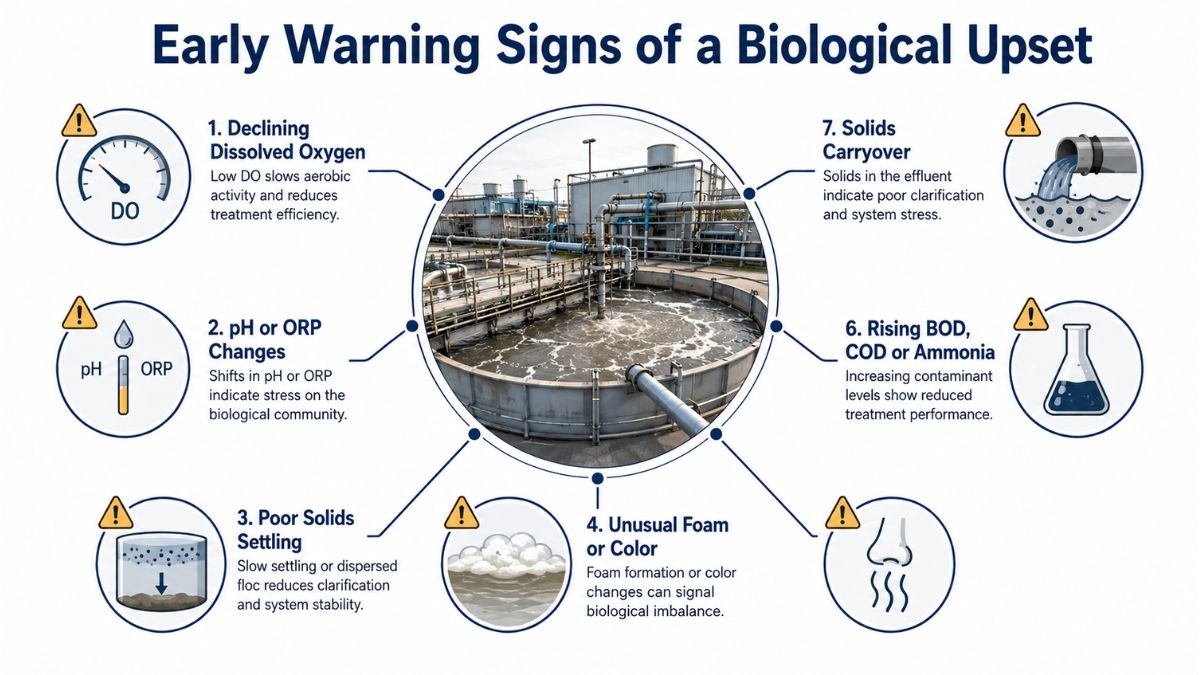
Biological upsets often produce observable warning signs before a major treatment failure occurs. Recognizing these changes early gives operators more time to identify the cause and stabilize the process.
Common warning signs include:
- Increasing oxygen demand or declining dissolved oxygen
- Sudden changes in pH or oxidation-reduction potential
- Poor solids settling or increased effluent turbidity
- Unusual foam, color, or odor
- Rising effluent BOD, COD, or ammonia
- Increased solids carryover
- Changes in sludge production or accumulation
No single indicator confirms a biological upset. However, several changes occurring together often signal that the microbial community is under stress.
Why Healthy Biology Is Sensitive to Change
Wastewater microorganisms constantly respond to their surrounding environment. Temperature, dissolved oxygen, pH, nutrient availability, organic loading, and wastewater composition all influence microbial activity. Although microbial communities can adapt to gradual changes, sudden shifts create biological stress. Imagine asking an athlete to sprint without warning after sitting still for hours. Microorganisms experience similar stress when wastewater conditions change dramatically.
The larger and faster the change, the greater the impact on biological treatment performance. Healthy biological systems are not necessarily fragile but they perform best when environmental conditions remain relatively stable.
Shock Organic Loading
One of the most common causes of biological upsets is shock organic loading. Shock loading occurs when unusually high concentrations of organic material enter the treatment system over a short period.
Examples include:
- Production surges
- Product spills
- Batch discharges
- Equipment cleaning
- Seasonal processing peaks
- Tank cleanouts
As organic loading increases, microorganisms rapidly consume available dissolved oxygen. If oxygen transfer cannot keep pace with demand, portions of the treatment system become oxygen-deficient, allowing anaerobic conditions to develop. The result may include reduced treatment efficiency, odor formation, poor solids stabilization, and elevated effluent BOD or COD. These changes are also common signs that an industrial wastewater treatment system is overloaded, particularly when influent loading increases faster than the system’s biological capacity.
Toxic Chemical Discharges
Not every wastewater constituent serves as food for microorganisms. Many industrial chemicals inhibit biological activity or directly damage microbial cells.
Potential biological inhibitors include:
- Strong disinfectants
- Solvents
- Heavy metals
- Chlorinated compounds
- High concentrations of cleaning chemicals
- Certain industrial process chemicals
Even temporary exposure may significantly reduce microbial populations. Facilities handling aggressive cleaning agents or specialty chemicals should carefully evaluate how these materials enter the wastewater treatment system. Maintaining proper equalization and chemical management practices helps minimize the risk of biological inhibition.
Low Dissolved Oxygen
Dissolved oxygen (DO) is one of the most important factors influencing biological wastewater treatment performance. Aerobic microorganisms require oxygen to efficiently metabolize organic pollutants. When dissolved oxygen concentrations fall below acceptable levels, aerobic bacterial activity slows and treatment efficiency begins to decline.
Common causes of low dissolved oxygen include:
- Insufficient aeration capacity
- Blower or diffuser malfunctions
- Increased organic loading
- Poor mixing or circulation
- Excessive solids accumulation
- Elevated wastewater temperatures
As oxygen becomes depleted, facultative bacteria shift to less efficient metabolic pathways while anaerobic microorganisms begin occupying larger portions of the treatment system. Understanding how bacteria break down organic waste helps explain why declining oxygen availability can quickly affect treatment efficiency, odor production, solids settling, and effluent quality.
If low dissolved oxygen persists, operators may observe:
- Increased odors
- Poor solids settling
- Elevated effluent BOD
- Reduced COD removal
- Darker wastewater
- Increased hydrogen sulfide production
Routine dissolved oxygen monitoring is one of the most effective methods for identifying developing biological problems before treatment performance deteriorates significantly.
Sudden pH Changes
Wastewater microorganisms perform best within a relatively stable pH range. Large pH fluctuations interfere with enzyme activity, slow microbial metabolism, and may damage sensitive bacterial populations.
Industrial facilities commonly experience pH disturbances from:
- CIP (Clean-in-Place) systems
- Acid cleaning
- Caustic cleaning
- Chemical manufacturing
- Product spills
- Poor neutralization
While many microbial communities can tolerate gradual pH changes, rapid swings often produce immediate biological stress. Repeated pH excursions may prevent microbial communities from fully recovering, resulting in chronic treatment instability. Maintaining consistent pH protects both microbial health and overall biological performance.
Temperature Extremes
Temperature directly influences biological reaction rates. As wastewater temperatures decline, microbial metabolism slows naturally. Organic matter is degraded more slowly, sludge stabilization decreases, and solids accumulate more rapidly. Conversely, elevated temperatures accelerate biological activity while simultaneously reducing dissolved oxygen solubility. This combination may create biological stress if oxygen transfer cannot satisfy increasing microbial demand.
Seasonal temperature fluctuations are especially important in wastewater lagoons, where biological processes depend heavily on environmental conditions. Understanding how temperature affects biological wastewater treatment performance allows operators to anticipate changes in reaction rates, oxygen demand, and solids stabilization before seasonal conditions disrupt treatment.
Nutrient Deficiencies
Although microorganisms consume organic carbon for energy, they also require nitrogen, phosphorus, trace minerals, and other nutrients for cell growth. Industrial wastewater occasionally contains abundant carbon but insufficient nutrients to support healthy microbial populations. When one essential nutrient becomes limiting, biological growth slows even though food remains available. This phenomenon explains why some industrial facilities experience declining treatment performance despite relatively constant organic loading.
Balanced nutrient availability supports:
- Healthy bacterial growth
- Stable biological communities
- Efficient organic degradation
- Improved sludge stabilization
- Better treatment consistency
Maintaining proper nutrient balance is often overlooked but remains essential for long-term biological health.
Hydraulic Shock Loading
Hydraulic loading affects biology just as much as organic loading. Large increases in flow can physically disrupt microbial communities before bacteria have time to adapt.
Rapid hydraulic surges may:
- Wash microorganisms out of treatment systems
- Reduce hydraulic retention time
- Decrease biological contact time
- Disturb settled biomass
- Increase suspended solids in the effluent
Equalization basins help minimize these fluctuations by providing a more consistent flow to downstream biological treatment processes. Facilities experiencing variable production schedules often benefit from evaluating hydraulic loading alongside organic loading.
Excessive Sludge Accumulation
Excessive sludge accumulation can both result from and contribute to biological upsets. As sludge layers become thicker, oxygen penetration may decrease and anaerobic zones can expand. Microorganisms responsible for aerobic treatment lose access to oxygen, while odor-producing anaerobic activity may become more prevalent.
In lagoons, basins, and other systems where settled solids occupy treatment space, accumulated sludge can reduce effective treatment volume, shorten hydraulic retention time, interfere with circulation, and make future biological upsets more likely. These industrial wastewater sludge problems often develop gradually, making routine sludge monitoring an important part of preventive system maintenance.
Biological Upsets Rarely Have a Single Cause
One of the biggest misconceptions in wastewater treatment is assuming that biological failures result from one isolated event. In reality, most biological upsets develop from multiple contributing factors occurring simultaneously.
For example, a facility may experience:
- Higher seasonal production
- Increased wastewater temperatures
- Reduced dissolved oxygen
- Gradual sludge accumulation
- Slight nutrient deficiencies
Individually, each change may appear manageable. Together, however, they create enough biological stress to reduce microbial activity and trigger declining treatment performance. Successful troubleshooting requires evaluating the wastewater treatment system as an interconnected biological ecosystem rather than focusing on individual operating parameters in isolation.
How to Prevent Biological Upsets
Although biological upsets cannot always be avoided, most can be minimized through proactive process monitoring and consistent operational practices. Successful wastewater treatment facilities focus on maintaining stable biological conditions rather than reacting after treatment performance begins to decline.
Key preventive strategies include:
- Monitor influent BOD and COD loading trends.
- Maintain adequate dissolved oxygen concentrations.
- Control pH within the desired operating range.
- Prevent toxic chemical discharges into the biological process.
- Equalize large fluctuations in flow and organic loading.
- Monitor sludge accumulation on a routine schedule.
- Evaluate nutrient balance for industrial wastewater.
- Perform regular equipment inspections and maintenance.
Early intervention often prevents small biological disturbances from becoming major operational problems.
Recovering from a Biological Upset
The first step in recovering from a biological upset is identifying the root cause. Adding chemicals or increasing aeration without understanding why the biology became stressed often produces only temporary improvements.
Operators should begin by evaluating:
- Recent changes in wastewater characteristics
- Production schedules
- Chemical usage
- Dissolved oxygen trends
- pH records
- Temperature changes
- Equipment performance
- Sludge accumulation
- Laboratory results
Once the underlying cause has been corrected and stable operating conditions have been restored, the microbial community can begin recovering naturally. Depending on the severity of the upset, complete biological recovery may require several days or several weeks.
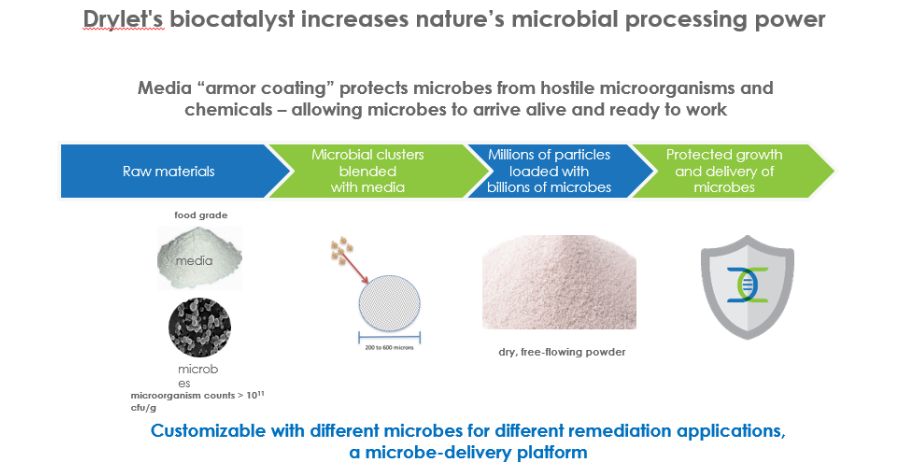
In some situations, bioaugmentation with beneficial bacteria may help reinforce the existing microbial community and support recovery. Bioaugmentation is most effective when used alongside appropriate operational corrections—not as a substitute for addressing low dissolved oxygen, toxic discharges, improper pH, nutrient deficiencies, or other underlying causes.
Healthy Biology Is the Best Protection Against Treatment Failures
Biological wastewater treatment is remarkably effective because healthy microbial communities continuously adapt to changing conditions. The goal is not to eliminate every operational fluctuation but to maintain an environment where microorganisms can respond successfully without becoming overwhelmed.
Facilities that consistently maintain stable biological conditions often experience:
- Improved treatment efficiency
- Lower sludge production
- Better odor control
- More consistent effluent quality
- Reduced operating costs
- Faster recovery following disturbances
The Bottom Line
Biological upsets occur when environmental or operational conditions disrupt the microorganisms responsible for wastewater treatment. While shock loading, toxic chemicals, low dissolved oxygen, pH changes, temperature fluctuations, nutrient deficiencies, hydraulic overload, and sludge accumulation are common causes, biological failures are rarely the result of a single event. Instead, they usually develop from several factors working together to stress the microbial community.
Facilities that monitor biological conditions proactively, maintain stable operating parameters, and address small problems before they escalate are far more likely to achieve consistent treatment performance, lower operating costs, reduced sludge accumulation, and improved long-term system reliability. Healthy wastewater biology remains the foundation of every successful biological treatment system.
Frequently Asked Questions
What is a biological upset in wastewater treatment?
A biological upset occurs when the microorganisms responsible for treating wastewater become stressed or damaged, reducing their ability to remove organic pollutants efficiently.
What causes biological upsets?
Common causes include shock organic loading, toxic chemical discharges, low dissolved oxygen, rapid pH changes, temperature fluctuations, nutrient deficiencies, hydraulic overload, and excessive sludge accumulation.
How long does it take for wastewater biology to recover?
Recovery depends on the severity of the upset and whether the underlying cause has been corrected. Minor disturbances may recover within several days, while significant biological damage can require several weeks.
Can bioaugmentation help recover from a biological upset?
Bioaugmentation may help supplement beneficial microorganisms and accelerate biological recovery when used alongside proper operational corrections. It is most effective after the underlying cause of the upset has been addressed.
How can operators prevent biological upsets?
Routine monitoring of dissolved oxygen, pH, organic loading, nutrient balance, sludge accumulation, temperature, and hydraulic loading helps maintain stable biological conditions and reduces the likelihood of treatment failures.
Is Your Wastewater Biology Showing Signs of Stress?
Changes in odor, settling, dissolved oxygen, sludge accumulation, or effluent quality may indicate that the biological community is struggling to maintain treatment performance. Drylet’s technical team can help evaluate current operating conditions, identify factors contributing to biological instability, and determine whether biological treatment support may be appropriate for your facility.
Request a Technical Assessment
Get Practical Wastewater Insights Delivered to Your Inbox
Subscribe to S2: Systems and Solids for practical guidance on wastewater biology, sludge management, lagoon performance, and industrial treatment challenges.