Industrial Wastewater Sludge Problems: Why Solids Build Up Faster Than Expected

Struggling with rising sludge levels or hauling costs?
Talk to a Drylet specialist about reducing solids and restoring treatment capacity—without adding infrastructure.

Overview
Sludge buildup in industrial wastewater systems rarely happens by surprise—it happens because design assumptions don’t match operational reality.
Most systems are engineered around steady-state conditions. Industrial facilities don’t operate that way.
Production swings, washdowns, product changeovers, and high-strength waste streams introduce variability that drives rapid biomass growth and solids accumulation. Over time, this imbalance reduces treatment capacity, increases hauling costs, and pushes systems toward expensive interventions.
The difference between stable performance and constant sludge problems comes down to one thing:
whether solids are being reduced at the same rate they are being generated.
Why Sludge Accumulates Faster Than Expected
In theory, sludge accumulation should follow predictable loading rates. In practice, industrial wastewater rarely behaves predictably.
Short periods of elevated loading—often tied to cleaning cycles or production peaks—can generate disproportionate amounts of biomass. Even if average flow appears normal, these spikes accelerate solids buildup.
Over time, this creates a compounding effect. Sludge begins to accumulate faster than it is removed or digested, reducing available treatment volume.
Facilities often first notice this through subtle performance changes. If that sounds familiar, many of the same early indicators are outlined in
Signs Your Wastewater Lagoon Is Losing Treatment Capacity
High-Strength Wastewater Changes Everything
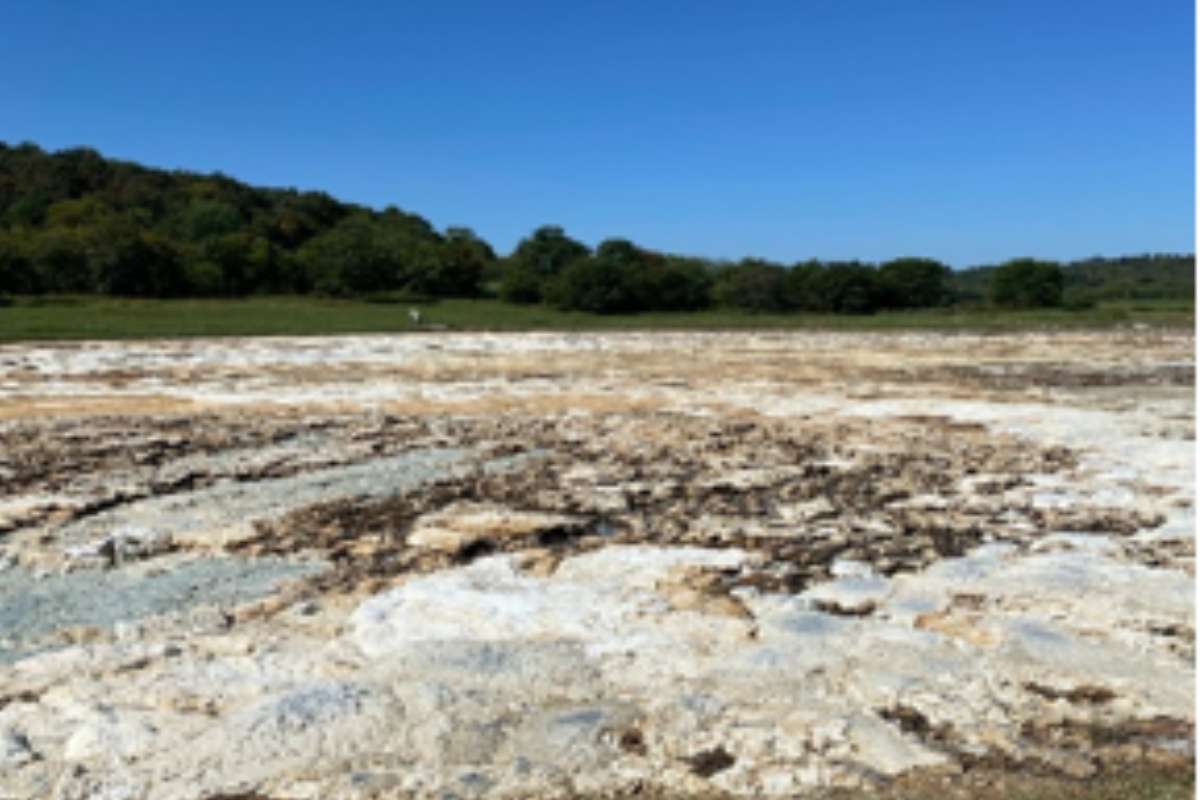
Industrial wastewater is fundamentally different from municipal wastewater because of its organic strength.
Instead of relatively dilute waste streams, industrial systems often deal with concentrated organics that drive aggressive biological activity. As microbes consume these compounds, they reproduce rapidly—and that growth becomes sludge.
The most common contributors include:
- Proteins from food processing
- Sugars and carbohydrates from production waste
- Residual organics from cleaning operations
- High concentrations of fats, oils, and grease (FOG)
This is not a treatment failure—it’s an imbalance.
Biology is doing its job, but without sufficient digestion of accumulated solids, the system slowly fills with biomass. For a deeper explanation of how this process works, see
How Biological Sludge Reduction Works in Wastewater Lagoons
FOG: The Silent Multiplier of Sludge Problems
If there’s one factor that quietly makes everything worse, it’s FOG.
FOG doesn’t behave like typical soluble waste. It can float, settle, or emulsify depending on conditions, which means it contributes to sludge in multiple ways at once.
More importantly, it interferes with treatment efficiency. FOG can coat microbial surfaces and limit oxygen transfer, slowing down biological activity while continuing to accumulate.
Over time, this creates a layered problem:
- Surface buildup (grease caps)
- Subsurface sludge accumulation
- Reduced biological efficiency
Hydraulics and Flow Patterns Make It Worse
Even in well-designed systems, poor flow distribution can accelerate sludge accumulation.
Industrial facilities often experience inconsistent discharge patterns that create:
- Short-circuiting (where water bypasses treatment zones)
- Dead zones with minimal mixing
- Uneven solids deposition across the system
When this happens, solids settle in low-energy areas and begin to accumulate faster than expected.
The result is a gradual loss of effective treatment volume, even if total system capacity hasn’t changed. This is the same mechanism behind retention-related performance loss in lagoons, explained in
Wastewater Lagoon Retention Time Explained
The Real Impact: Loss of Treatment Capacity
As sludge builds, it doesn’t just sit there—it actively reduces system performance.
Available volume decreases, which increases loading on the remaining active treatment area. That leads to:
- Shorter retention times
- Higher oxygen demand
- Reduced treatment efficiency
- Increased risk of permit violations
This progression is gradual at first, then accelerates quickly once a critical threshold is reached.
Why Hauling Costs Keep Climbing
At some point, sludge accumulation becomes impossible to ignore—and that’s when hauling increases.
What starts as occasional removal becomes routine, then frequent, then expensive.
The issue is that hauling doesn’t solve the problem. It resets it temporarily.
Without reducing the rate of sludge generation or increasing digestion, systems fall into a cycle:
- Sludge accumulates
- It gets removed
- It accumulates again—often faster
For a breakdown of removal approaches and their limitations, see
Wastewater Lagoon Sludge Removal Methods
The Core Equation Most Systems Ignore
Every wastewater system operates on a simple balance:
Sludge Generated – Sludge Reduced = Sludge Accumulated
Most facilities focus heavily on treatment performance but overlook sludge reduction.
That’s why long-term solutions require shifting from removal-based thinking to reduction-based strategies. Otherwise, the only options left are:
- Increased hauling
- Mechanical dredging
- Expensive system expansion
How to Reduce Sludge Before It Becomes a Capital Problem
The best time to address sludge is before it forces a major decision.
Effective control comes from:
- Understanding true organic loading (not just flow)
- Identifying FOG and high-strength waste sources
- Maintaining proper mixing and oxygen distribution
- Supporting biological digestion within sludge layers
Biological sludge reduction approaches work by accelerating the breakdown of accumulated solids directly in place. Instead of removing sludge after it builds up, they reduce it continuously. Real-world results have shown biological treatment can reduce accumulated biosolids significantly without capital expansion in the following case study:
42% Solids Reduction in Industrial Lagoon System

This shifts the system from reactive to stable.
Industrial sludge problems are not random—they are the predictable result of loading, chemistry, and system dynamics.
Facilities that actively manage these factors can maintain capacity and control costs. Those that don’t will continue to see rising sludge levels, increasing hauling frequency, and eventual system limitations.
The difference is not in the system design.
It’s in how solids are managed over time.
Want to reduce sludge without dredging or increasing hauling costs?
Talk to a Drylet Specialist
FAQ
Why does industrial wastewater generate more sludge than municipal systems?
Industrial wastewater contains higher concentrations of organic material, which drives increased microbial growth and results in more biomass production.
How fast can sludge build up?
In high-strength systems, significant accumulation can occur within months, especially during periods of variable loading or poor solids management.
Is sludge buildup always visible?
No. Much of the accumulation occurs below the surface and may only become apparent after performance begins to decline.
Why doesn’t hauling fix the problem?
Hauling removes sludge but does not address the rate at which it is generated. Without reduction, accumulation continues.
Can sludge be reduced without dredging?
Yes. Biological approaches can reduce sludge over time by enhancing microbial digestion within the system.