How Upstream Wastewater Conditions Increase Industrial Treatment Costs

Many industrial wastewater problems begin upstream in the collection system long before wastewater reaches the main treatment process.
In food processing plants, rendering facilities, meat processors, dairies, breweries, and other high-strength wastewater operations, biological and hydraulic conditions continue changing throughout drainage systems, sewer lines, wet wells, lift stations, lagoons, and equalization basins. As wastewater moves through these systems, fats, oils, grease (FOG), proteins, and suspended solids continue accumulating and degrading under increasingly unstable conditions.
By the time wastewater finally reaches the treatment process, facilities may already be dealing with elevated organic loading, hydrogen sulfide generation, sludge accumulation, odor problems, and influent instability that increase operational costs throughout the entire system.
This is especially true in industrial wastewater systems handling high-strength organic loading such as:
- Meat processing wastewater
- Food manufacturing wastewater
- Dairy wastewater
- Rendering wastewater
- Brewery wastewater
- Poultry processing wastewater
- Industrial lagoon systems
As wastewater moves through these systems, biological and chemical reactions continue during transport. Fats cool and accumulate along pipe walls, solids settle in low-flow areas, anaerobic conditions develop inside wet wells and sewer reaches, and hydrogen sulfide generation begins increasing throughout the collection network.
Over time, these upstream conditions begin affecting every downstream process inside the treatment plant.
Need Help Evaluating Your Wastewater System?
Drylet helps industrial facilities identify:
- FOG accumulation issues
- Sludge buildup
- Influent instability
- Lagoon performance problems
- Odor and sulfide generation
- Biological treatment inefficiencies
Facilities experiencing excessive sludge accumulation often encounter many of the same long-term operational challenges discussed in Sludge Accumulation in Wastewater Lagoons, where organic loading gradually reduces system efficiency over time.
Understanding how upstream wastewater conditions affect downstream treatment performance is becoming increasingly important as industrial facilities look for ways to improve efficiency without major infrastructure expansion.
Wastewater Continues Changing Before It Reaches the Plant
Many industrial wastewater systems are designed primarily around hydraulics. The goal is simply to move wastewater from the production process to the treatment plant as efficiently as possible.
In reality, wastewater continues reacting biologically during transport.
Collection systems frequently contain long retention times created by:
- Extended sewer runs
- Lift stations
- Wet wells
- Equalization basins
- Lagoons
- Low-flow piping sections
- Pump stations
Under oxygen-limited conditions, anaerobic bacteria begin breaking down organic material through fermentative pathways. As this process continues, wastewater systems begin generating hydrogen sulfide, volatile fatty acids, sulfur compounds, floating grease mats, and settled organic solids.
FOG accumulation becomes especially problematic in food processing and protein-processing facilities. As fats and oils cool during transport, they begin adhering to pipe walls and accumulating throughout the collection network. These deposits progressively reduce hydraulic capacity while simultaneously creating surfaces that attract additional grease and organic material.
Over time, portions of the wastewater collection system begin functioning less like passive conveyance infrastructure and more like uncontrolled biological reactors.
Facilities operating under oxygen-limited conditions often experience many of the same biological inefficiencies outlined in Anaerobic vs. Aerobic Wastewater Treatment: Operational Differences That Impact Sludge, Stability, and Cost, where solids accumulation and oxygen depletion begin reducing overall treatment efficiency.
That instability does not stay upstream. It eventually reaches the treatment plant itself.
Why Influent Variability Creates Operational Instability
Stable influent is one of the most important factors in biological wastewater treatment performance.
Activated sludge systems, lagoons, sequencing batch reactors, and biological nutrient removal systems all perform best under relatively consistent loading conditions. When influent strength fluctuates significantly, operators are forced to continuously compensate for changing biological demand inside the treatment process.
In industrial wastewater systems, upstream instability often creates sudden loading events caused by:
- Grease slugs released from drainage systems
- Solids mobilization from wet wells
- Pump station cleanouts
- Lagoon turnover events
- Uneven equalization performance
- Organic surge loading
- Sewer biofilm release
These events create short-duration but high-intensity process stress inside the treatment plant.
The effects are rarely isolated to a single process. Increased organic loading raises oxygen demand inside the aeration basin, forcing blowers to work harder to maintain dissolved oxygen levels. Clarifiers begin experiencing solids carryover as sludge settleability deteriorates under unstable conditions. Nitrification efficiency declines as sensitive nitrifying organisms struggle under rapidly changing loading conditions.
Facilities operating near design capacity are particularly vulnerable because they often have limited process flexibility available during peak loading events.
Many industrial systems experiencing unstable loading eventually begin showing the same operational warning signs discussed in Signs Your Industrial Wastewater System is Overloaded.
In many cases, operators focus on adjusting treatment processes inside the plant while the actual instability continues developing upstream.
The Hidden Cost of FOG in Industrial Wastewater Systems
FOG is one of the most disruptive and underestimated contributors to industrial wastewater treatment inefficiency.
Facilities processing meat, dairy products, oils, proteins, or food products frequently experience grease accumulation throughout the collection system long before wastewater reaches the treatment process itself. Grease deposits develop inside drainage systems, sewer lines, wet wells, lift stations, lagoons, and equalization basins.

As FOG accumulates throughout the system, hydraulic flow becomes increasingly restricted and biological instability begins compounding downstream.
Once grease reaches the treatment plant, operators commonly experience persistent operational challenges including scum accumulation, foam formation, clarifier instability, reduced oxygen transfer efficiency, elevated sludge production, and increased maintenance requirements throughout the plant.
FOG also contributes heavily to odor generation because anaerobic grease deposits create ideal conditions for hydrogen sulfide production. Wet wells and low-flow sewer sections exposed to heavy grease loading frequently become major odor sources within industrial wastewater systems.
Over time, persistent FOG loading contributes to long-term solids accumulation and reduced lagoon treatment capacity, often forcing facilities to evaluate <a href="https://www.drylet.com/post/alternatives-to-lagoon-dredging">alternatives to lagoon dredging</a> before major mechanical cleanup projects become necessary.
Biological Conditioning Before the Treatment Plant
One of the most overlooked opportunities in industrial wastewater optimization is upstream biological conditioning.
Instead of waiting until wastewater reaches the biological basin, many facilities are increasingly focusing on supporting biological activity throughout the collection and conveyance system itself.
This includes biological treatment within:
- Drainage systems
- Sewer networks
- Wet wells
- Lift stations
- Lagoons
- Equalization basins
- Grease interceptors
When biological activity is properly supported upstream, microbial populations continuously degrade FOG, proteins, organic biofilms, settled solids, and other complex organics before they accumulate throughout the system.
The result is often a measurable improvement in overall system stability.
Facilities implementing upstream biological treatment commonly experience reduced grease accumulation, lower sulfide generation, improved hydraulic flow, fewer odor complaints, reduced solids carryover, and more stable influent conditions entering the treatment plant.
Importantly, the benefit is cumulative. Improving conditions upstream reduces stress on every downstream process.
Facilities pursuing upstream biological optimization are often targeting the same long-term operational improvements discussed in How Biological Sludge Reduction Works in Wastewater Lagoons, where biological activity is used to improve treatment efficiency while reducing solids accumulation over time.
Stable Influent Improves Biological Treatment Efficiency
Biological treatment systems perform best when microbial communities remain stable.
When influent loading becomes more predictable, operators typically see improvements throughout the treatment process. Aeration systems operate more efficiently, clarifier performance stabilizes, sludge settleability improves, nitrification becomes more reliable, and foam formation decreases.
This becomes especially important because aeration commonly represents the single largest energy demand in industrial wastewater treatment systems. In many activated sludge facilities, aeration accounts for 50–70% of total treatment energy consumption.
Reducing unnecessary oxygen demand caused by unstable upstream loading can significantly lower long-term operating costs while improving treatment reliability.
Stable influent conditions also help biological systems better tolerate seasonal production changes, cleaning cycles, and operational fluctuations common in industrial manufacturing environments.
Excess Sludge Production Creates Compounding Costs
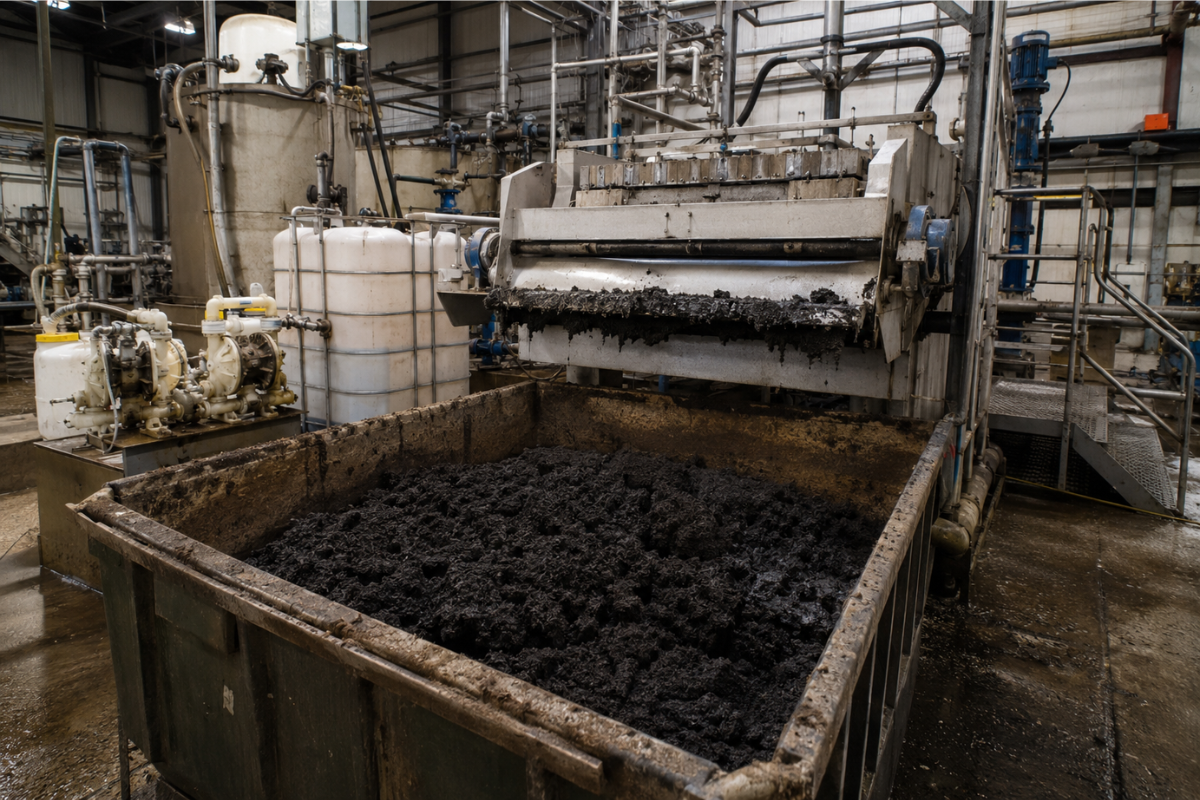
Higher organic loading almost always produces more biological sludge.
As sludge production increases, facilities experience rising costs associated with sludge hauling, polymer demand, dewatering, digestion, storage, and disposal. In many industrial wastewater systems, sludge handling eventually becomes one of the largest operational expenses within the entire treatment process.
This becomes particularly problematic for facilities dealing with:
- Lagoon solids accumulation
- Limited dewatering capacity
- Digester overload
- Rising hauling costs
- Restricted disposal options
- Limited storage capacity
Improving biological degradation efficiency throughout the treatment chain can reduce the amount of residual solids ultimately requiring disposal.
Industrial Wastewater Optimization Requires System-Level Thinking
Wastewater treatment efficiency is rarely determined by a single tank, basin, or clarifier.
Every upstream condition affects downstream performance:
- Drainage systems affect sewer loading
- Sewer conditions affect pump stations
- Pump stations affect influent stability
- Influent stability affects biological treatment
- Biological treatment affects sludge production
- Sludge quality affects digestion and dewatering
This is why many facilities begin seeing measurable operational improvements when they stop viewing wastewater treatment as isolated infrastructure and begin managing it as a connected biological system.
Facilities optimizing upstream biological conditions frequently improve:
- Treatment stability
- Odor control
- Hydraulic capacity
- Sludge reduction
- Aeration efficiency
- Energy consumption
- Maintenance frequency
without major infrastructure expansion.
Biological Optimization vs Capital Expansion
Many industrial facilities assume rising treatment costs automatically require:
- Larger aeration systems
- Additional lagoons
- Expanded clarifiers
- Mechanical dredging
- Additional sludge handling capacity
- Major plant expansion
In reality, many wastewater systems lose efficiency gradually through solids accumulation, FOG buildup, oxygen limitation, and biological instability long before true hydraulic capacity is reached.
In these situations, biological optimization can often recover significant treatment efficiency within existing infrastructure.
Facilities increasingly evaluate biological treatment strategies before committing to expensive mechanical cleanouts or major infrastructure changes. In many cases, stabilizing upstream biological conditions delays or reduces the need for costly infrastructure expansion.
Conclusion
Industrial wastewater treatment costs rarely begin at the treatment basin itself.
In many systems, inefficiencies start developing upstream through uncontrolled FOG accumulation, solids buildup, hydraulic instability, and unmanaged anaerobic activity throughout the collection network.
As these conditions worsen, treatment plants experience higher sludge production, increased aeration demand, greater odor generation, unstable influent loading, and rising operational costs throughout the treatment process.
By improving biological conditions before wastewater reaches the treatment plant, facilities can often improve treatment stability, reduce maintenance requirements, lower sludge production, and recover treatment efficiency without major infrastructure expansion.
The most effective industrial wastewater treatment strategies increasingly recognize the biological connection between every stage of the wastewater cycle.
Request a Technical Wastewater Assessment
Drylet works with industrial facilities to evaluate:
- FOG accumulation
- Sludge buildup
- Lagoon performance
- Influent variability
- Biological treatment efficiency
- Digester performance
- Odor and sulfide issues
- Wastewater system stability

FAQ
Why do upstream wastewater conditions affect treatment plant performance?
Wastewater continues undergoing biological and chemical changes throughout the collection system. FOG accumulation, anaerobic activity, solids buildup, and sewer instability all influence the influent characteristics reaching the treatment plant.
How does FOG increase industrial wastewater treatment costs?
FOG contributes to sewer blockages, scum formation, higher sludge production, increased aeration demand, odor generation, and additional maintenance throughout the wastewater system.
Can biological treatment reduce sludge production?
Yes. Improved biological degradation efficiency can reduce residual sludge production, lowering hauling, dewatering, polymer, and disposal costs.
What industries commonly experience upstream wastewater problems?
Industries commonly affected include:
- Meat processing
- Food manufacturing
- Dairy processing
- Rendering
- Breweries
- Poultry processing
- Industrial lagoon systems