Signs Your Industrial Wastewater System Is Overloaded
Signs Your Industrial Wastewater System Is Overloaded
Industrial wastewater systems rarely fail without warning. In most cases, performance declines gradually as loading conditions exceed what the system can biologically and hydraulically handle. Operators often respond to individual symptoms—adjusting chemicals, increasing sludge removal, or troubleshooting equipment—without recognizing the underlying issue: the system is overloaded.
Overloading is not always obvious. It does not necessarily present as a single failure point, but rather as a pattern of inefficiencies that compound over time. As solids accumulate, effective treatment volume decreases. As volume decreases, loading intensity increases. The result is a system that becomes progressively more unstable, expensive to operate, and difficult to control.
Request a Technical Assessment to evaluate system loading and sludge accumulation before performance declines further.
Understanding System Overload in Industrial Wastewater
An industrial wastewater system is considered overloaded when the incoming hydraulic or organic load exceeds the system’s capacity to treat it effectively. This can occur suddenly due to process changes, but more often it develops gradually as conditions shift over time.
In many facilities, the primary driver is not an increase in influent strength alone, but a loss of effective treatment capacity. As sludge accumulates along the bottom of basins or lagoons, usable volume is reduced. Even if influent conditions remain constant, the system is now operating under higher relative loading.
This distinction is critical. Operators may believe the system is performing as designed, when in reality, the design conditions no longer apply.
How Biological Sludge Reduction Works in Wastewater Lagoons
Sludge Accumulation as the First Warning Sign
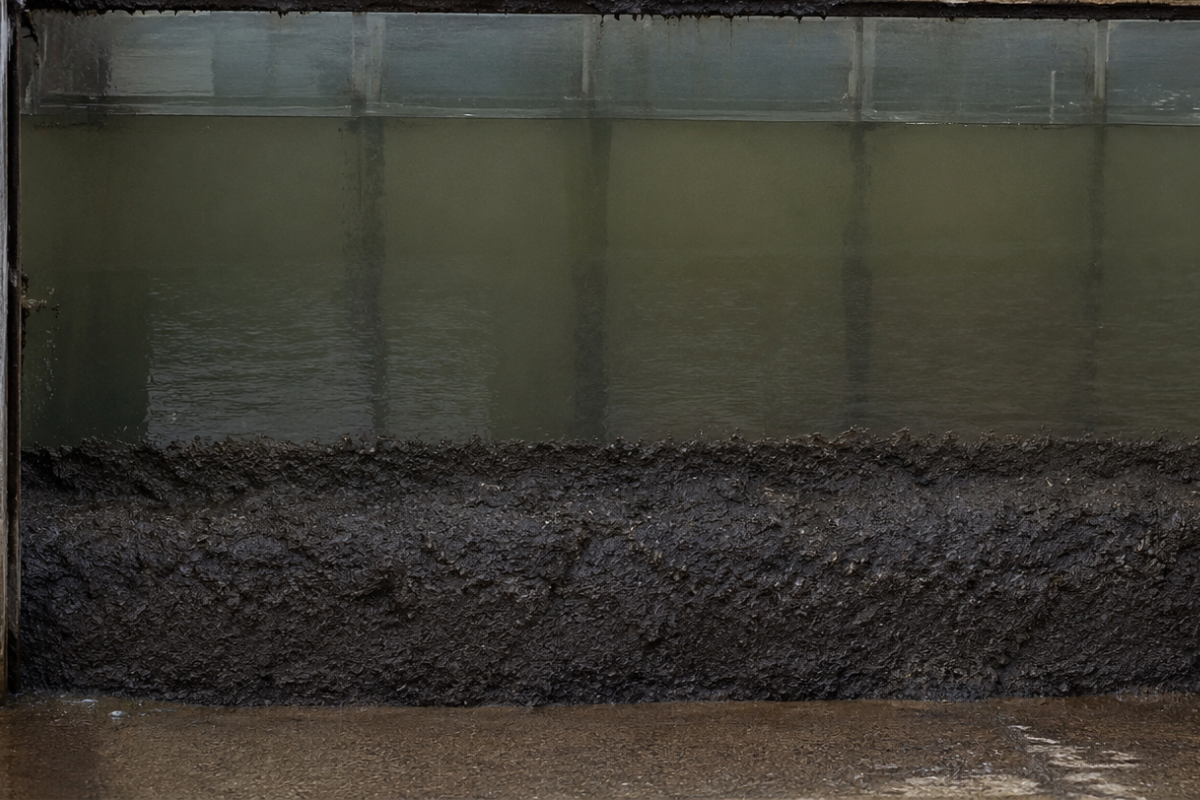
One of the earliest and most reliable indicators of overload is accelerated sludge buildup. Under balanced conditions, biological processes break down incoming solids at a rate that prevents excessive accumulation. When loading exceeds that capacity, solids begin to settle and compact faster than they can be digested.
Over time, this creates a dense sludge layer that reduces system volume and alters internal flow patterns. The impact is not always immediately visible at the surface, which is why many systems continue operating in a degraded state for extended periods.
Operators may notice:
- Sludge depth increasing faster than expected
- Reduced effectiveness of existing treatment processes
- More frequent need for sludge handling or removal
What appears to be a solids management issue is often the first clear signal of a system operating beyond its limits.
What Causes Sludge Buildup in Wastewater Lagoons
Loss of Treatment Capacity and Hydraulic Efficiency
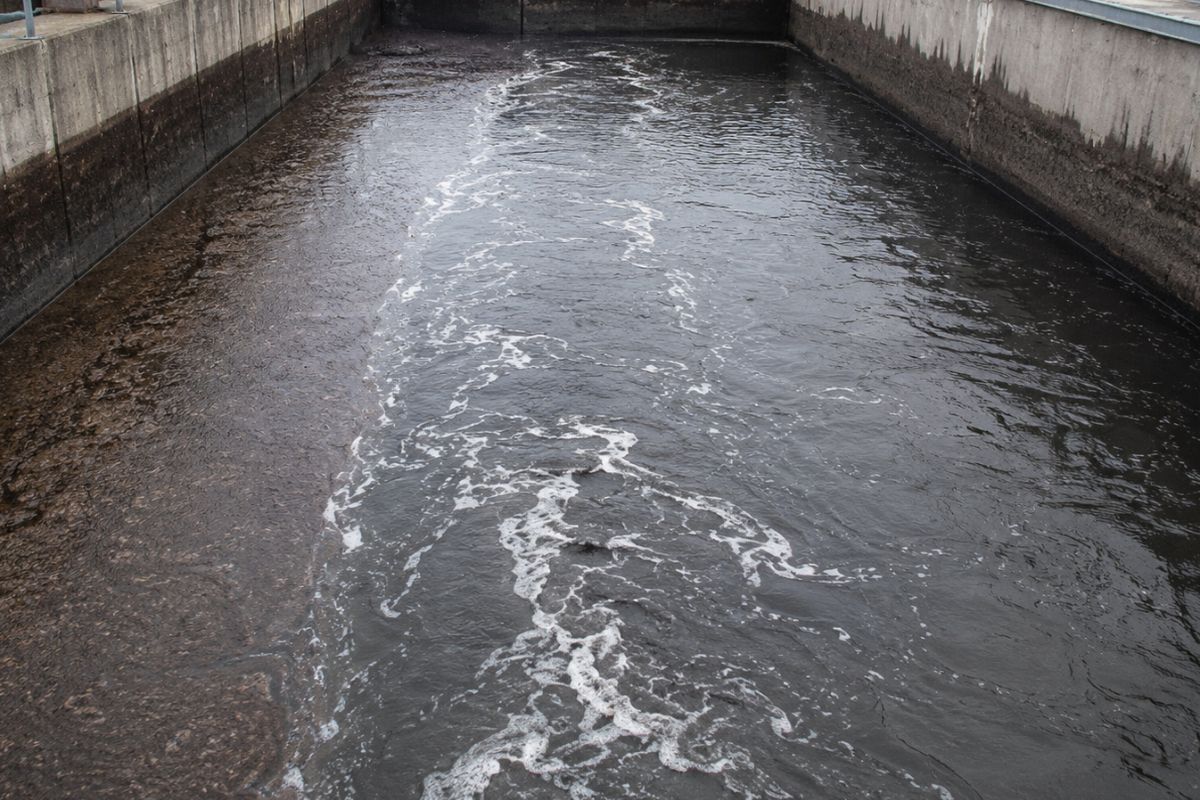
As sludge accumulates, the system’s ability to retain and properly treat wastewater declines. Retention time—one of the most important parameters in wastewater treatment—is directly impacted by available volume.
Reduced volume leads to:
- Shortened hydraulic retention time
- Increased risk of short-circuiting
- Incomplete biological treatment
Instead of flowing evenly through the system, wastewater begins to move through preferential paths, bypassing treatment zones. This reduces contact time with active biology and results in inconsistent performance.
In many cases, operators attempt to compensate through increased aeration or chemical dosing. While these adjustments may temporarily stabilize the system, they do not address the underlying loss of capacity.
Wastewater Lagoon Retention Time Explained
Rising Chemical Demand and Operational Intervention
As biological treatment efficiency declines, systems require more external support to maintain compliance. This is often one of the most noticeable operational changes, particularly in industrial facilities with tight discharge limits.
Operators may see gradual increases in:
- Polymer usage for solids separation
- Coagulants and flocculants
- Disinfection chemicals such as chlorine or bleach
These increases are rarely caused by a single event. Instead, they reflect a system that is compensating for reduced biological performance and higher suspended solids levels.
The key issue is not the chemical demand itself, but what it represents: a system that is no longer self-regulating.
Increasing Sludge Handling and Disposal Costs
As overload conditions persist, the physical burden of excess solids becomes more apparent. Sludge must be removed more frequently, dewatered more aggressively, and transported offsite at increasing cost.
Facilities often respond by scaling up mechanical solutions such as dredging or hauling. While necessary in some cases, these approaches address accumulated material rather than the biological imbalance causing it.
Common cost-related indicators include:
- More frequent sludge hauling
- Reduced dewatering efficiency
- Increased labor and equipment usage
These trends tend to accelerate over time, particularly if underlying loading conditions remain unchanged.
Cost of Dredging a Wastewater Lagoon (Full Breakdown + Hidden Costs)
Inconsistent Effluent Quality and Compliance Risk
An overloaded system rarely produces stable effluent. Instead, performance becomes increasingly variable, particularly under changing conditions such as rainfall events or production fluctuations.
This variability can include:
- Elevated or fluctuating BOD and COD
- Increased total suspended solids (TSS)
- Difficulty maintaining permit compliance
What makes this challenging is that the system may appear to recover temporarily, masking the severity of the issue. Without a clear understanding of loading conditions and system capacity, operators may attribute these fluctuations to external factors rather than systemic overload.
Surface Conditions, Odors, and Biological Imbalance

As treatment processes become imbalanced, visible and sensory indicators often emerge. These are typically late-stage signs, but they provide valuable insight into system health.
Operators may observe:
- Persistent odors indicating anaerobic conditions
- Foam, scum, or FOG accumulation at the surface
- Irregular gas production
These conditions suggest that biological processes are no longer functioning as intended, often due to excessive loading or insufficient oxygen distribution in aerated systems.
Why Overload Conditions Are Often Misdiagnosed
One of the most common challenges in industrial wastewater management is misidentifying the root cause of performance issues. Because overload develops gradually, it is often mistaken for:
- Equipment inefficiencies
- Chemical dosing problems
- Seasonal variation
In reality, these are secondary effects. The primary issue is that the system is operating outside of its design capacity—either due to increased loading, reduced volume, or both.
Without addressing this, adjustments made at the operational level tend to produce only short-term improvements.
Confirming Whether a System Is Overloaded
Identifying overload requires a data-driven approach. Visual inspection alone is not sufficient, particularly in systems where sludge accumulation is not immediately apparent.
A proper evaluation typically includes:
- Sludge depth measurement or mapping
- Analysis of influent loading and flow variability
- Review of retention time relative to design conditions
- Effluent performance trends over time
This type of assessment provides a clear picture of whether the system is operating within its intended capacity.
How to Measure Sludge Depth in Wastewater Lagoons (And Why Guesswork Fails)
Restoring Performance Without Expanding Infrastructure
A common assumption is that overloaded systems require expansion. While this may be necessary in some cases, many facilities can restore performance by addressing the underlying causes of overload.
This often involves:
- Reducing accumulated sludge to recover lost volume
- Improving biological activity to increase digestion rates
- Stabilizing system conditions to prevent future buildup
When addressed early, these actions can significantly extend the life of existing infrastructure and reduce long-term operating costs.
Conclusion
Industrial wastewater systems rarely reach overload conditions overnight. The process is gradual, driven by increasing solids, declining capacity, and subtle shifts in system behavior that are easy to overlook.
Recognizing the warning signs early—particularly sludge accumulation, reduced retention time, rising costs, and inconsistent performance—allows operators to take corrective action before the system reaches a critical point.

FAQ
How do you know if a wastewater system is overloaded?
Common indicators include rapid sludge buildup, reduced treatment capacity, increased chemical usage, and inconsistent effluent quality.
What happens when a wastewater system is overloaded?
Treatment efficiency declines, solids accumulate, and the system becomes more expensive and difficult to operate while increasing compliance risk.
Can an overloaded wastewater system be fixed without expansion?
In many cases, yes. Restoring biological balance and reducing sludge accumulation can recover lost capacity.
What is the most common cause of overload in industrial wastewater systems?
Excess solids loading combined with reduced effective volume from sludge accumulation is one of the most common causes.