How to Measure Sludge Depth in Wastewater Lagoons (And Why Guesswork Fails)
The Hidden Risk of Unmeasured Sludge Accumulation
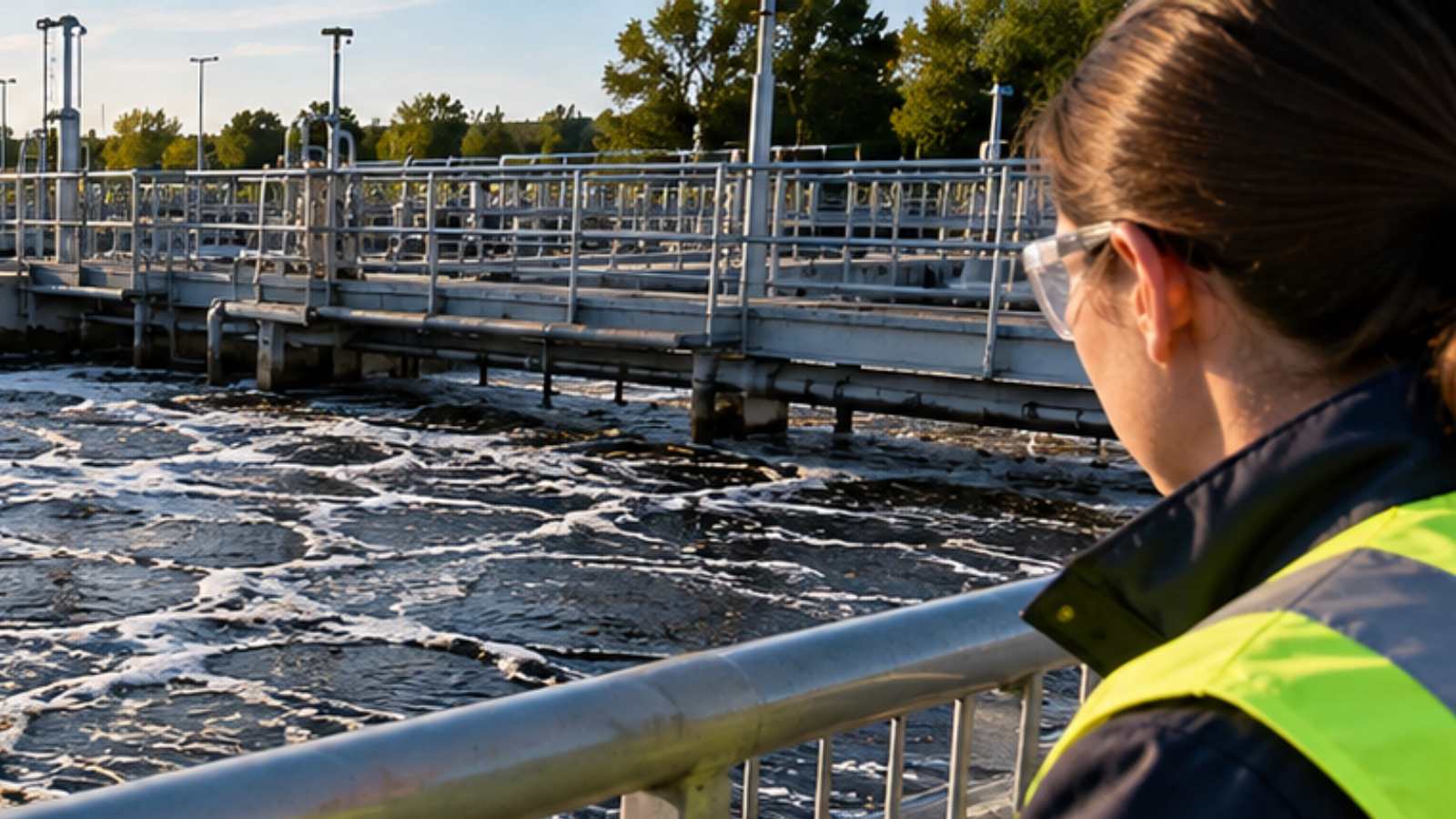
Wastewater lagoons are often perceived as low-maintenance treatment systems. With few mechanical components and large hydraulic volume, they can operate for years without visible signs of distress.
However, sludge accumulation is gradual and non-uniform. Effective treatment volume can decline significantly before surface indicators reveal a problem.
Without quantitative sludge depth measurement, facilities risk:
- Reduced hydraulic retention time (HRT)
- Increased organic loading stress
- Anaerobic short-circuiting
- Odor events
- Accelerated dredging timelines
- Regulatory compliance pressure
Lagoon performance cannot be accurately assessed by surface observation alone. Measurement is foundational to responsible lagoon management.
Why Sludge Depth Measurement Matters
Sludge accumulation reduces the effective treatment volume of a lagoon. As solids settle and compact over time, the active biological zone decreases.
This reduction directly affects:
- Organic loading rate
- Volatile solids (VS) destruction efficiency
- Hydraulic buffering capacity
- Nutrient removal performance
For example, if a lagoon loses 18–24 inches of effective depth across a large surface area, total treatment volume can decline by 10–20% or more. This reduction may not be visually apparent but can materially impact performance stability.
Seasonal factors further compound accumulation. As discussed in our analysis of winter wastewater lagoon performance and sludge accumulation, lower temperatures reduce biological reaction rates, accelerating seasonal sludge buildup.
Without measurement, this volume loss remains undetected until operational instability emerges.
Common Sludge Measurement Methods
Sludge Judge (Manual Core Sampler)
The Sludge Judge is a clear tube used to extract a vertical core sample from the lagoon.
Advantages:
- Low cost
- Simple to operate
- Minimal equipment required
Limitations:
- Limited spatial coverage
- Operator-dependent accuracy
- Difficult in deep or wind-affected lagoons
- Not suitable for full-volume mapping
Manual sampling provides point data, but does not offer comprehensive solids distribution insight across large basins.
Weighted Line or Survey Rod
Some facilities use weighted lines or rods to estimate sludge depth.
Limitations include:
- Difficulty distinguishing compacted sludge from semi-solid layers
- Inconsistent readings
- No digital documentation
- No volumetric calculation capability
These approaches rely heavily on interpretation and cannot provide defensible solids volume data for engineering or capital planning decisions.
Sonar-Based Sludge Mapping
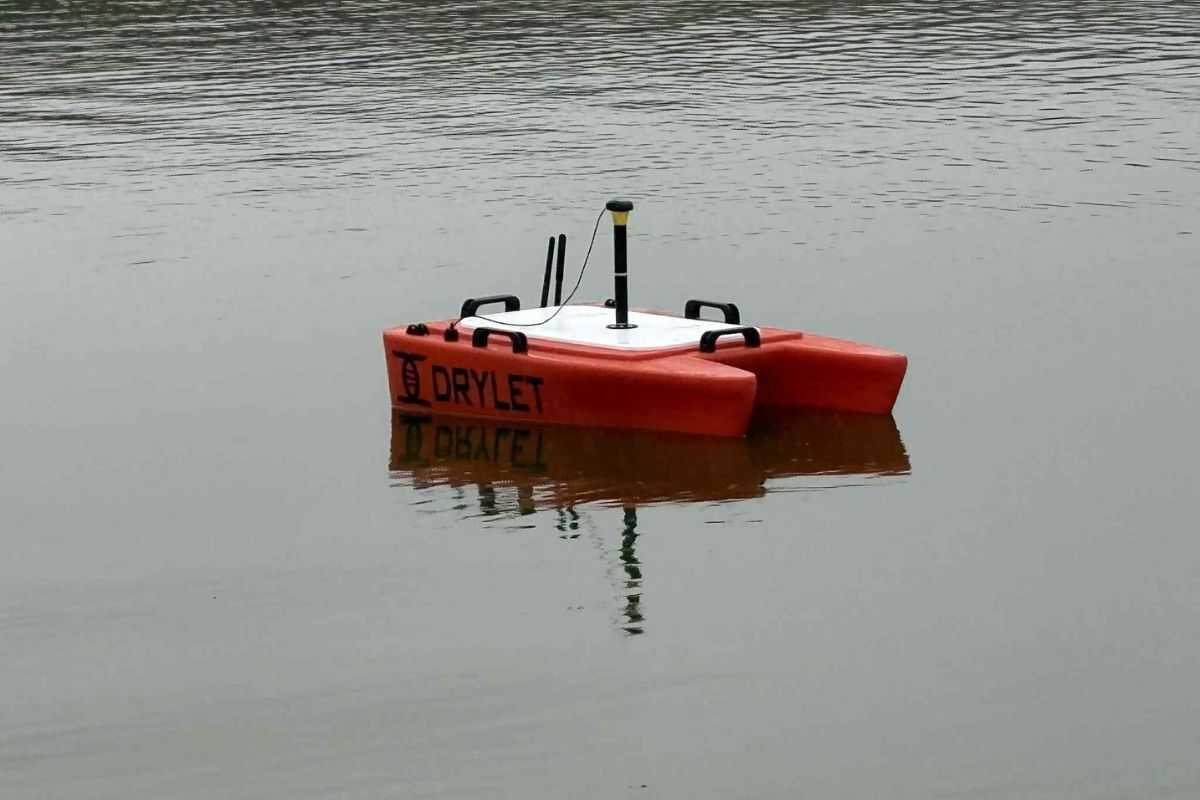
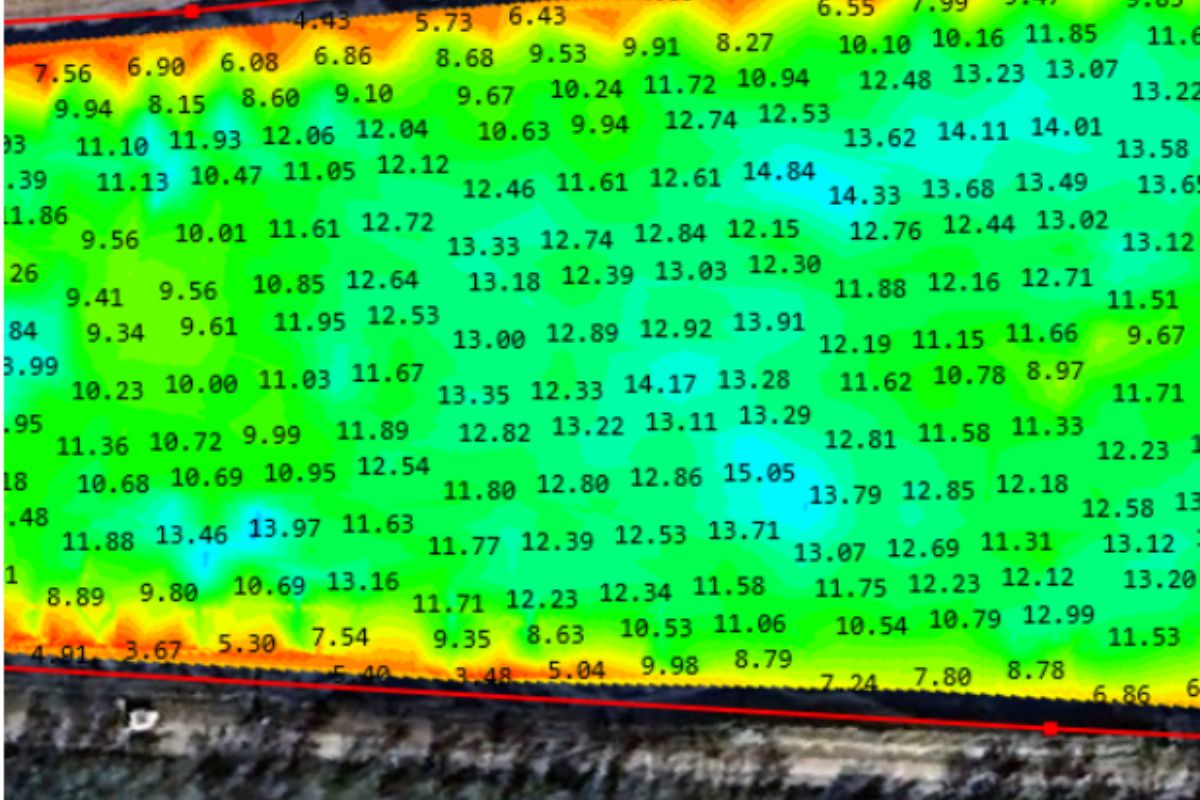
Hydroacoustic (sonar) sludge mapping provides comprehensive lagoon profiling. Drylet’s lagoon solids mapping services utilize GIS-based hydroacoustic profiling to quantify sludge blanket depth and total accumulated solids volume.

This method uses acoustic signals to measure:
- Sludge blanket depth
- Soft vs. compacted solids differentiation
- Spatial distribution of accumulation
- Total sludge volume
Advantages include:
- Full lagoon coverage
- GIS-based mapping
- Repeatable measurements
- Quantitative volume calculations
- Data suitable for capital planning
Unlike point sampling methods, sonar mapping produces a measurable solids profile across the entire lagoon footprint. This allows operators to move from estimation to data-driven decision making.
Why Guesswork Fails
Several assumptions commonly delay sludge measurement:
- “The lagoon looks fine.”
- “We dredged within the last decade.”
- “There are no odor complaints.”
These are unreliable indicators of solids accumulation.
Sludge buildup is typically:
- Gradual
- Non-uniform
- Concentrated in hydraulic dead zones
- Invisible from surface observation
Localized solids hot spots can reduce effective treatment volume without affecting the entire basin uniformly. Without mapping, these areas remain undetected. Operational stability may appear normal until a hydraulic or seasonal stress event reveals underlying capacity loss.
What Proper Sludge Mapping Reveals
Quantitative solids profiling provides insight into:
- Sludge blanket thickness variability
- Solids concentration gradients
- Flow path disruption
- Dead zones and short-circuiting
- Remaining effective treatment volume
This information supports:
- Biological sludge reduction targeting
- Dredging timeline projections
- Capital expansion planning
- Compliance risk mitigation
Volume-based measurement allows facilities to compare:
- Biological reduction strategies
- Mechanical dredging costs
- Long-term capital expenditure projections
Without measurement, these decisions are made reactively.
When Should Lagoons Be Measured?
Recommended measurement intervals include:
- Every 1–5 years for baseline assessment
- Following seasonal instability
- Prior to dredging decisions
- Before capital expansion planning
- After prolonged cold weather cycles
Measurement is particularly valuable following winter months, when reduced reaction kinetics and settling dynamics contribute to accelerated seasonal accumulation. Routine solids profiling prevents capacity surprises.
Strategic Integration with Biological Sludge Reduction
Sludge measurement informs intervention.
Without quantifying accumulation:
- Biological treatment programs cannot be targeted effectively
- Application rates cannot be optimized
- Performance outcomes cannot be measured objectively
Effective lagoon management integrates:
- Sludge depth mapping
- Targeted biological solids reduction
- Post-treatment measurement verification
This data-driven framework improves digestion efficiency while reducing reliance on mechanical dredging.
Effective lagoon management integrates targeted biological sludge reduction programs, quantitative sludge mapping, and post-treatment verification.
Long-Term Cost Implications of Not Measuring
Failure to measure sludge depth can result in:
- Accelerated dredging frequency
- Increased hauling and disposal costs
- Reduced lagoon lifespan
- Regulatory non-compliance exposure
- Premature capital expansion requirements
Mechanical dredging projects can range from hundreds of thousands to millions of dollars depending on lagoon size and solids volume.
Proactive measurement enables facilities to evaluate lower-cost biological optimization strategies before capacity loss becomes critical.
Facilities that conduct measurement prior to intervention often avoid premature dredging through targeted treatment strategies, as demonstrated in documented municipal lagoon sludge reduction case studies.
Conclusion
Sludge depth measurement transforms lagoon management from reactive to predictive.
Facilities relying on estimation often discover solids accumulation only after performance instability emerges. By quantifying sludge blanket depth and total solids volume, operators gain the data necessary to make informed operational and financial decisions.
Lagoon systems are long-term infrastructure assets. Their lifespan and stability depend on understanding what lies beneath the surface. Learn How to Reduce Sludge in Wastewater Lagoons.
For facilities evaluating lagoon capacity, solids accumulation trends, or biological optimization strategies, Drylet provides data-driven lagoon solids mapping support and measurable sludge reduction programs.
Subscribe to the Drylet technical newsletter, Systems and Solids for continued insights into lagoon performance management, seasonal optimization, and long-term sludge reduction strategies.