Meat Processing Wastewater Treatment Cost: What Drives Operating Expenses Higher?

Wastewater treatment costs in meat processing facilities rarely increase because of a single operational failure. In most cases, costs rise gradually as solids accumulate throughout the treatment system and biological efficiency begins to decline. Facilities often first notice the problem through secondary symptoms such as rising sludge hauling frequency, increased polymer demand, unstable dissolved oxygen levels, odor complaints, or declining lagoon capacity. Over time, those symptoms become increasingly expensive to manage individually.
For meat processors, rendering facilities, poultry plants, and protein processing operations, wastewater treatment can become one of the largest ongoing operational expenses in the facility if solids accumulation is not controlled early. Unlike many industrial waste streams, meat processing wastewater contains extremely high concentrations of biodegradable organics, including fats, oils, grease, blood, proteins, and suspended solids. These materials create unusually high biochemical oxygen demand (BOD) and chemical oxygen demand (COD), placing continuous stress on biological treatment systems.
As treatment systems age and solids loading increases, facilities often respond reactively by increasing hauling, chemical usage, aeration runtime, or mechanical maintenance. While these actions may temporarily stabilize operations, they do not always address the underlying cause of the increasing cost structure: incomplete digestion of accumulated organic solids.
Talk to a Drylet Wastewater Specialist
Facilities experiencing rising sludge hauling costs, lagoon capacity loss, DAF overload, or unstable biological treatment performance can request a technical assessment of their wastewater system.
Why Meat Processing Wastewater Is Expensive to Treat
Meat processing wastewater is considered one of the most difficult industrial waste streams to manage biologically because of its combination of high organic loading and continuous variability. Slaughtering, rendering, trimming, washdown operations, packaging lines, and byproduct handling all contribute significant organic material to the wastewater stream throughout production hours.
Unlike municipal wastewater, which tends to be relatively diluted and somewhat predictable, protein processing wastewater often contains dense concentrations of emulsified fats, suspended proteins, dissolved organics, and settleable solids. The resulting loading conditions create persistent stress on dissolved oxygen demand, solids separation systems, and downstream biological digestion processes.
DAF systems are commonly installed to remove fats and suspended solids prior to biological treatment, but these systems also concentrate large quantities of organic sludge that must still be managed. As solids loading continues increasing, downstream lagoons, digesters, or aeration basins may begin accumulating residual sludge faster than the system can biologically digest it.
This imbalance between solids accumulation and biological digestion capacity is one of the primary drivers behind escalating wastewater treatment costs in meat processing facilities.
The Operational Costs Most Facilities Underestimate
Many facilities initially focus on visible disposal expenses such as hauling invoices or dredging costs. However, some of the largest long-term operational costs develop indirectly as treatment efficiency declines.
Sludge Hauling and Disposal
Sludge hauling frequency often increases gradually enough that facilities normalize the expense over time. As solids accumulate in lagoons, digesters, or clarifiers, available treatment volume decreases and residual sludge production rises. Facilities may compensate by increasing pumping frequency or scheduling additional hauling events simply to maintain operational stability.
The financial impact extends beyond transportation and disposal fees. Increased hauling activity also introduces additional labor requirements, maintenance coordination, equipment wear, and operational downtime. In facilities with limited storage or equalization capacity, emergency pumping events may further disrupt production schedules and biological stability. Learn more in our article on Reducing Sludge Hauling Cost.
DAF Solids Management
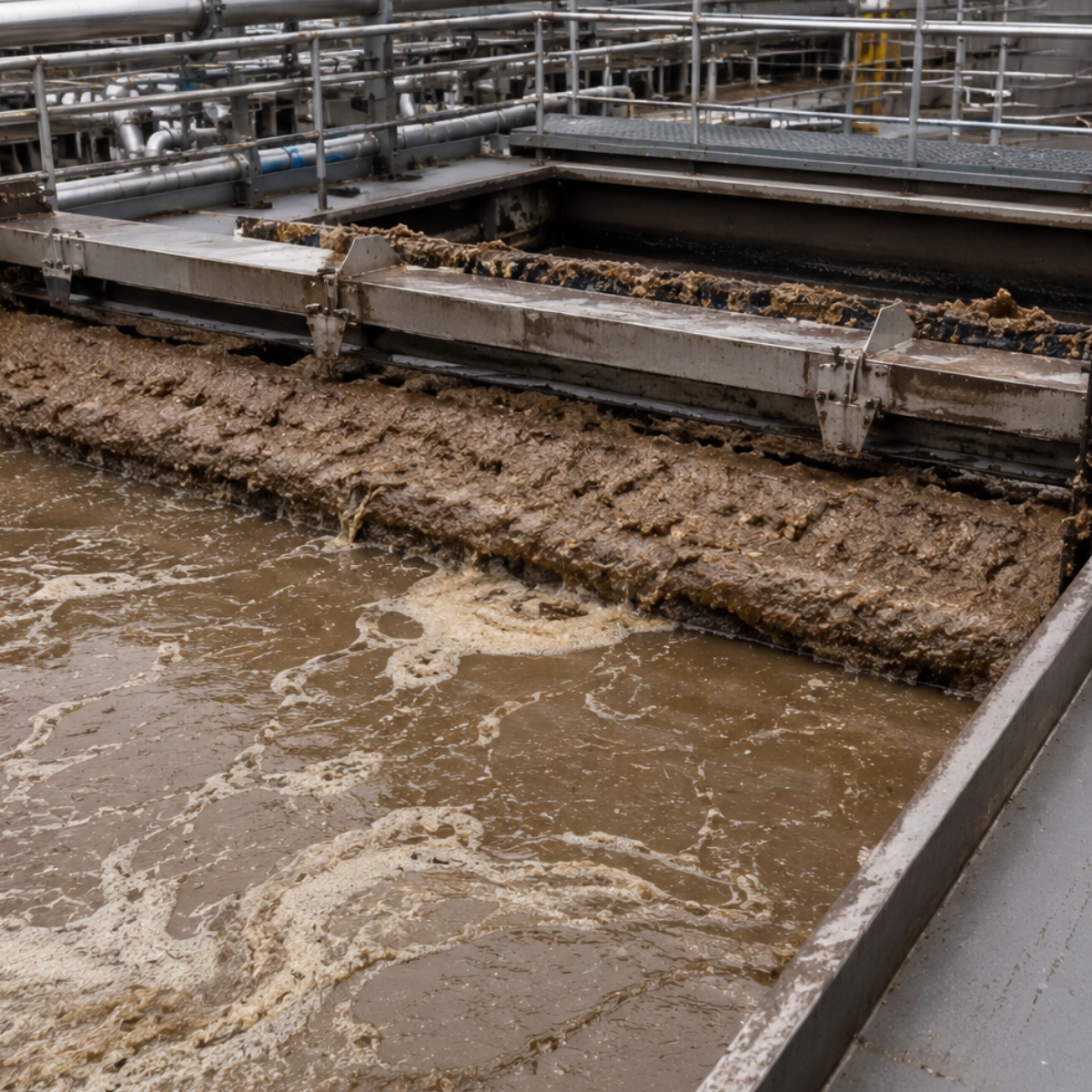
Dissolved air flotation systems are highly effective at removing fats, oils, grease, and suspended solids from meat processing wastewater. However, the efficiency of solids capture can create its own operational burden when sludge production rates begin increasing faster than downstream management capacity.
As organic loading rises, facilities commonly experience increasing polymer demand, greater sludge dewatering requirements, higher disposal volumes, and more persistent odor generation. In some systems, operators improve DAF performance while unintentionally overwhelming downstream biological treatment with concentrated residual solids.
This is especially common in facilities processing high-fat or high-protein waste streams where organic loading variability fluctuates significantly during production cycles. We talk about this more in Why FOG (Fats, Oils, and Grease) Disrupts Wastewater Treatment Systems.
Aeration and Energy Consumption
Aeration demand is one of the most significant operating costs in industrial wastewater treatment. As sludge accumulates within lagoons or aeration basins, oxygen transfer efficiency begins declining due to reduced effective volume, poor mixing characteristics, and increasing oxygen demand from concentrated organics.
Operators frequently compensate by extending blower runtime, increasing dissolved oxygen setpoints, or operating supplemental aeration equipment. While these adjustments may temporarily maintain treatment performance, they also increase electrical consumption substantially.
In overloaded systems, additional aeration alone may not restore treatment stability because the underlying issue is often insufficient solids digestion rather than inadequate oxygen supply.
How Sludge Accumulation Alters Treatment Performance

One of the most misunderstood aspects of industrial wastewater treatment is how dramatically accumulated solids can alter biological performance over time. As sludge layers thicken, the hydraulic and biological characteristics of the system begin changing simultaneously.
Available treatment volume decreases, retention time shortens, and organic loading rates effectively increase even when influent flow remains unchanged. In lagoons, accumulated sludge may create short-circuiting flow paths that reduce treatment efficiency and increase suspended solids carryover. In aerated systems, excessive solids accumulation can interfere with oxygen transfer and mixing efficiency, further reducing biological activity.
Facilities often interpret these symptoms as isolated mechanical or operational issues when they are actually interconnected consequences of progressive solids overload.
This pattern is particularly common in meat processing wastewater systems because of the unusually high concentration of biodegradable solids entering treatment every day.
Lagoon Capacity Loss and Long-Term Cost Escalation
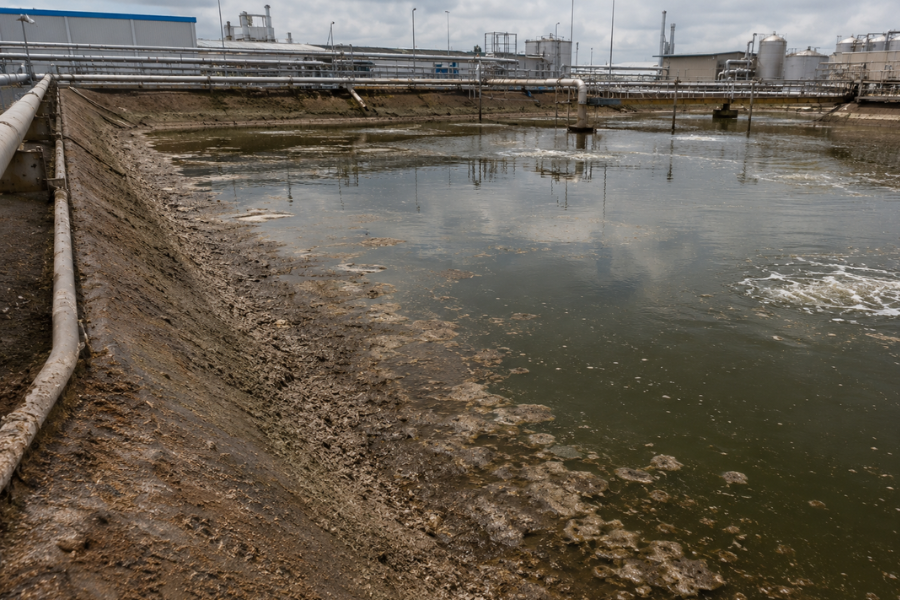
Many meat processing facilities rely on anaerobic or facultative lagoons for equalization, digestion, polishing, or long-term solids storage. While lagoons can provide highly effective treatment when properly maintained, accumulated sludge gradually reduces the available treatment volume over time.
As capacity declines, lagoons lose hydraulic retention time and become less capable of absorbing production variability. This can lead to increased odor generation, unstable effluent quality, higher suspended solids concentrations, and declining digestion performance.
Facilities frequently do not recognize the extent of capacity loss until dredging becomes necessary or operational performance deteriorates significantly. By that point, treatment costs may already have been increasing for years through higher aeration demand, increased hauling frequency, and ongoing maintenance intervention.
Here are some common Signs Your Wastewater Lagoon Is Losing Treatment Capacity
Mechanical Removal vs Biological Solids Reduction
When sludge accumulation becomes severe, facilities often evaluate dredging, excavation, or mechanical cleanout projects. These approaches can immediately restore treatment volume, but they are also associated with substantial cost, downtime, and operational disruption.
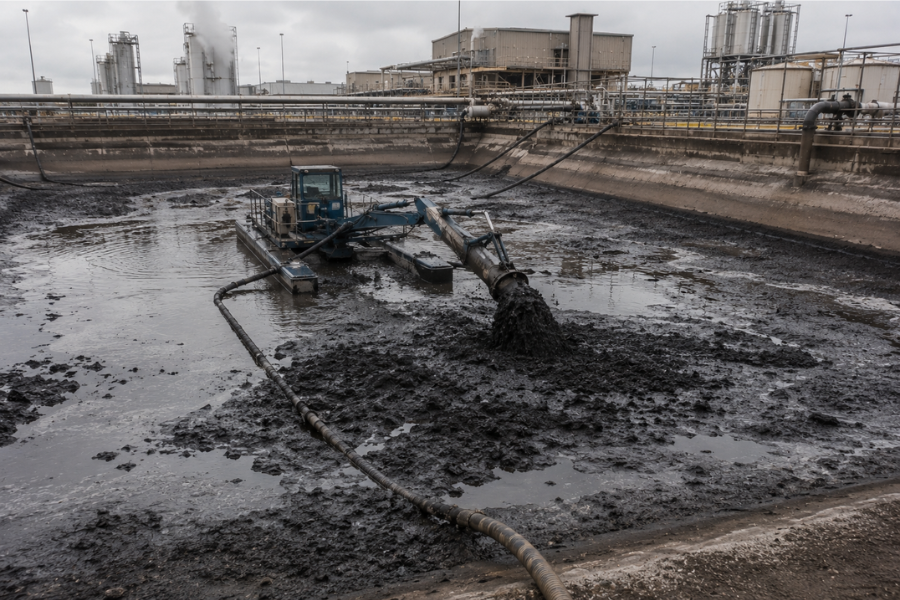
In anaerobic systems, aggressive solids removal may also disturb established biological populations responsible for digestion activity. This can temporarily reduce treatment efficiency while the microbial ecosystem reestablishes itself.
For this reason, many facilities are increasingly evaluating biological sludge reduction strategies designed to accelerate digestion of accumulated organic solids while systems remain operational. The objective is not simply to remove sludge once, but to improve the long-term balance between solids loading and biological digestion capacity.
Internal Link Opportunity: Alternatives to Lagoon Dredging
Biological Optimization and Cost Reduction
Modern biological treatment strategies are increasingly focused on improving digestion efficiency within existing infrastructure rather than relying entirely on capital expansion or reactive maintenance.
In properly matched applications, enhanced biological activity may help reduce sludge accumulation rates, improve flowability, stabilize lagoon performance, reduce odor generation, and lower hauling frequency. Because meat processing wastewater contains large amounts of biodegradable organic material, systems with insufficient biological activity often retain a significant amount of partially digested solids.
Improving digestion efficiency can therefore influence multiple operational costs simultaneously, including hauling, aeration, maintenance, and lagoon capacity management.
This is one reason many facilities are evaluating lower-CAPEX optimization approaches before committing to major infrastructure expansion projects.
Warning Signs That Wastewater Costs Are Being Driven by Solids Accumulation
Facilities experiencing increasing wastewater treatment costs often observe several operational symptoms occurring simultaneously. Rising sludge hauling frequency, persistent odor generation, unstable dissolved oxygen levels, increasing polymer demand, fat cap accumulation, declining digester performance, and more frequent maintenance interruptions are commonly interconnected indicators of solids overload within the treatment system.
In many cases, operators focus on controlling each symptom individually rather than identifying the broader biological imbalance driving the instability. By the time these conditions become severe enough to require emergency intervention, treatment costs may already have escalated substantially.
Understanding how solids accumulation affects biological treatment efficiency is critical for identifying the true source of long-term operating cost increases.
Why Meat Processing Facilities Are Prioritizing Lower-CAPEX Optimization
Large wastewater infrastructure upgrades can require millions of dollars in capital investment, extended construction timelines, and significant operational disruption. As a result, many meat processors are prioritizing strategies that improve treatment efficiency within existing infrastructure before pursuing expansion projects.
This has increased interest in biological optimization approaches designed to improve digestion performance, extend lagoon life, reduce sludge accumulation rates, and stabilize treatment systems without major structural modifications.
For facilities dealing with rising sludge management costs, the ability to improve treatment efficiency without constructing additional lagoons or expanding mechanical treatment capacity can provide significant operational and financial advantages.
Conclusion
Meat processing wastewater treatment costs are typically driven less by a single catastrophic event and more by gradual biological and hydraulic deterioration caused by excessive solids accumulation over time.
As sludge accumulates throughout the treatment system, facilities often experience declining treatment efficiency, increasing aeration demand, higher hauling frequency, greater maintenance requirements, and more operational instability. These costs compound progressively as biological digestion capacity falls behind incoming solids loading.
Facilities that address solids management proactively are often better positioned to stabilize long-term operating costs, improve treatment reliability, and delay expensive capital expansion projects.
For meat processors, rendering operations, and protein processing facilities, understanding the relationship between solids digestion, hydraulic capacity, and operational cost is becoming increasingly important as treatment systems face higher loading demands and tighter compliance expectations.
Request a Technical Assessment
Drylet works with industrial wastewater facilities, rendering operations, protein processors, and food production systems to help reduce sludge accumulation, improve lagoon performance, and stabilize biological treatment systems.
FAQ
Why is meat processing wastewater difficult to treat?
Meat processing wastewater contains extremely high concentrations of biodegradable organics, including fats, proteins, blood, suspended solids, and grease. These materials create high BOD and COD loading that places significant stress on biological treatment systems.
What drives wastewater treatment costs higher in meat processing facilities?
The largest operational costs are commonly associated with sludge hauling, DAF sludge management, aeration energy demand, lagoon maintenance, odor control, polymer usage, and mechanical cleaning.
How does sludge accumulation affect wastewater treatment performance?
As sludge accumulates, treatment volume decreases and retention time shortens. This increases organic loading rates, reduces oxygen transfer efficiency, destabilizes biological treatment, and increases operational costs.
Can biological treatment reduce sludge hauling frequency?
In properly matched systems, biological sludge reduction programs may help improve digestion efficiency and reduce the rate of organic solids accumulation, potentially lowering hauling frequency over time.
What industries experience wastewater challenges similar to meat processing?
Rendering facilities, poultry processors, dairy operations, food manufacturing plants, and agricultural wastewater systems commonly experience similar high-strength organic loading conditions.