Biological vs Chemical Treatment in Industrial Wastewater: What Actually Works Long-Term

Industrial wastewater operators are under constant pressure to maintain compliance, control operating costs, reduce sludge accumulation, and keep treatment systems stable under changing loading conditions.
For many facilities, the default response to wastewater problems has historically been chemical treatment. Coagulants, oxidizers, pH adjusters, defoamers, and odor-control chemicals can often produce fast visible changes. But over time, many industrial operators discover that chemical-heavy treatment programs frequently create additional operational costs, increased sludge production, and recurring instability.
This is why more industrial facilities are shifting toward biological treatment strategies designed to improve the actual digestion and breakdown of organic waste rather than simply reacting to symptoms.
The question is no longer whether chemicals have a role in wastewater treatment. They do.
The real question is:
What approach actually improves long-term wastewater system performance, lowers total operating cost, and reduces solids accumulation over time?
Request a Wastewater System Evaluation
Facilities dealing with sludge accumulation, rising hauling costs, odor issues, FOG buildup, or unstable lagoon performance may benefit from a biological treatment assessment.
Request a Technical Assessment
Understanding the Difference Between Biological and Chemical Treatment
Biological treatment and chemical treatment approach wastewater problems very differently.
Chemical treatment typically attempts to neutralize, separate, oxidize, precipitate, or suppress contaminants.
Biological treatment focuses on accelerating the natural breakdown of organic waste using microbial activity.
In industrial wastewater systems, these differences become extremely important over time because industrial facilities often generate:
- High organic loading
- FOG (fats, oils, and grease)
- Proteins and carbohydrates
- Suspended solids
- Sludge accumulation
- Variable influent conditions
- Seasonal loading swings
- High COD and BOD concentrations
The more organic material entering the system, the more critical digestion efficiency becomes.
Facilities that rely primarily on chemical correction often continue accumulating solids while masking the operational symptoms temporarily.
Facilities focused on biological digestion improvement are typically addressing the root cause of long-term solids buildup.
For facilities already struggling with sludge accumulation, this becomes especially important because untreated solids eventually reduce retention time, increase hauling frequency, and compromise treatment performance.
Where Chemical Treatment Works Well
Chemical treatment absolutely has a place in industrial wastewater operations.
Many systems require chemicals for:
- pH adjustment
- Nutrient balancing
- Phosphorus removal
- Metals precipitation
- Disinfection
- Polymer-assisted dewatering
- Emergency upset response
- Foam suppression
Chemical treatment is often valuable for immediate operational control.
For example, coagulants and flocculants can improve suspended solids separation in DAF systems. Oxidizers may temporarily reduce odors. Caustics and acids can rapidly stabilize pH during process swings.
These tools can be operationally necessary.
The problem occurs when facilities rely on chemicals as the primary strategy for managing biological waste accumulation.
In many industrial systems, chemical programs can unintentionally increase sludge generation by converting dissolved material into additional solids that still require handling, storage, hauling, or disposal.
This is one reason many operators experience rising sludge hauling costs even while increasing chemical usage.
Why Biological Treatment Often Performs Better Long-Term

Industrial wastewater is fundamentally a biological problem.
Most industrial wastewater streams contain biodegradable organic material. The challenge is whether the system can digest that material efficiently enough to prevent accumulation.
Biological treatment improves the system’s ability to break down organics naturally.
Instead of transferring pollutants from one form to another, biological digestion converts organics into simpler end products such as:
- Carbon dioxide
- Water
- Stable biomass
- Methane (in anaerobic systems)
When biological treatment is functioning properly, facilities often see improvements in:
- Sludge reduction
- Lagoon capacity recovery
- Odor reduction
- FOG digestion
- Reduced hauling frequency
- Improved oxygen transfer
- More stable treatment performance
- Reduced chemical dependency
The long-term operational impact can be significant because improved digestion reduces accumulation rates inside the treatment system itself.
Rather than continuously reacting to solids buildup, operators begin slowing the actual rate of accumulation.
The Problem With “Shock and Kill” Chemical Programs
One of the most common long-term issues in industrial wastewater treatment is overusing aggressive chemical programs that disrupt biological activity.
Many oxidizers and disinfecting chemistries can suppress or damage beneficial bacteria populations when improperly applied.
This creates a cycle where:
- Biological performance weakens
- Solids accumulate faster
- Odors worsen
- Operators increase chemical usage
- Biological digestion declines further
Over time, the system becomes increasingly dependent on reactive chemical correction.
This is especially common in systems experiencing:
- Persistent FOG accumulation
- Lagoon sludge buildup
- Organic overloading
- Poor digestion
- Odor complaints
- Foam formation
- Reduced retention time
In many cases, operators are treating symptoms instead of improving digestion efficiency.
Signs Your Industrial Wastewater System Is Overloaded
Biological Treatment and Sludge Reduction
One of the biggest long-term operational advantages of biological treatment is sludge reduction.
Sludge handling is one of the largest ongoing costs in industrial wastewater operations.
As solids accumulate, facilities often face:
- Increased hauling costs
- Reduced lagoon volume
- Reduced hydraulic retention time
- Aeration inefficiency
- Odor generation
- Increased downtime
- More frequent cleanouts
- Expensive dredging projects
Biological treatment targets the underlying digestion process responsible for solids accumulation.
In properly designed biological programs, bacteria continue consuming accumulated organic solids over time instead of allowing them to compact and build up indefinitely.
This can dramatically extend the operational lifespan of lagoons and basins.
Some facilities have used biological treatment to significantly delay or reduce the need for mechanical dredging.
Biological Treatment in High-Strength Industrial Wastewater
High-strength industrial wastewater systems are often ideal candidates for biological treatment optimization.
Industries commonly dealing with high organic loading include:
- Meat processing
- Rendering
- Food manufacturing
- Dairy processing
- Beverage production
- Pulp and paper
- Ethanol production
- Agricultural processing
These systems generate wastewater streams rich in biodegradable organics.
When digestion efficiency falls behind loading rates, solids and FOG begin accumulating rapidly.
Biological treatment programs designed specifically for industrial wastewater can help improve digestion capacity without requiring major infrastructure expansion.
This becomes increasingly important as facilities attempt to avoid:
- New lagoon construction
- Expanded aeration systems
- Additional sludge storage
- Frequent hauling
- Capital-intensive retrofits
For many operators, improving biological efficiency becomes one of the few scalable ways to increase treatment capacity without major construction costs.
Why Carrier-Based Biological Technology Matters
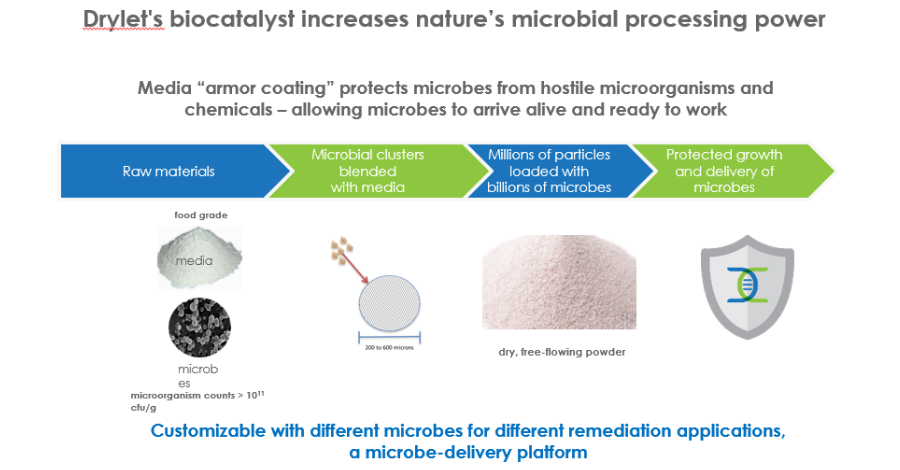
Not all biological treatment products perform the same way.
One major challenge in industrial wastewater systems is delivering bacteria effectively into sludge layers and high-solids environments.
Many traditional bacterial products struggle because organisms remain suspended in the water column rather than reaching concentrated sludge deposits.
Carrier-based biological technologies are designed differently.
Drylet’s patented porous silica carrier technology helps transport bacteria directly into sludge deposits where digestion is needed most. This improves contact between bacteria and accumulated organic solids while helping protect microbial populations during application.
Unlike simple liquid bacterial additives, carrier-based systems are specifically designed for long-term biological digestion improvement in difficult industrial environments.
This becomes especially important in:
- Anaerobic lagoons
- Covered digesters
- High-solids lagoons
- FOG-heavy systems
- Deep sludge deposits
- Low-oxygen environments
How Biological Sludge Reduction Works in Wastewater Lagoons
Chemical Treatment vs Biological Treatment: The Long-Term Cost Difference
Short-term chemical treatment can appear less expensive initially because results may happen quickly.
But long-term wastewater costs are usually driven by:
- Sludge hauling
- Dredging
- Downtime
- Energy consumption
- Odor mitigation
- Compliance risks
- Equipment wear
- Emergency maintenance
- Capacity loss
Facilities that improve digestion efficiency biologically are often reducing the underlying drivers of those costs.
This is why many industrial facilities eventually shift from purely reactive chemical programs toward biologically focused operational strategies.
The goal becomes creating a more stable system instead of continuously fighting symptoms.
The Best Industrial Wastewater Programs Usually Combine Both
The most effective industrial wastewater treatment programs are rarely “biology only” or “chemicals only.”
Strong systems usually combine:
- Necessary chemical controls
- Stable biological digestion
- Solids management
- Proper aeration
- Hydraulic control
- Monitoring and optimization
Chemicals can provide operational support.
Biology provides long-term digestion stability.
The facilities that consistently achieve the best long-term performance are usually the ones improving the health and efficiency of the biological treatment process itself.
Final Thoughts
Chemical treatment will always have a role in industrial wastewater treatment.
But chemicals alone rarely solve long-term sludge accumulation, digestion inefficiency, or biological instability.
Industrial wastewater systems perform best when biological digestion remains healthy, stable, and capable of keeping pace with organic loading.
For facilities facing rising sludge costs, odor complaints, FOG accumulation, or declining treatment performance, improving biological activity often addresses the root operational issue instead of temporarily masking symptoms.
Long-term wastewater optimization is not just about controlling wastewater.
It is about improving how efficiently the system digests waste in the first place.
Request a Technical Assessment
If your facility is experiencing sludge accumulation, high hauling costs, lagoon performance issues, or persistent FOG buildup, Drylet can help evaluate whether biological treatment improvements may reduce long-term operating costs.

Frequently Asked Questions
Is biological wastewater treatment better than chemical treatment?
Biological treatment is often more effective for long-term digestion of organic waste, sludge reduction, and lagoon stability. Chemical treatment is typically better suited for rapid correction, pH adjustment, nutrient removal, or emergency operational control.
Does chemical wastewater treatment increase sludge?
In many systems, chemical treatment can increase sludge production because contaminants are converted into additional solids that still require handling and disposal.
Can biological treatment reduce sludge hauling costs?
Yes. Improved biological digestion can reduce the rate of solids accumulation, which may lower hauling frequency and extend the operational life of lagoons and basins.
Is biological treatment effective in industrial wastewater systems?
Yes. Biological treatment is commonly used in food processing, meat processing, rendering, dairy, beverage, agricultural, and other high-strength industrial wastewater systems.
Can biological treatment replace all chemicals?
No. Most industrial wastewater systems still require some chemical treatment for pH control, phosphorus removal, disinfection, or operational adjustments. The most effective systems usually balance both approaches.