Cost of Dredging a Wastewater Lagoon (Full Breakdown + Hidden Costs)
Overview
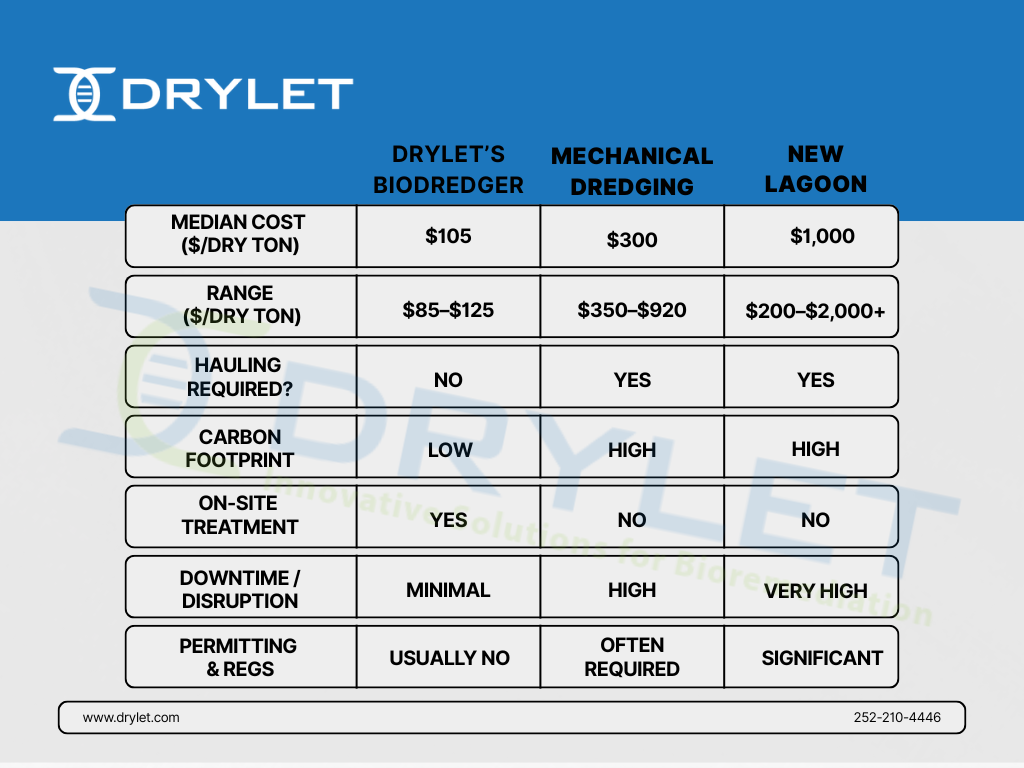
The cost of dredging a wastewater lagoon typically ranges from $50,000 to $300,000 per acre, with total project costs often reaching $500,000 to over $1 million once dewatering, hauling, and disposal are included.
While dredging can restore lagoon capacity, the initial quote rarely reflects the full financial impact. Hidden costs—including sludge handling, operational disruption, and rapid re-accumulation—can significantly increase total project expense.
For facilities evaluating dredging, the more important question is not just “What does it cost?” but “Is it the most effective and sustainable solution?”
Before moving forward with any dredging project, it is critical to understand your actual sludge volume and distribution.

What Does It Actually Cost to Dredge a Lagoon?
Dredging costs vary widely depending on sludge volume, lagoon configuration, access, and disposal requirements. Facilities with minimal access constraints and nearby disposal options may remain on the lower end of the cost range. However, most lagoons dealing with long-term accumulation fall on the higher end due to the complexity of removal and handling.
One of the most common and costly mistakes is estimating dredging scope without accurate sludge data. When sludge volume is underestimated, projects frequently exceed budget once work begins.
Before estimating cost, sludge levels should be verified using reliable measurement methods.
How to Measure Sludge Depth in Wastewater Lagoons
Why Dredging Costs Escalate Quickly
Dredging is not a single expense—it is a multi-phase process where each step adds cost.
The project begins with mobilization. Equipment must be transported to the site, staging areas must be prepared, and access may need to be improved. For remote or difficult-to-access lagoons, this alone can represent a significant upfront investment.
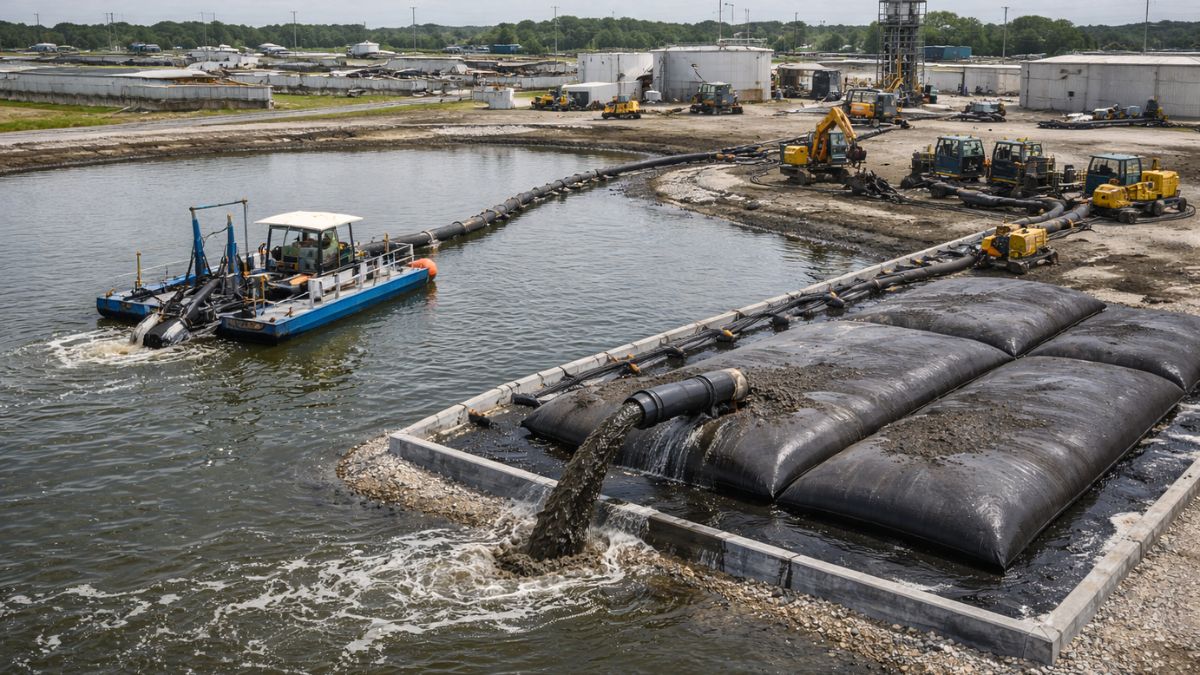
The dredging method also plays a major role in cost. Mechanical dredging often requires lowering lagoon levels and introduces operational disruption, while hydraulic dredging pumps sludge as a slurry and reduces structural impact. However, hydraulic methods shift cost downstream into dewatering and handling.
Dewatering is one of the most underestimated cost drivers. Removed sludge must be processed before transport using drying beds, geotextile tubes, or mechanical systems. Polymer addition, labor, and time all contribute to rising costs at this stage.
Finally, hauling and disposal often become the largest portion of the project. Transportation distance, landfill tipping fees, and regulatory requirements can push total costs far beyond initial expectations.
The Costs Most Operators Don’t See Coming
The most significant dredging costs are often indirect and not included in initial quotes.
Operational disruption is a major factor. During dredging, treatment capacity may be reduced, increasing the risk of compliance issues and placing additional burden on plant staff. In lagoons already under stress, this can create short-term performance instability.
If your lagoon is already showing warning signs, it is important to understand the root cause before proceeding.
Signs Your Wastewater Lagoon Is Losing Treatment Capacity
Another overlooked issue is incomplete sludge removal. Lagoons rarely have uniform sludge distribution, and dredging often leaves behind residual solids in dead zones or low-flow areas. These remaining solids can quickly contribute to future buildup.
This leads to rapid re-accumulation. If the biological conditions causing sludge buildup are not addressed, solids will begin to return—often within just a few years.
There are also structural and regulatory risks to consider. Dredging can damage liners, stress embankments, and introduce permitting challenges that delay timelines and increase costs.
A Realistic Project Cost Scenario
To understand how these costs combine, consider a mid-sized lagoon system with moderate sludge accumulation.
A facility with a five-acre lagoon may initially receive a dredging estimate that appears manageable. However, once mobilization, dewatering, hauling, and disposal are included, total project costs can approach or exceed $900,000.
This type of cost escalation is common, particularly when sludge volume is underestimated or disposal requirements are more complex than expected.
Dredging vs. Long-Term Sludge Management

Dredging is often viewed as a one-time solution, but it primarily addresses the symptom rather than the cause of sludge accumulation.
Biological sludge reduction offers a different approach by enhancing microbial activity to break down organic solids within the lagoon. Instead of physically removing sludge, this method reduces accumulation over time while improving overall treatment performance.
Facilities using biological approaches often see sludge reductions in the range of 50 to 60 percent within a few months, without the need for hauling, disposal, or system disruption.
To understand how this works:
How Biological Sludge Reduction Works in Wastewater Lagoons
For a broader comparison of options:
→ Alternatives to Lagoon Dredging
When Dredging Is Necessary—and When It Isn’t
There are situations where dredging is unavoidable. Lagoons that have reached critical capacity limits or require immediate volume recovery may need physical removal of sludge.
However, many systems are not at that point. Lagoons with moderate sludge accumulation or gradual performance decline may have alternative options that reduce or delay the need for dredging.
The key difference between these scenarios is having accurate data and a clear understanding of system conditions.
Why Sludge Mapping Should Come First

Accurate sludge measurement is one of the most important steps in controlling dredging costs.
Most lagoons do not accumulate sludge evenly. Relying on a few point measurements can lead to significant errors in estimating total volume, which directly impacts project cost.
Comprehensive sludge mapping provides a complete view of accumulation patterns, allowing operators to better estimate volume, identify problem areas, and evaluate targeted solutions.
If this step has not been completed, it should be prioritized before any major investment.
→ Lagoon Sludge Mapping and Survey Methods
Key Takeaways
Dredging a wastewater lagoon is a complex and often expensive process that extends far beyond the initial removal of sludge. While it can restore capacity, it also introduces significant financial, operational, and regulatory considerations.
Facilities that take the time to fully understand sludge conditions—and evaluate alternative strategies—are better positioned to reduce long-term costs and improve overall system performance.
FAQ
How much does it cost to dredge a wastewater lagoon?
Most projects range from $50,000 to $300,000 per acre, depending on sludge volume, access, and disposal requirements.
What is the most expensive part of dredging?
Dewatering, hauling, and disposal are often the largest cost components, frequently exceeding the dredging itself.
How long before sludge comes back after dredging?
In many systems, sludge begins to re-accumulate within 3 to 5 years if underlying conditions are not addressed.
Can dredging be avoided?
In some cases, yes. Biological treatment and improved lagoon management can significantly delay or reduce the need for dredging.
Don’t Commit to Dredging Without the Full Picture
Before investing hundreds of thousands—or more—it is critical to understand your lagoon’s actual sludge volume and the most cost-effective path forward.
Request a Technical Assessment