Lagoon Sludge Mapping vs Sludge Depth Measurement: Why Full Mapping Matters

Most wastewater lagoon operators have measured sludge depth at some point. The process is familiar, relatively simple, and widely accepted as a way to monitor lagoon conditions. If you are using standard tools and methods, you are likely following practices similar to those outlined in How to Measure Sludge Depth in Wastewater Lagoons.
Yet many lagoons continue to lose treatment capacity, develop odor issues, or require costly dredging—even when sludge measurements appear manageable.
The reason is straightforward: sludge depth alone does not tell the full story.

Sludge does not accumulate evenly across a lagoon. It forms localized mounds, dead zones, and uneven layers that impact flow patterns, treatment efficiency, and effective volume long before average depth measurements raise concern.
Understanding this difference is critical. Measuring sludge depth answers one question—how much sludge is present at a specific point.
Sludge mapping answers a far more important one—how sludge is affecting the entire system.
The Limits of Sludge Depth Measurement
Sludge depth measurement is an essential operational practice, but it has inherent limitations.
Using tools such as a sludge judge, operators collect vertical samples that show the interface between sludge and water. This provides a clear indication of sludge thickness at a specific location. For routine monitoring, this method is effective. It helps confirm sludge presence and track general trends over time.

However, even with multiple sampling points, sludge depth measurements remain discrete data points within a continuous system.
As a result:
- Measurements may miss localized sludge accumulation
- Results vary depending on sampling location
- Data does not fully reflect how sludge impacts flow and mixing
In practice, operators can take multiple readings and still overlook the conditions that are actually driving performance issues. In many cases, these hidden conditions are the same early warning signs discussed in Signs Your Wastewater Lagoon Is Losing Treatment Capacity.
The Real Issue: Uneven Sludge Distribution
The fundamental limitation of sludge depth measurement is that it assumes sludge behaves uniformly. In reality, sludge distribution is heavily influenced by lagoon hydraulics and operating conditions.
Factors such as influent location, aeration patterns, and flow paths cause solids to settle unevenly over time.

This often leads to:
- Sludge mounding near influent zones
- Dead zones with minimal mixing
- Flow short-circuiting through the lagoon
These conditions can exist even when average sludge depth appears acceptable. The result is a system where treatment efficiency declines—not simply because of how much sludge exists, but because of where it is located.
What Lagoon Sludge Mapping Reveals
Lagoon sludge mapping shifts the focus from isolated measurements to a complete understanding of sludge distribution.
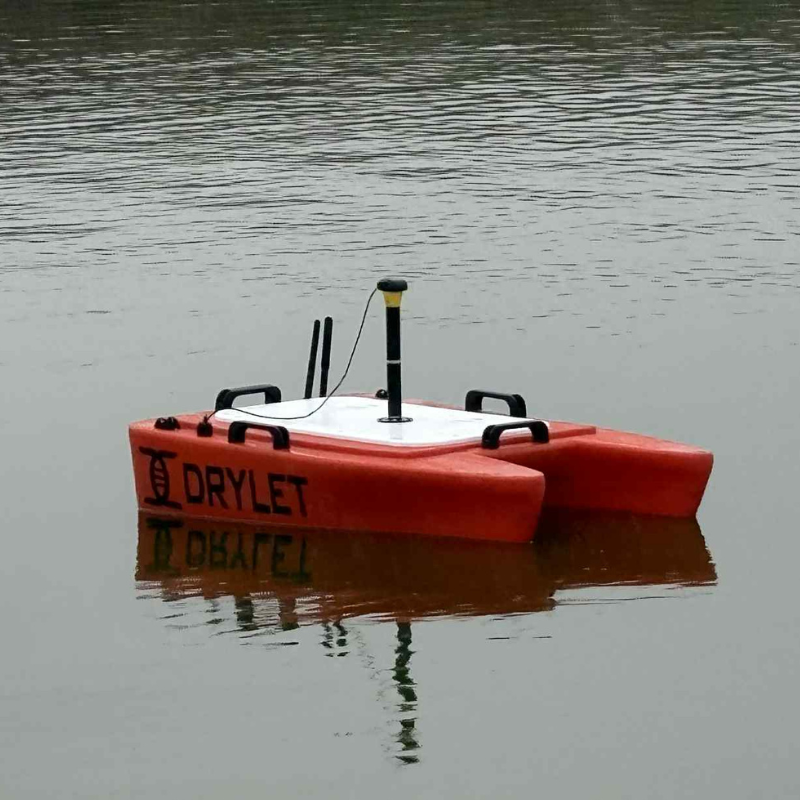
Instead of relying on individual depth readings, mapping evaluates how sludge is distributed across the entire lagoon bottom.
This allows operators to identify:
- Areas of concentrated sludge buildup
- Regions with little to no accumulation
- Loss of effective treatment volume
- Patterns that impact hydraulic performance
In many systems, mapping reveals that a relatively small portion of the lagoon is responsible for the majority of performance limitations.
Request a GPS Sonar Mapping Quote
Why Mapping Changes Operational Decisions
When sludge distribution is clearly understood, operational decisions become significantly more precise.
For example, dredging is often considered when sludge depth reaches a certain threshold. However, mapping may show that sludge is concentrated in specific areas rather than evenly distributed. This opens the door to more targeted and cost-effective strategies.
These approaches are often evaluated before committing to full removal, as discussed in Alternatives to Lagoon Dredging.
Similarly, biological treatment strategies can be applied more effectively when operators understand where sludge accumulation is most severe. This allows treatment to align with actual conditions rather than assumptions.
This is especially relevant when considering approaches outlined in How Biological Sludge Reduction Works in Wastewater Lagoons.
Mapping also helps identify hydraulic inefficiencies, allowing operators to improve aeration, mixing, and overall lagoon performance.
When Sludge Mapping Becomes Necessary
While routine sludge depth measurement should remain part of regular operations, there are situations where full lagoon mapping becomes essential.
These include:
- Declining treatment performance despite acceptable depth readings
- Persistent odor or gas production
- Increasing sludge handling or hauling costs
- Planning for dredging or capital improvements
In many cases, operators begin working through common troubleshooting steps, similar to those outlined in Wastewater Lagoon Troubleshooting Guide, but find that point measurements alone do not fully explain the issue.
In these scenarios, relying on point measurements alone can lead to incomplete or misleading conclusions. Mapping provides the level of detail needed to fully understand the system before making significant operational or financial decisions.
From Measurement to Management
The distinction between sludge depth measurement and sludge mapping reflects a broader shift in lagoon management.
Measurement is focused on monitoring conditions.
Mapping is focused on understanding system behavior.
Operators who rely solely on depth measurements often react to visible symptoms. Those who incorporate mapping gain the ability to identify root causes, anticipate problems, and make more informed decisions.
As lagoons age and loading conditions change, this shift becomes increasingly important for maintaining long-term performance.
Conclusion
Sludge depth measurement remains a valuable tool for wastewater lagoon operators, but it provides only a partial view of lagoon conditions.
Because sludge accumulates unevenly, understanding its distribution is essential for maintaining performance and making informed decisions. Lagoon sludge mapping provides this broader perspective, revealing how sludge affects flow, volume, and treatment efficiency across the entire system.
For facilities facing performance challenges or planning future investments, the difference between measuring sludge and mapping it can significantly impact both operational outcomes and costs.
FAQ
Is sludge depth measurement enough to manage a lagoon effectively?
It is useful for routine monitoring, but it does not capture how sludge is distributed or how it affects overall lagoon performance.
What is the main advantage of sludge mapping?
It provides a complete view of sludge distribution, allowing operators to identify problem areas and make more informed decisions.
Can sludge mapping help reduce dredging costs?
Yes. Mapping often reveals that sludge is unevenly distributed, which can support targeted solutions instead of full-scale dredging.
How often should lagoon sludge mapping be performed?
Typically every two to five years, or when performance issues arise that cannot be explained by routine measurements.
See What Your Lagoon Is Really Doing
If sludge measurements are not aligning with what you are seeing in performance, the issue may not be how much sludge you have—but where it is.
Request a Lagoon Sludge Assessment →