Anaerobic vs. Aerobic Wastewater Treatment: Operational Differences That Impact Sludge, Stability, and Cost

Why Treatment Type Matters More Than Most Operators Realize
When comparing anaerobic vs aerobic wastewater treatment, operators are not simply choosing between two biological environments — they are choosing how sludge will accumulate, how energy will be consumed, and how long-term system stability will be maintained.
- Sludge accumulation rates
- System stability
- Energy consumption
- Seasonal sensitivity
- Odor generation
- Hauling frequency
- Long-term capacity planning
Understanding the operational differences between anaerobic and aerobic wastewater treatment is not simply an academic exercise. It is central to managing solids, controlling costs, and maintaining compliance. This article provides a technical breakdown of both systems, with a focus on sludge behavior, performance drivers, and strategic implications for municipal and industrial operators.
Anaerobic Wastewater Treatment: Low Oxygen, High Solids Accumulation Risk

What Defines an Anaerobic System?
Anaerobic treatment operates in the absence of dissolved oxygen. Microorganisms break down organic material using alternative electron acceptors, producing byproducts such as methane, carbon dioxide, and hydrogen sulfide.
Common applications include:
- Municipal lagoons (non-aerated)
- Industrial equalization basins
- Primary sludge digesters
- Agricultural lagoons
Anaerobic lagoons are widely used because of their low energy requirements and operational simplicity.
Operational Characteristics of Anaerobic Systems
1. Sludge Accumulation Patterns
Anaerobic environments typically experience:
- Higher solids settling rates
- Slower biological oxidation
- Compaction of sludge layers
- Formation of stable bottom deposits
Without oxygen-driven microbial metabolism, organic breakdown is slower and often incomplete. Over time, this leads to measurable sludge accumulation and reduced lagoon depth. Facilities relying solely on passive anaerobic digestion often experience increasing hauling frequency or face expansion costs.
2. Temperature Sensitivity
Anaerobic microbial activity decreases significantly in cold weather. As temperatures drop:
- Metabolic rates slow
- Organic breakdown efficiency decreases
- Sludge accumulation accelerates
Cold temperatures reduce microbial metabolic rates and increase sludge accumulation risk. A deeper technical breakdown is available in our article on how cold weather affects lagoon performance.
3. Energy Demand
Anaerobic systems require minimal mechanical aeration, resulting in:
- Lower direct energy costs
- Reduced mechanical complexity
However, lower energy input often correlates with slower solids reduction and longer retention times.
4. Odor and Gas Production
Byproducts such as hydrogen sulfide and methane can accumulate, particularly in overloaded or imbalanced systems, leading to:
- Odor complaints
- Safety considerations
- Community pressure
Odor is often a secondary indicator of incomplete digestion.
Aerobic Wastewater Treatment: Oxygen-Driven Stability and Faster Breakdown

What Defines an Aerobic System?
Aerobic treatment relies on dissolved oxygen to support bacteria that metabolize organic waste more rapidly and completely.
Common applications include:
- Activated sludge systems
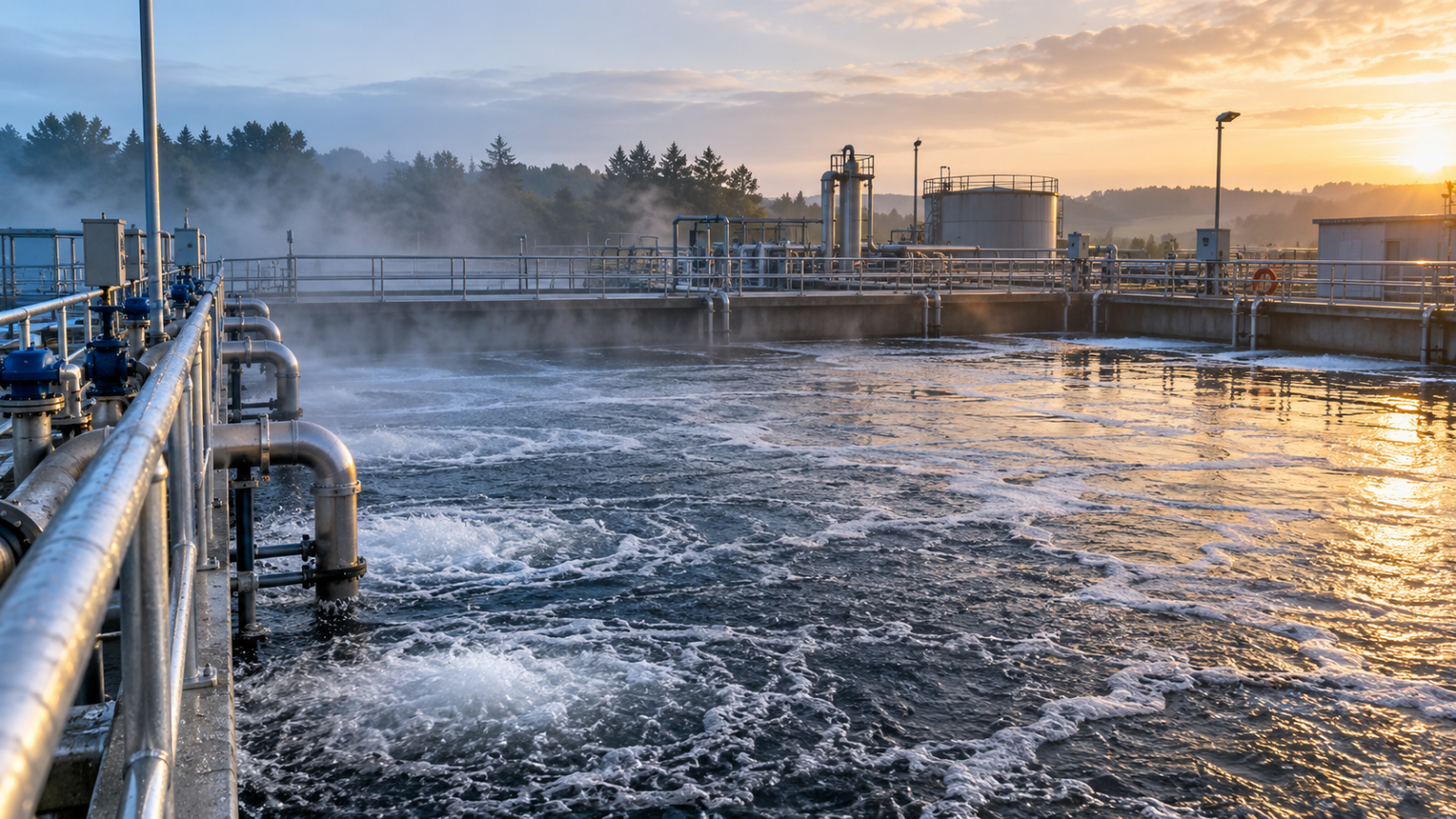
- Aerated lagoons
- Sequencing batch reactors (SBRs)
- Industrial aeration basins
Aerobic systems are widely used where tighter discharge standards and faster processing are required.
Operational Characteristics of Aerobic Systems
1. Sludge Production vs. Sludge Reduction
Aerobic systems typically:
- Break down soluble BOD more quickly
- Maintain more consistent treatment performance
- Generate biological sludge through cell growth
While aerobic systems reduce soluble BOD more rapidly, they convert organic material into new bacterial biomass. This secondary sludge must be managed through wasting and disposal. Without proper solids control, aerobic systems can experience increasing sludge inventory and higher hauling frequency.
2. Energy Requirements
Aeration is energy-intensive. Facilities must account for:
- Blower operation
- Diffuser maintenance
- Power consumption fluctuations
Energy cost often becomes the trade-off for faster and more stable treatment performance.
3. Seasonal Resilience
Aerobic systems are generally more resilient than anaerobic lagoons in moderate cold conditions, but performance still declines when:
- Oxygen transfer efficiency drops
- Microbial activity slows
Temperature remains a biological limiting factor in both systems.
Side-by-Side Operational Comparison

The choice between systems is often driven by infrastructure, budget, and regulatory requirements — but sludge management implications are frequently underestimated.
Is Anaerobic vs Aerobic Wastewater Treatment Better?
There is no universally “better” system — only systems that are better suited for specific operational conditions.
- Anaerobic wastewater treatment is typically selected for low-energy lagoon environments and high-strength waste streams.
- Aerobic wastewater treatment is preferred where discharge limits are tighter and faster biological oxidation is required.
The determining factors should include:
- Existing infrastructure
- Sludge accumulation rate
- Energy budget
- Odor sensitivity
- Regulatory requirements
For many facilities, the decision is not about switching systems, but about improving sludge management within the system already in place.
Sludge Behavior: The Overlooked Cost Driver
Regardless of system type, sludge accumulation ultimately determines:
- Available treatment capacity
- Hydraulic retention time
- Risk of permit violations
- Dredging or hauling expenses
Facilities that delay sludge intervention often experience exponential cost increases as solids compact and become more difficult to remediate. Facilities that have not recently quantified solids depth should begin with accurate measurement before implementing biological adjustments. You can review the recommended methodology in our guide on how to measure sludge depth in wastewater lagoons.
Anaerobic lagoons are particularly prone to compacted sludge layers that resist natural breakdown. In aerated systems, excess biological growth increases wasting requirements and disposal frequency. Strategic biological management can significantly alter these trajectories.
Biological Optimization Within Each System
Not all biological environments respond the same to augmentation strategies.
In anaerobic lagoons, successful intervention requires:
- Penetration into compacted sludge layers
- Protection of bacteria during deployment
- Extended contact time within solids
Drylet’s patented porous silica carrier technology is specifically designed to deliver bacteria directly into sludge layers rather than allowing them to remain suspended in the water column . This distinction is critical in anaerobic systems where bottom-layer digestion determines long-term capacity. Before implementing biological adjustments, facilities should quantify solids accumulation and map sludge depth to establish a measurable baseline. Integrating biological treatment with accurate solids data improves planning accuracy and performance verification. Learn more about our sonar sludge mapping services for data-driven lagoon assessment.
Documented performance benchmarks include:
- 50–60% sludge reduction within 3–4 months (application dependent)
- One pound capable of destroying 500–700 pounds of solids (conditions dependent)
In aerobic environments, biological optimization focuses more on:
- Stabilizing biomass levels
- Reducing excess sludge generation
- Improving oxygen utilization efficiency
Different system types require different biological strategies.
Choosing the Right Approach for Your Facility
When evaluating anaerobic vs aerobic wastewater treatment, operators should consider:
- Current sludge depth and accumulation rate
- Energy cost tolerance
- Odor sensitivity
- Regulatory discharge limits
- Hauling frequency and cost
- Available basin capacity
In many cases, facilities are not choosing between anaerobic and aerobic — they are managing the system they already have. The strategic question becomes:
How can performance and sludge reduction be optimized within the existing infrastructure?
Strategic Takeaway
Anaerobic and aerobic wastewater treatment systems operate under fundamentally different biological conditions, but both are influenced by solids accumulation, temperature, and microbial efficiency.
Operators who understand:
- How sludge behaves in each system
- How oxygen availability changes metabolic pathways
- How biological augmentation performs differently in each environment
are better positioned to control long-term operational costs and avoid reactive dredging or expansion.
Understanding the operational differences in anaerobic vs aerobic wastewater treatment allows facilities to make data-driven decisions about sludge management, energy consumption, and long-term system stability. Treatment type defines the biological environment — but sludge strategy determines operational cost trajectory.
Need clarity on how your system type is impacting sludge accumulation?
Request a technical review to evaluate sludge depth, biological performance, and cost-reduction opportunities within your existing anaerobic or aerobic system.
[Request a Consultation]
Frequently Asked Questions About Anaerobic vs Aerobic Wastewater Treatment
Which system produces more sludge?
Anaerobic lagoons often accumulate compacted sludge layers over time due to slower breakdown rates. Aerobic systems generate secondary biological sludge through biomass growth, requiring regular wasting.
Why do anaerobic lagoons accumulate sludge?
In the absence of oxygen, organic breakdown occurs more slowly. Solids settle and compact, reducing effective lagoon depth and capacity.
Does aerobic treatment eliminate sludge problems?
No. While aerobic systems oxidize organics more quickly, excess biomass must still be removed and managed.
Can biological treatment improve both systems?
Yes — when properly designed and deployed to reach solids layers, biological treatment can improve digestion efficiency and reduce accumulated sludge in both anaerobic and aerobic environments .