DAF Sludge vs Lagoon Sludge: Key Differences Operators Need to Understand
Managing difficult DAF solids, rising hauling costs, or downstream sludge buildup?
Talk to a Drylet specialist about strategies to reduce sludge and improve treatment performance.

Overview
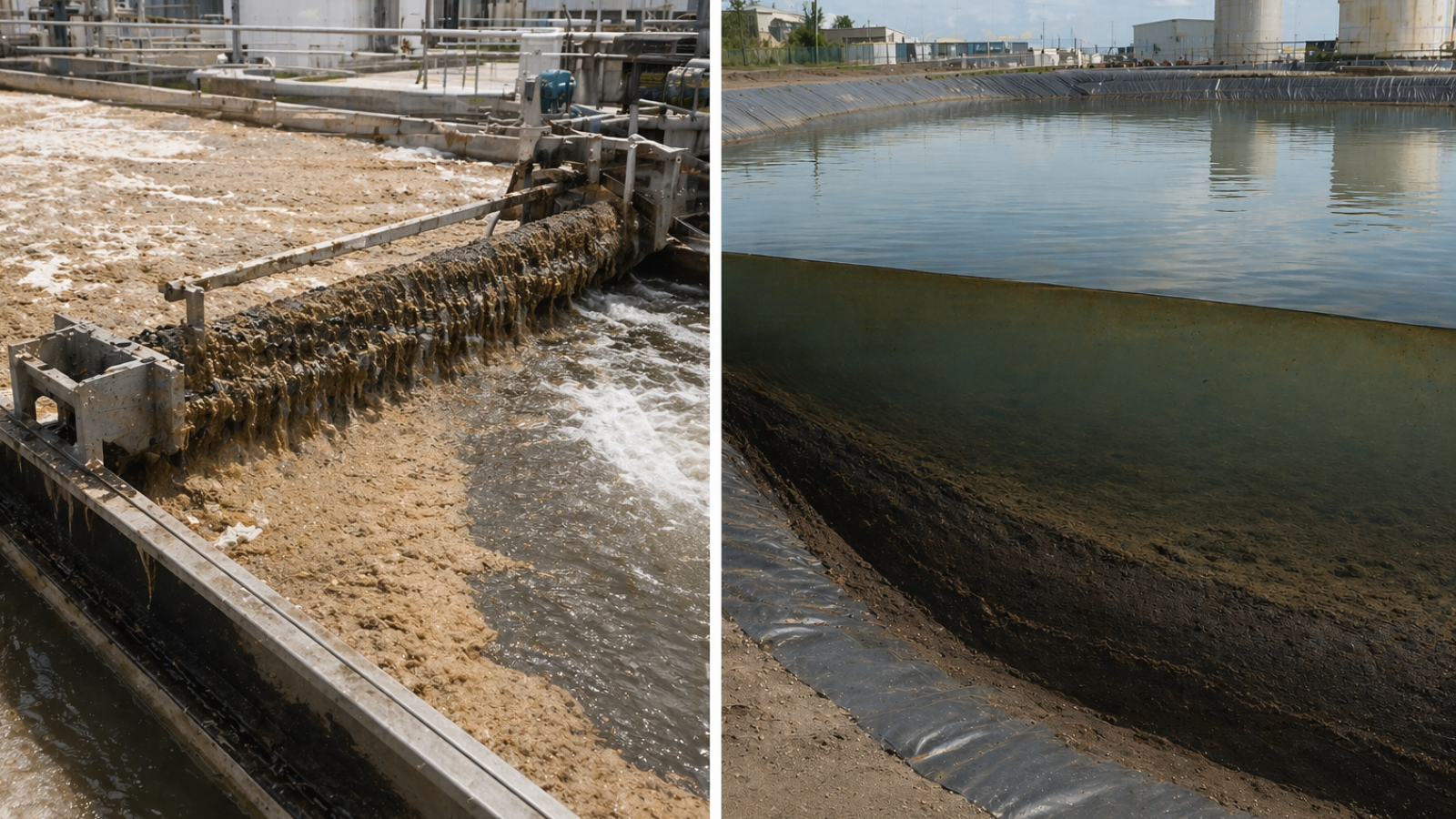
Although DAF sludge and lagoon sludge are often grouped together as biosolids, they are fundamentally different materials.
They form through different mechanisms, have different physical characteristics, respond differently to treatment, and create different operational challenges. Understanding those differences matters when evaluating sludge handling costs, biological reduction strategies, or long-term treatment performance.
For many facilities, treating all sludge as if it behaves the same can lead to poor process decisions.
How DAF Sludge Forms
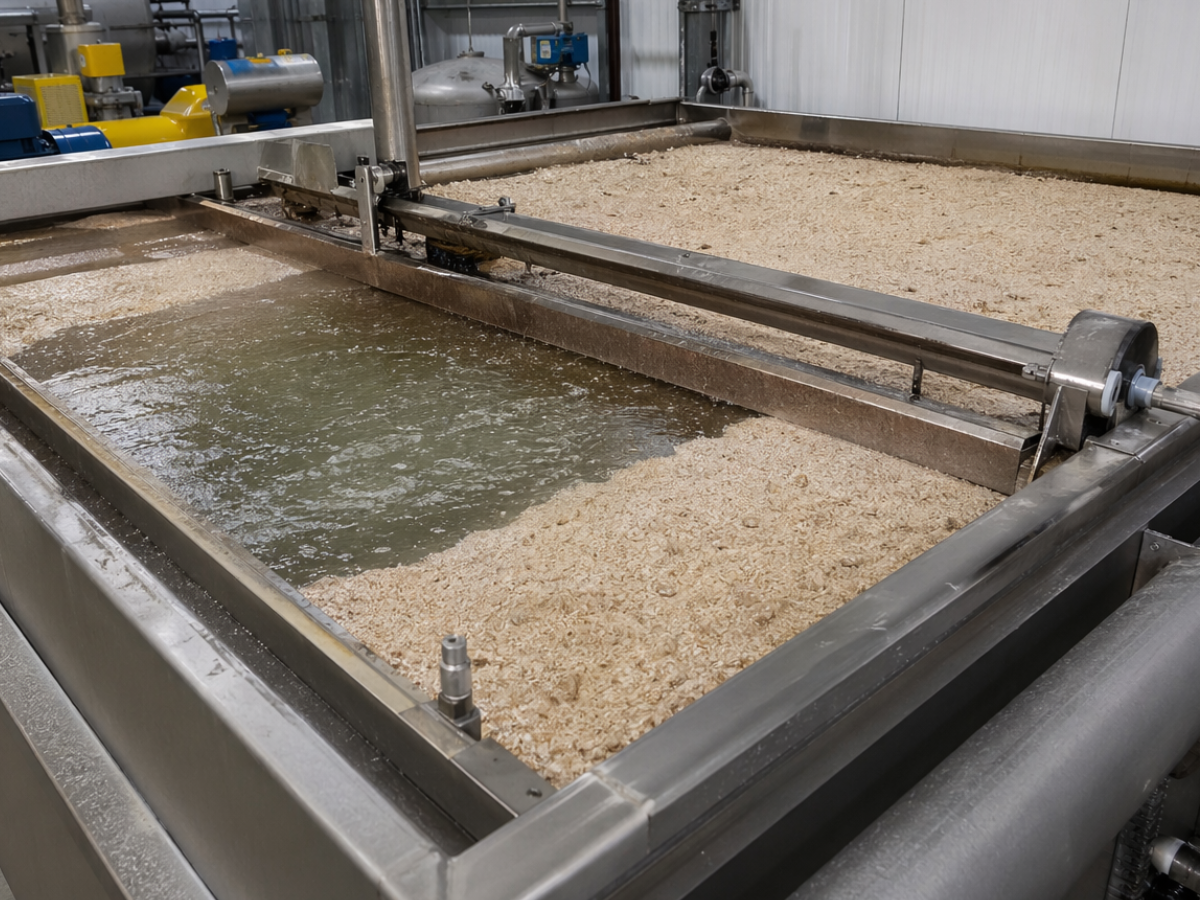
Dissolved air flotation systems are designed to remove suspended solids and floatable contaminants before they move deeper into treatment. Rather than allowing solids to settle, DAF systems intentionally bring materials to the surface through air attachment and flotation.
That distinction matters because the sludge produced is often rich in fats, oils, grease, proteins, and unstable organics. These materials tend to have high moisture content, low density, and difficult dewatering characteristics. Because DAF sludge originates as concentrated removed contaminants rather than stabilized biological solids, it often behaves more like a difficult residual than conventional sludge.
Facilities dealing with increasing solids loading may recognize similar warning signs described in
Industrial Wastewater Sludge Problems: Why Solids Build Up Faster Than Expected
How Lagoon Sludge Forms
Lagoon sludge develops very differently. Rather than being mechanically separated through flotation, lagoon solids accumulate gradually through settling, biological growth, and deposition of inert materials over time.
In many systems, lagoon sludge contains a mixture of:
- settled organics
- biological biomass
- grit and inert solids
- partially stabilized residuals
Unlike DAF sludge, lagoon solids often become more consolidated and mineralized as they age.
That distinction is why lagoon sludge commonly affects hydraulic volume and retention time long before operators recognize a severe solids problem.
This relationship is explored further in
What Causes Sludge Buildup in Wastewater Lagoons?
Why Physical Characteristics Matter
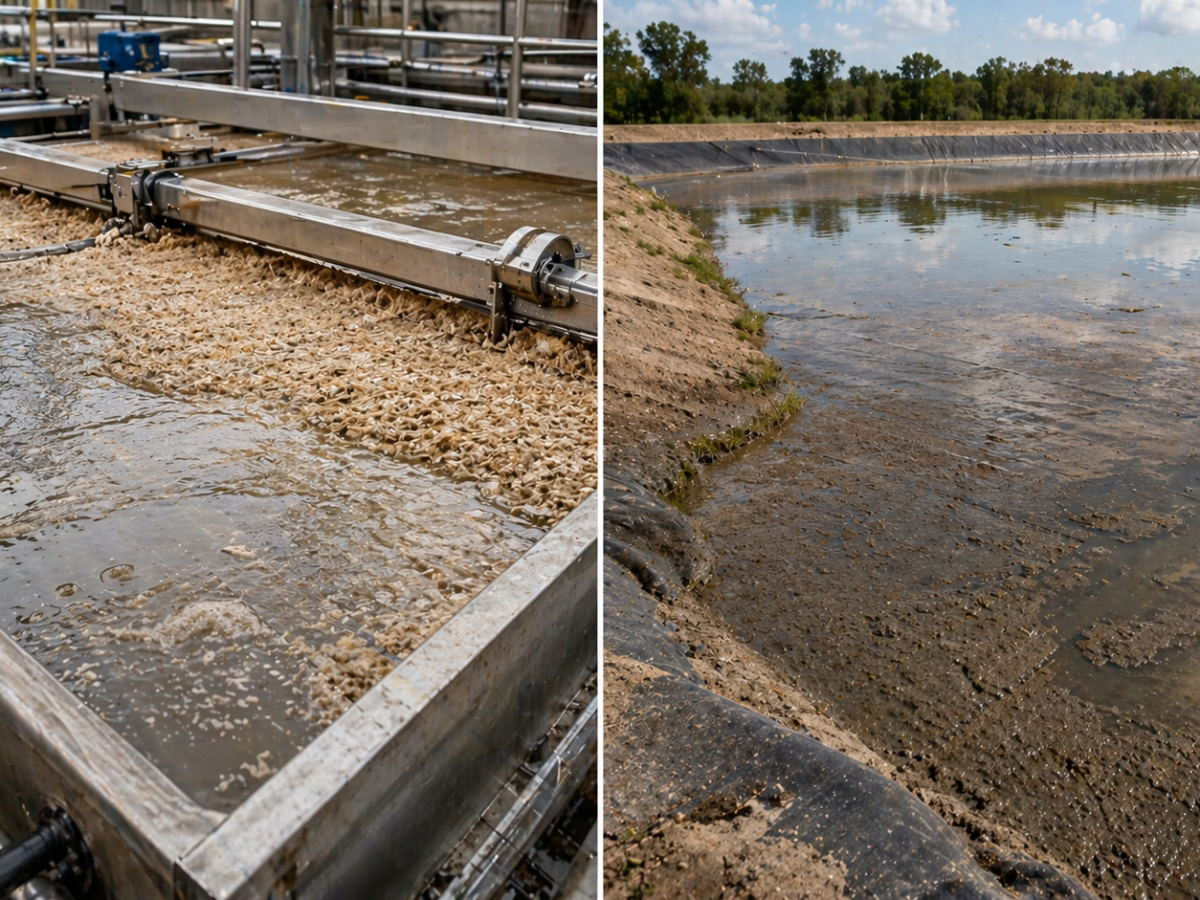
One of the most important distinctions between these sludges is physical behavior. DAF sludge often remains buoyant or semi-buoyant because of grease content and low-density solids. Lagoon sludge generally settles and accumulates at depth. That difference affects everything from storage behavior to treatment options. DAF solids may create scums, flotation layers, and handling difficulties.
Lagoon sludge more often reduces effective treatment volume and can contribute to long-term capacity loss. These are very different operational risks, even though both may ultimately show up as “sludge problems.”
Hydraulic impacts tied to settled sludge accumulation are closely related to principles discussed in
Wastewater Lagoon Retention Time Explained
Biological Treatability Is Not the Same
Another mistake operators sometimes make is assuming all sludge responds similarly to biological treatment.
It does not.
High-FOG DAF sludge may resist digestion differently than aged organic lagoon solids. By contrast, many accumulated lagoon solids remain biologically active and may respond well to enhanced digestion approaches. This is one reason biological sludge reduction has been used as an alternative to conventional removal approaches in some systems.
For more on those mechanisms, see
How Biological Sludge Reduction Works in Wastewater Lagoons
Why DAF Sludge Often Carries Higher Handling Costs
Handling cost is often where the differences become impossible to ignore. DAF sludge may appear manageable in volume, but because of moisture content and poor dewatering behavior, hauling and disposal costs can escalate rapidly. Operators often underestimate the economics because disposal costs are driven not simply by solids concentration, but by how those solids behave.
Lagoon sludge presents a different economic burden. Its costs often show up through reduced treatment capacity, dredging risk, or long-term accumulation rather than immediate disposal challenges.
Understanding which cost structure is developing is essential before choosing a management strategy.
DAF Problems Often Become Downstream Problems
Another major difference is system impact. Poorly performing DAF systems can increase downstream solids and FOG loading, which often creates problems operators mistakenly attribute to lagoons or aeration systems. In those cases, the apparent sludge problem may actually begin at the front of the process.
That is why solids management should rarely be evaluated unit by unit in isolation. It is a system problem.
When Sludge Reduction Strategies Should Be Evaluated
Whether the concern is DAF solids or accumulated lagoon sludge, the same decision point often emerges: continue removing solids mechanically, or reduce accumulation biologically.
That evaluation usually becomes relevant when:
- hauling frequency begins rising
- effective treatment volume declines
- oxygen demand becomes harder to control
- capital expansion discussions begin
At that point, alternatives should be evaluated before removal becomes the default response.
A useful cost benchmark is
👉 Cost of Dredging a Wastewater Lagoon
(link exact phrase)
Conclusion
DAF sludge and lagoon sludge may share a name, but they are fundamentally different materials with different treatment implications. Those differences influence handling costs, biological behavior, operational risk, and long-term solids management strategy.
Understanding those distinctions allows operators to make better decisions before sludge problems become capacity problems.
Looking at alternatives to rising sludge handling costs?
Request a technical assessment to evaluate biological sludge reduction options before pursuing costly removal or expansion.
FAQ
Why does industrial wastewater generate more sludge than municipal systems?
Industrial wastewater contains higher concentrations of organic material, which drives increased microbial growth and results in more biomass production.
How fast can sludge build up?
In high-strength systems, significant accumulation can occur within months, especially during periods of variable loading or poor solids management.
Is sludge buildup always visible?
No. Much of the accumulation occurs below the surface and may only become apparent after performance begins to decline.
Why doesn’t hauling fix the problem?
Hauling removes sludge but does not address the rate at which it is generated. Without reduction, accumulation continues.
Can sludge be reduced without dredging?
Yes. Biological approaches can reduce sludge over time by enhancing microbial digestion within the system.