What Causes Biological Inhibition in Wastewater Treatment?
Biological wastewater treatment depends on microorganisms remaining active under the conditions in which they operate. When those conditions change, treatment performance can deteriorate even when the biomass is still present. A discharge containing an inhibitory chemical, a sudden loss of oxygen in an aerobic process, or a significant pH change can all reduce microbial activity.
Biological inhibition in wastewater treatment is a reduction in microbial activity caused by a substance or operating condition that interferes with biological processes. It can affect organic matter removal, nitrification, or other treatment functions. Identifying the cause is essential because the corrective action for a toxic discharge is different from the response to an aeration failure or nutrient deficiency.
This guide covers common sources of inhibition, the warning signs operators can monitor, and a practical approach to troubleshooting and recovery.
Key Takeaways
- Inhibition describes reduced microbial activity. It can be temporary, but severe or prolonged exposure may also injure or kill microorganisms.
- Toxic chemicals, metals, pH and temperature extremes, oxygen limitations in aerobic systems, and nutrient deficiencies can all interfere with treatment.
- Nitrification may be affected before overall BOD removal because the organisms involved have different environmental requirements and sensitivities.
- Changes in effluent quality are warning signs, not proof of a specific inhibitor. Compare them with process data, loading changes, and chemical-use records.
- Correct the underlying cause before considering supplemental biological treatment or other recovery measures.
What Is Biological Inhibition in Wastewater Treatment?
Inhibition occurs when the rate of a microbial process decreases because a compound or environmental condition interferes with the microorganisms responsible for it. Depending on the cause, cells may remain viable but function more slowly, or the exposure may lead to lasting damage.
The term is related to, but not completely separate from, a biological upset. Inhibition is one possible mechanism behind an upset. A broader upset can also involve hydraulic overload, solids washout, poor settling, or equipment failure. Operators should not assume that a treatment upset proves toxicity.
For example, an inhibited nitrifying population may show reduced conversion of ammonia to nitrate even while carbon removal remains relatively stable. Conversely, poor effluent BOD may reflect insufficient oxygen or contact time rather than a toxic compound. The process data help distinguish these situations.
What Causes Biological Inhibition?
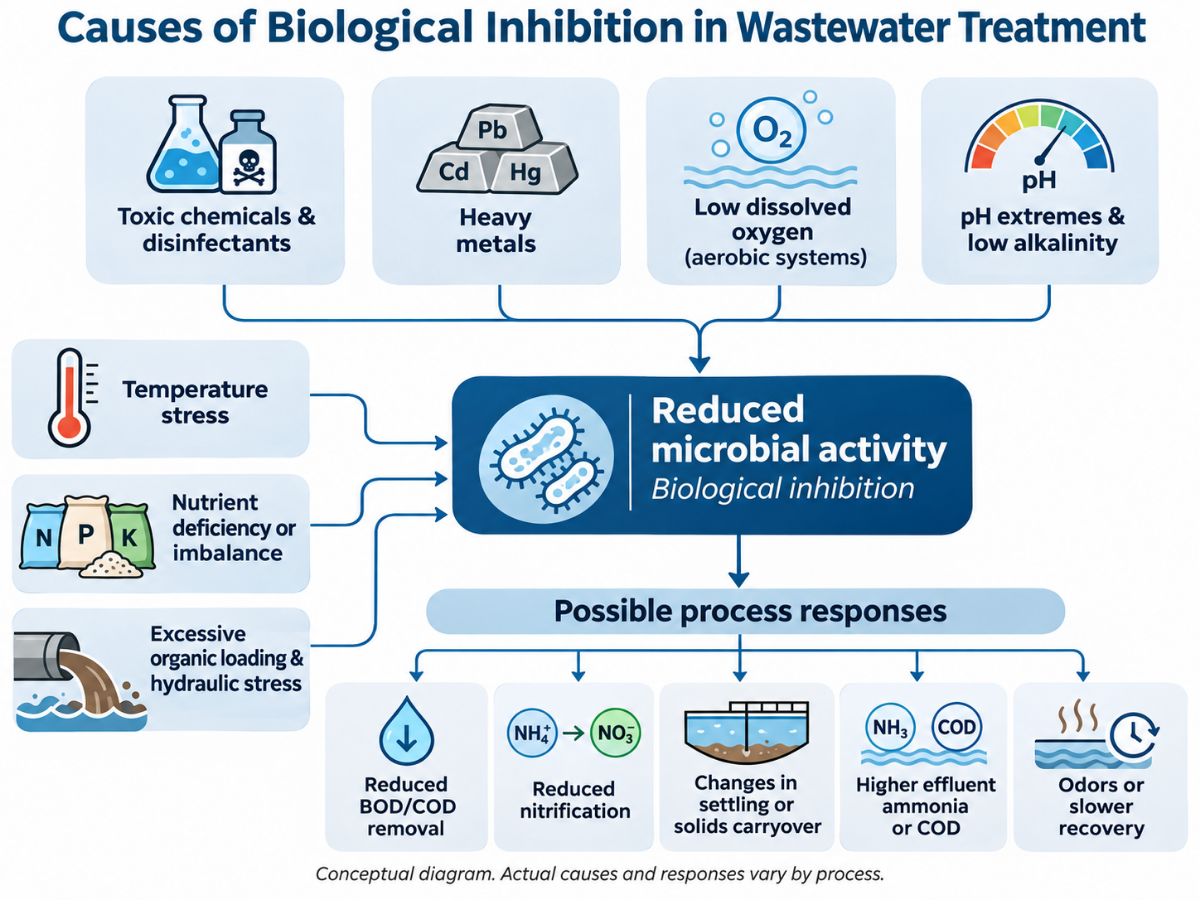
1. Toxic Chemicals and Disinfectants
Some industrial and commercial discharges contain constituents that interfere with microbial metabolism. Potential inhibitors include chlorine-based disinfectants, other oxidizing agents, selected solvents and phenolic compounds, cyanide, and certain cleaning or process chemicals. Whether a particular discharge is inhibitory depends on its concentration, exposure duration, chemical form, and the treatment population's acclimation.
Batch cleaning, sanitation cycles, equipment washdowns, and accidental chemical releases are important events to investigate when performance changes unexpectedly. The U.S. EPA's guidance on preventing interference at wastewater treatment plants describes chemical toxicity, acclimation, pH, temperature, and wastewater characteristics as factors affecting inhibition.
2. Heavy Metals and Other Inorganic Contaminants
Copper, zinc, nickel, chromium, cadmium, and some other metals can inhibit biological processes under certain conditions. The risk depends not just on total metal concentration but also on the dissolved and bioavailable forms, which are affected by pH and wastewater chemistry.
For industrial facilities with possible metal inputs, reviewing source discharges and obtaining appropriate laboratory analysis is more useful than assuming that every rise in effluent COD or ammonia is caused by heavy metals.
3. Low Dissolved Oxygen in Aerobic Processes
Aerobic microorganisms require oxygen for the reactions they perform. If oxygen transfer cannot keep up with demand, aerobic organic removal or nitrification can slow. Causes include a blower or diffuser malfunction, poor mixing, a sudden increase in organic loading, and changes in temperature that affect oxygen availability.
Oxygen targets depend on the process. Low dissolved oxygen is not inherently a failure in a properly designed anoxic or anaerobic treatment zone. Likewise, introducing oxygen where an anaerobic process is required can interfere with that process. The EPA Nutrient Control Design Manual explains that nitrifying organisms are particularly sensitive to insufficient dissolved oxygen and that denitrification requires different oxygen conditions.
For lagoon operations, see Wastewater Lagoon Aeration Problems: Causes, Impacts, and How to Fix Them.
4. pH Extremes and Inadequate Alkalinity
pH changes influence enzyme function, microbial growth, and the chemical form of potential inhibitors. Acidic or highly alkaline discharges can interfere with biological performance. Nitrification is especially sensitive to pH and alkalinity because the process consumes alkalinity as ammonia is oxidized.
As a reference for conventional nitrification, the EPA Nutrient Control Design Manual describes generally favorable operation around pH 6.8 to 8.0. This is not a universal operating range for every biological wastewater system. The appropriate target depends on the actual process, influent characteristics, and treatment objectives.
Read How pH Affects Biological Wastewater Treatment Performance for additional operating considerations.
5. Temperature Stress
Wastewater temperature affects microbial reaction rates and the community's ability to perform treatment. Cold conditions generally slow biological reactions, while temperatures above a population's tolerance can damage cellular function. A seasonal decline in treatment rate is not automatically evidence of toxic inhibition.
Sudden changes can be more disruptive than gradual shifts, particularly where industrial batch discharges introduce unusually hot or cold water. Compare actual wastewater temperature measurements with prior performance rather than relying only on ambient air temperature.
For a deeper explanation, see How Temperature Affects Biological Wastewater Treatment Performance.
6. Nutrient Deficiencies or Imbalance
Microorganisms need available nitrogen, phosphorus, and other nutrients to build and maintain cells. Some industrial wastewaters supply abundant biodegradable carbon but relatively little nitrogen or phosphorus. Under those conditions, biological growth and organic removal may become nutrient-limited.
Possible indicators include slower organic removal and, in some activated sludge systems, changes in floc structure or settling. These symptoms have several possible causes, so nutrient concentrations and loading should be assessed before adding nutrients. The EPA's activated sludge bulking and foaming report describes the role of nutrient-deficient wastewater in certain settling problems.
7. Excessive Organic Loading and Hydraulic Stress
A sudden surge in BOD or COD loading can increase oxygen demand beyond an aerobic system's capacity. High flows can also reduce contact time or wash solids out of some processes. These conditions may look like toxicity because treatment performance declines, but they do not necessarily indicate the presence of a chemical inhibitor.
In some processes, excessive concentrations of a particular substrate can directly inhibit biological activity. Distinguishing this from overload or insufficient hydraulic retention requires process-specific evidence.
Related reading: Signs Your Industrial Wastewater System Is Overloaded.
What Are the Warning Signs of Biological Inhibition?
Inhibitory conditions may appear suddenly after a chemical discharge or develop gradually under recurring stress. Operators may observe one or more of the following:
- Higher effluent BOD or COD compared with comparable loading conditions.
- Higher effluent ammonia or reduced nitrification performance.
- Changes in oxygen uptake or other biological activity tests, where those measurements are available.
- Unexpected pH or alkalinity changes.
- Changes in sludge settling, solids carryover, or effluent turbidity in processes that rely on solids separation.
- Unusual odors or a change in process appearance.
These signs are not diagnostic on their own. Similar changes can result from hydraulic conditions, equipment failures, increased organic loading, or normal seasonal effects. The strongest evidence comes from comparing multiple indicators against a known operating baseline.
How to Diagnose Biological Inhibition: An Operator's Troubleshooting Sequence
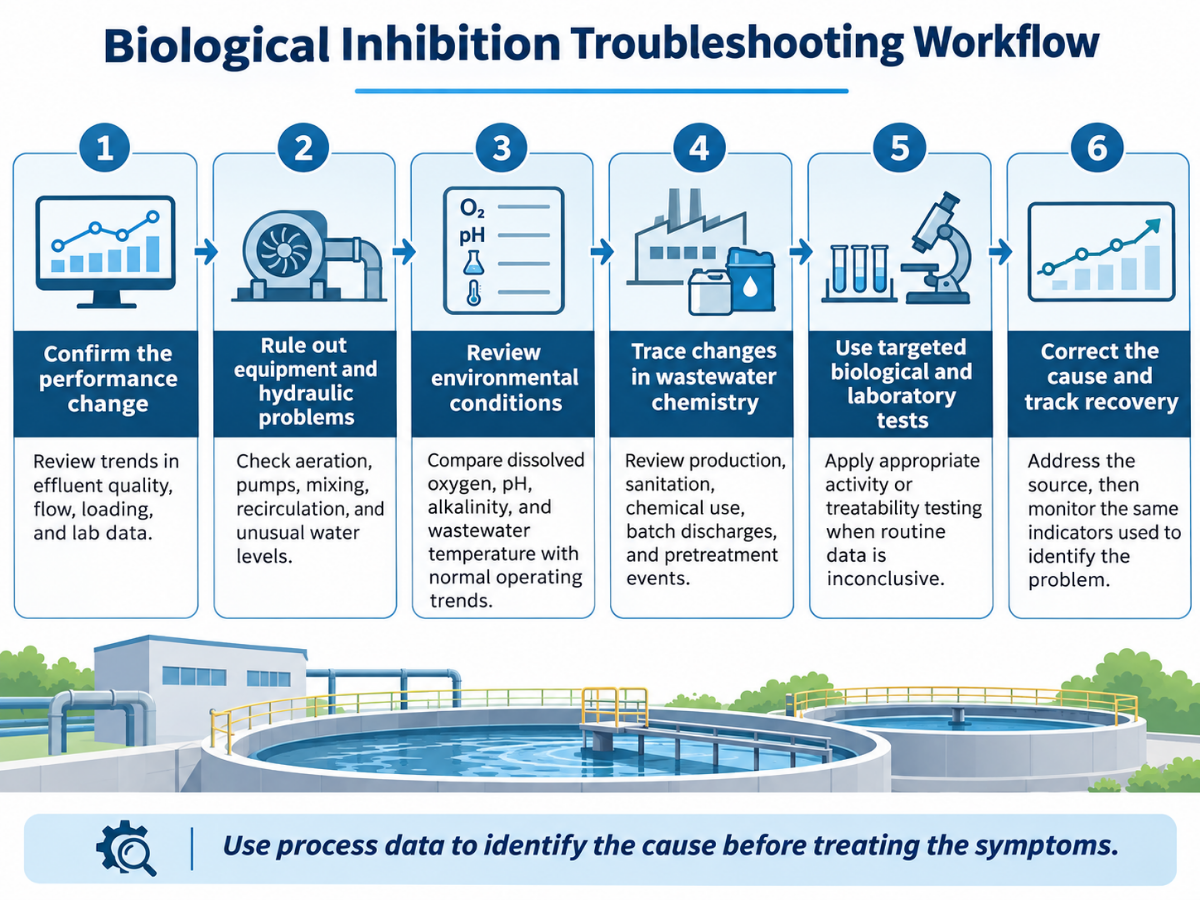
Step 1. Confirm the Performance Change
Review influent and effluent BOD or COD, ammonia where relevant, flow, and available trend data. Identify which biological function has changed and when the change began. Do not diagnose inhibition from a single measurement without checking sampling and laboratory results.
Step 2. Rule Out Equipment and Hydraulic Problems
Check blowers, aeration equipment, pumps, mixing, recirculation, and unusual water levels as appropriate to the process. Determine whether recent flow or loading changes could explain the observed performance loss.
Step 3. Review Environmental Conditions
Compare dissolved oxygen in aerobic zones, pH, alkalinity, and wastewater temperature with normal operating trends. Where nitrification is affected, consider both oxygen demand and alkalinity consumption rather than focusing only on one possible inhibitor.
Step 4. Trace Changes in Wastewater Chemistry
Review industrial production records, sanitation and clean-in-place schedules, chemical inventories, unusual deliveries, and batch discharges. Where warranted, sample suspected waste streams for specific contaminants and evaluate pretreatment or equalization options.
Step 5. Use Targeted Biological and Laboratory Tests
Where routine data do not identify the cause, appropriate respirometry, oxygen uptake, nitrification activity, or treatability testing can help assess inhibition. A qualified laboratory or process engineer should select tests suited to the biological system and suspected contaminants.
Step 6. Correct the Cause and Track Recovery
Address the discharge or operating condition, then follow the same performance indicators used to identify the problem. Recovery time varies with the severity of the event, the affected microbial populations, and whether viable biomass remains. There is no single recovery period that applies to every wastewater process.
Can Wastewater Biology Recover After Inhibition?
Often, yes, but recovery is not guaranteed. When organisms remain viable, correcting pH, oxygen availability, nutrient limitations, or the toxic source may allow biological activity to recover. Severe or persistent exposure can cause biomass loss and require a longer process recovery.
Adding more bacteria does not correct an active toxic discharge, unsuitable pH, or a failed aeration system. Where the operating environment has been stabilized, supplemental microorganisms may be considered for particular treatment objectives, subject to process compatibility and an evaluation of actual results.
See What Is Bioaugmentation? How Beneficial Bacteria Improve Wastewater Treatment. Drylet's Aqua Assist is one example of a microbial treatment product designed to support biological wastewater processes. It should be evaluated as a supplement to sound operation, not as a substitute for identifying and removing the cause of inhibition.
What Real-World Treatment Recovery Can Show
Drylet's industrial rendering lagoon performance case study documents operational and biological treatment changes alongside improvements in lagoon performance, effluent quality, and odor complaints. It illustrates the importance of addressing system conditions as part of a treatment program. The case study does not establish that a specific chemical inhibitor caused the original problem, and it should not be interpreted as an inhibition-removal experiment.
Frequently Asked Questions
What is biological inhibition in wastewater treatment?
Biological inhibition is a reduction in microbial activity caused by an inhibitory substance or an unfavorable operating condition. It can affect wastewater treatment even when some of the microbial population remains viable.
What chemicals inhibit wastewater treatment bacteria?
Potential inhibitors include certain disinfectants, oxidants, solvents, phenolic compounds, cyanide, and metals. The effect depends on the chemical form, dose, exposure, and treatment conditions. No single list identifies every cause of inhibition at every facility.
Can low dissolved oxygen inhibit biological treatment?
Yes, in processes that rely on aerobic activity. Oxygen limitation can reduce organic removal or nitrification. Low oxygen is expected in properly designed anoxic or anaerobic zones, however, so the correct interpretation depends on the treatment process.
How can operators distinguish inhibition from overloading?
Compare effluent quality, oxygen demand, flow, pH, temperature, and influent chemistry with historical operating conditions. A sudden chemical-use or discharge change may support an inhibition hypothesis, while high load or hydraulic changes may point toward an operational upset. Testing may be needed to determine the cause.
Will bioaugmentation fix an inhibited wastewater system?
Not while the underlying inhibitory condition remains unresolved. Supplemental microorganisms may support a suitable process after conditions have been corrected, but results depend on the site and treatment objective.
Conclusion: Identify the Cause Before Treating the Symptoms
Biological inhibition can reduce organic removal, nitrification, and other microbial treatment functions. Toxic compounds are important potential causes, but low oxygen in aerobic systems, nutrient deficiencies, pH shifts, temperature stress, and overloading can produce similar warning signs.
The most reliable response is to confirm the affected process, compare current conditions with historical data, investigate likely sources, and correct the underlying problem before deciding whether additional biological support is appropriate.
Need Help Evaluating Biological Treatment Performance?
If your industrial or municipal wastewater system is experiencing unexplained performance changes, recurring odors, or sludge management concerns, Drylet can review your operating conditions and discuss applicable treatment strategies.
Request a Technical Wastewater Assessment
Stay Informed with S²: Systems & Solids
Get practical wastewater operations insights, technical articles, and case-study updates through Drylet's monthly digest.