Industrial Rendering Facility Restores Anaerobic Lagoon Performance Without Mechanical Dredging
Overview
Industrial rendering facilities generate some of the highest-strength wastewater found in food processing. When excessive organic loading and solids accumulation overwhelm an anaerobic lagoon, treatment performance declines, odors increase, and regulatory compliance becomes increasingly difficult. This case study demonstrates how a Kentucky rendering facility restored lagoon performance using Drylet's BioDredger® biological treatment program. Rather than relying solely on chemical treatment or costly mechanical dredging, the facility adopted a biological restoration strategy focused on improving long-term lagoon performance.
Through emergency biological treatment, ongoing maintenance dosing, and operational improvements, the facility significantly reduced COD, TSS, and ammonia, eliminated persistent odor complaints, restored dischargeable effluent, and avoided costly mechanical dredging. The documented results provide a practical example of how biological dredging can extend lagoon life while improving long-term wastewater treatment performance.
Key Results
- Eliminated persistent community odor complaints
- Restored stable anaerobic lagoon performance
- Significant reductions in COD and TSS
- Ammonia reduced from nearly 1,500 mg/L to below 200 mg/L
- Eliminated lagoon surface cap
- Maintained dischargeable effluent for more than one year
- Avoided mechanical dredging
- Reduced chemical treatment costs by approximately $79,000 per month
Facility Background
Rendering wastewater is among the most challenging industrial waste streams to treat because it contains extremely high concentrations of fats, oils, grease (FOG), proteins, blood, suspended solids, and dissolved organic matter. These materials place an enormous biological demand on wastewater treatment systems, particularly anaerobic lagoons.
When incoming organic loading consistently exceeds the lagoon's biological treatment capacity, solids begin accumulating faster than naturally occurring microorganisms can degrade them. Over time, sludge layers increase, treatment volume decreases, odors become more severe, and permit compliance becomes increasingly difficult.
A Kentucky rendering facility experienced exactly these conditions. Between 2022 and 2025, the facility faced chronic organic overloading, elevated COD, TSS, and ammonia concentrations, declining lagoon performance, and increasing odor complaints from the surrounding community. These conditions created growing operational challenges while increasing the potential need for costly mechanical dredging and regulatory intervention.
The Operational Challenge
The facility's anaerobic lagoon exhibited several warning signs commonly associated with excessive solids accumulation and biological stress.
Challenges included:
- Chronic organic overloading
- Excessive sludge accumulation
- Elevated Chemical Oxygen Demand (COD)
- Elevated Total Suspended Solids (TSS)
- High ammonia concentrations
- Persistent community odor complaints
- Reduced downstream treatment efficiency
- Increasing risk of mechanical dredging
As sludge accumulated, biological treatment efficiency declined. The lagoon developed a surface cap, biological activity became less effective, and wastewater quality deteriorated. These conditions not only affected treatment performance but also increased operating costs and generated repeated complaints to regulatory agencies.
Why Rendering Lagoons Develop Odor Problems
One of the most common misconceptions is that odors are the primary problem. In reality, odors are usually a symptom of deeper biological and operational issues. When anaerobic lagoons receive more organic material than their microbial communities can process, several problems begin occurring simultaneously:
- Organic solids accumulate on the lagoon bottom.
- Biological digestion slows.
- Retention time decreases.
- Floating solids create a surface cap.
- Volatile fatty acids and reduced sulfur compounds increase.
- Odorous gases become more noticeable around the facility.
Without addressing the underlying biological imbalance, simply masking odors or applying chemicals rarely produces long-term improvements. Restoring biological activity and reducing accumulated solids are often necessary to achieve sustainable odor control.
The Biological Treatment Strategy
Rather than relying on mechanical dredging or continuous chemical additions, Drylet implemented a biological treatment strategy designed to restore the lagoon's natural treatment capacity.
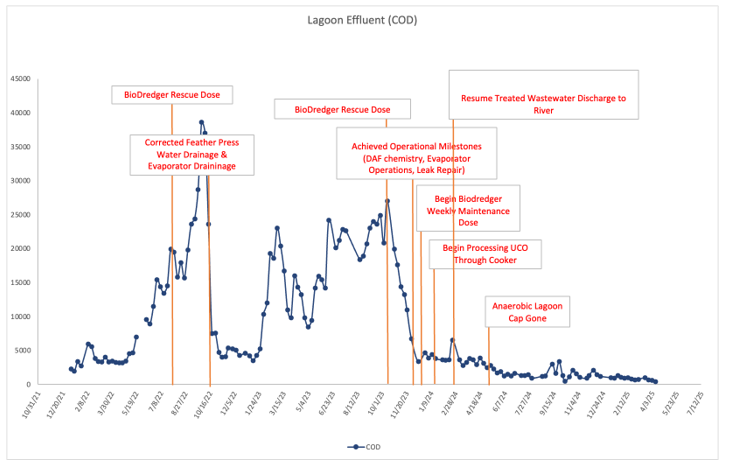
The project began with emergency BioDredger® applications during 2022 and 2023 using approximately 1,000 pounds per emergency treatment. After stabilizing lagoon conditions, the facility transitioned to a long-term maintenance program beginning in early 2024 consisting of two 25-pound buckets applied on a biweekly basis. Continuous maintenance dosing has continued since implementation.
Equally important, the facility also implemented upstream operational improvements, including reducing grease entering the wastewater system. Combining improved operations with ongoing biological treatment helped restore a healthier biological balance within the lagoon.
Measurable Performance Improvements
The biological treatment program produced improvements that extended well beyond odor reduction.
COD Reduction
Weekly sampling demonstrated substantial reductions in Chemical Oxygen Demand (COD), indicating improved degradation of organic material and more stable biological treatment. The case study's trend data show consistent performance improvements following BioDredger applications and operational changes.
Lower Suspended Solids
Total Suspended Solids (TSS) declined significantly as solids loading decreased and biological digestion improved. Lower suspended solids contributed to improved lagoon efficiency and reduced sludge accumulation.
Ammonia Stabilization
Ammonia concentrations, which had peaked near 1,500 mg/L during periods of severe overloading, steadily declined after implementation of the maintenance program. By early 2025, ammonia levels had stabilized below 200 mg/L, reflecting improved lagoon health and biological performance.
Visible Improvements in Lagoon Performance
Operational data were supported by visible improvements throughout the treatment process.
Over time, operators observed:
- Elimination of the lagoon surface cap
- Improved water clarity
- Increased visible biological activity
- Reduced sludge accumulation
- Restored lagoon appearance
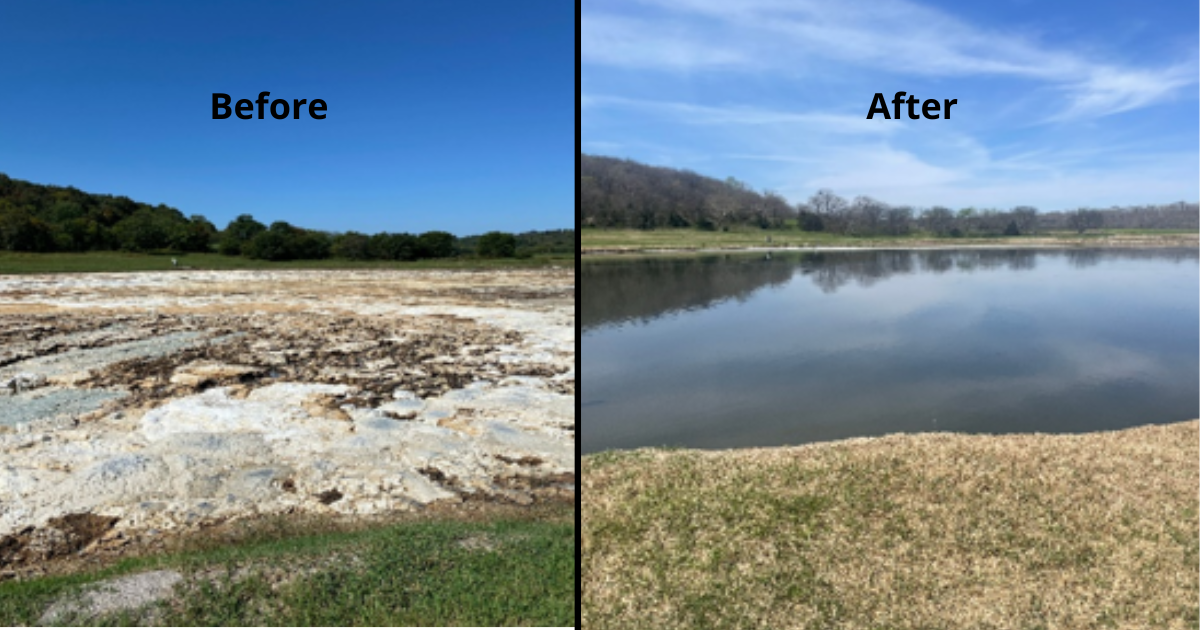
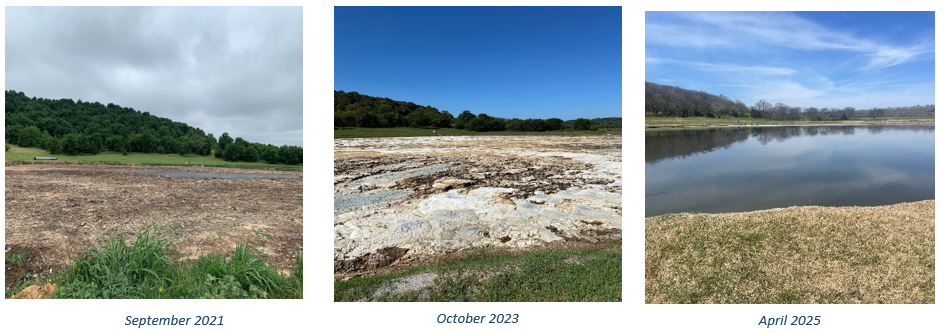
Satellite imagery and field photographs documented the transformation from heavily impacted lagoon conditions to a significantly healthier biological system over multiple years. These visual improvements reinforced the analytical data, demonstrating that reductions in solids accumulation translated into measurable improvements in overall lagoon health and treatment performance.
Operational Benefits Beyond Odor Control
The project delivered benefits that affected nearly every aspect of wastewater operations.
The facility:
- Eliminated persistent odor complaints
- Maintained dischargeable water for more than one year
- Avoided mechanical dredging
- Greatly reduced direct chemical additions
- Improved regulatory compliance
- Lowered operating costs
- Improved relationships with nearby residents and regulators
Following treatment, community complaints subsided and the facility resumed effective wastewater treatment while avoiding an estimated $79,000 per month in costs associated with previous emergency chemical dosing.
Facility Feedback
The facility's General Manager summarized the operational improvements following implementation of the biological treatment program:
"We have been able to run for some time without dosing any chemicals directly into the lagoon. Our pH is staying around 7.3–7.5. We are not showing a spike in acidifiers that would cause concern. With the work we continue to do here at the facility by not allowing grease to go down the drain, and the maintenance dosing, we have been very thrilled with the results. We have now maintained dischargeable water for just over a year. The cap on the lagoon is completely gone, and you can walk around the lagoon and see the activity."
Why Biological Dredging Worked
This project illustrates that successful lagoon restoration requires more than simply adding biological products. Long-term improvements resulted from combining emergency biological treatment, consistent maintenance dosing, and operational changes that reduced upstream loading.
Rather than relying solely on costly mechanical dredging to remove accumulated solids, the facility restored biological activity and gradually reduced sludge through natural biological processes. The project demonstrates how consistent biological maintenance, combined with sound operational practices, can extend lagoon life, improve treatment stability, and reduce long-term operating costs.
Download the Full Case Study
Review the complete technical case study, including treatment timelines, laboratory data, performance graphs, before-and-after images, and operational results from this industrial rendering facility. See how Drylet's BioDredger® biological treatment program restored anaerobic lagoon performance, reduced odors, and helped the facility avoid costly mechanical dredging while maintaining dischargeable effluent.

Ready to Improve Wastewater Performance?
Every wastewater system has unique operating conditions. Whether you're dealing with sludge accumulation, excessive solids, odors, high COD, ammonia, FOG, or inconsistent biological performance, Drylet's technical team can evaluate your system and recommend practical biological treatment solutions tailored to your facility.

Interested in Becoming a Drylet Distributor?
Drylet is expanding its distributor network across industrial, municipal, agricultural, food processing, rendering, and FOG wastewater markets. If you're looking to add innovative biological treatment solutions to your product portfolio, we'd love to discuss partnership opportunities.
Frequently Asked Questions
Can biological treatment eliminate wastewater odors?
Biological treatment addresses one of the primary causes of wastewater odors by restoring healthy microbial activity and reducing the accumulation of organic solids. While every system is different, improving biological treatment performance often leads to significant reductions in odor generation, particularly in anaerobic lagoons experiencing organic overloading.
What causes sludge to accumulate in anaerobic lagoons?
Sludge accumulates when organic solids enter the lagoon faster than naturally occurring microorganisms can break them down. High organic loading, excessive fats, oils and grease (FOG), inadequate retention time, seasonal temperature changes, and biological inhibition can all accelerate sludge accumulation over time.
Can biological treatment reduce the need for mechanical dredging?
In many applications, biological dredging programs can significantly slow sludge accumulation or gradually reduce existing organic solids, extending the useful life of wastewater lagoons. While some facilities may eventually require mechanical dredging, biological treatment can often delay or reduce the frequency and cost of those projects.
Why are COD and TSS important wastewater measurements?
Chemical Oxygen Demand (COD) measures the amount of organic material present in wastewater, while Total Suspended Solids (TSS) measures the concentration of suspended particles. Both are key indicators of wastewater treatment performance and are commonly monitored to evaluate biological system efficiency and regulatory compliance.
How long does it take to restore biological lagoon performance?
Every wastewater system responds differently depending on sludge depth, organic loading, wastewater characteristics, operating conditions, and maintenance practices. Some improvements, such as odor reduction, may occur relatively quickly, while restoring long-term biological balance and reducing accumulated solids typically requires a consistent maintenance program over time.
Related Resources
How to Measure Sludge Depth in Wastewater Lagoons
Learn how operators accurately measure sludge accumulation and monitor lagoon capacity before performance problems develop.
Alternatives to Lagoon Dredging
Compare biological sludge reduction with mechanical dredging and explore practical options for extending lagoon life.
Signs Your Industrial Wastewater System Is Overloaded
Recognize the warning signs of excessive organic loading before treatment performance declines.
Common Causes of Industrial Lagoon Odors
Understand the biological and operational factors that contribute to persistent wastewater odors.
What Is Wastewater Biology? Understanding the Science Behind Biological Treatment
Learn how microorganisms naturally break down organic waste and why healthy biological activity is essential for wastewater treatment.