
Commercial Kitchen Drain Odor Case Study: Eliminating Persistent Drain Odors with LiquifyGT®

Overview
Persistent drain odors can create an unpleasant dining experience, reduce employee satisfaction, and indicate the buildup of fats, oils, grease (FOG), and organic waste within commercial plumbing systems.
A national upscale steakhouse chain experienced recurring drain odors throughout one of its restaurant kitchens despite routine chemical cleaning. During an eight-week field evaluation, Drylet recommended LiquifyGT® to biologically treat the affected drains. By the end of the evaluation, odors had been eliminated from all treated drains, customer complaints had stopped, and kitchen staff also reported noticeably improved drain flow.
Key Results
- Eliminated persistent odors from 16 commercial kitchen drains
- Eight-week field evaluation
- Eliminated the routine use of harsh drain chemicals
- Improved drain flow throughout the kitchen
- Reduced customer odor complaints
- Improved working conditions for kitchen staff
The Challenge
A national upscale steakhouse chain experienced persistent drain odors throughout one of its restaurant kitchens. All 16 floor drains emitted strong odors that became increasingly noticeable to kitchen staff and, eventually, to restaurant guests. Although maintenance personnel scrubbed the drains weekly using chemical cleaners, the odors consistently returned.
Like many commercial kitchens, the restaurant generated fats, oils, grease (FOG), proteins, and food particles that entered the drainage system during daily operations. Over time, these organic materials accumulated inside drain lines and floor drains, creating ideal conditions for odor-producing bacteria. Management wanted a long-term solution that addressed the source of the odor rather than temporarily masking it with chemicals.
Why Commercial Kitchen Drains Develop Odors
Commercial kitchen drains continually receive fats, oils, grease, proteins, carbohydrates, and other organic waste generated during food preparation and cleanup. As these materials accumulate on drain walls, naturally occurring microorganisms begin decomposing the organic matter. In areas where oxygen becomes limited, anaerobic bacteria can produce foul-smelling compounds that escape through floor drains and sink drains into occupied spaces.
Understanding why FOG (fats, oils, and grease) disrupts wastewater treatment systems also helps explain why accumulated organic material inside restaurant plumbing systems often becomes the source of persistent drain odors. While harsh chemicals may temporarily suppress odors, they often fail to remove the underlying organic buildup responsible for recurring odor problems.
Treatment Approach
After discussing the facility's operating conditions, Drylet recommended treating the affected drains with LiquifyGT®. Because the restaurant was experiencing odors without significant drain backups or slow drainage, a maintenance treatment program was recommended rather than a more aggressive restoration program.
Each of the 16 kitchen drains received one 8-ounce scoop of LiquifyGT® every other week throughout the eight-week evaluation. The biological treatment introduced beneficial microorganisms capable of naturally breaking down accumulated organic material within the drains. As these microorganisms established themselves, they began reducing the organic deposits responsible for generating persistent odors.
Results
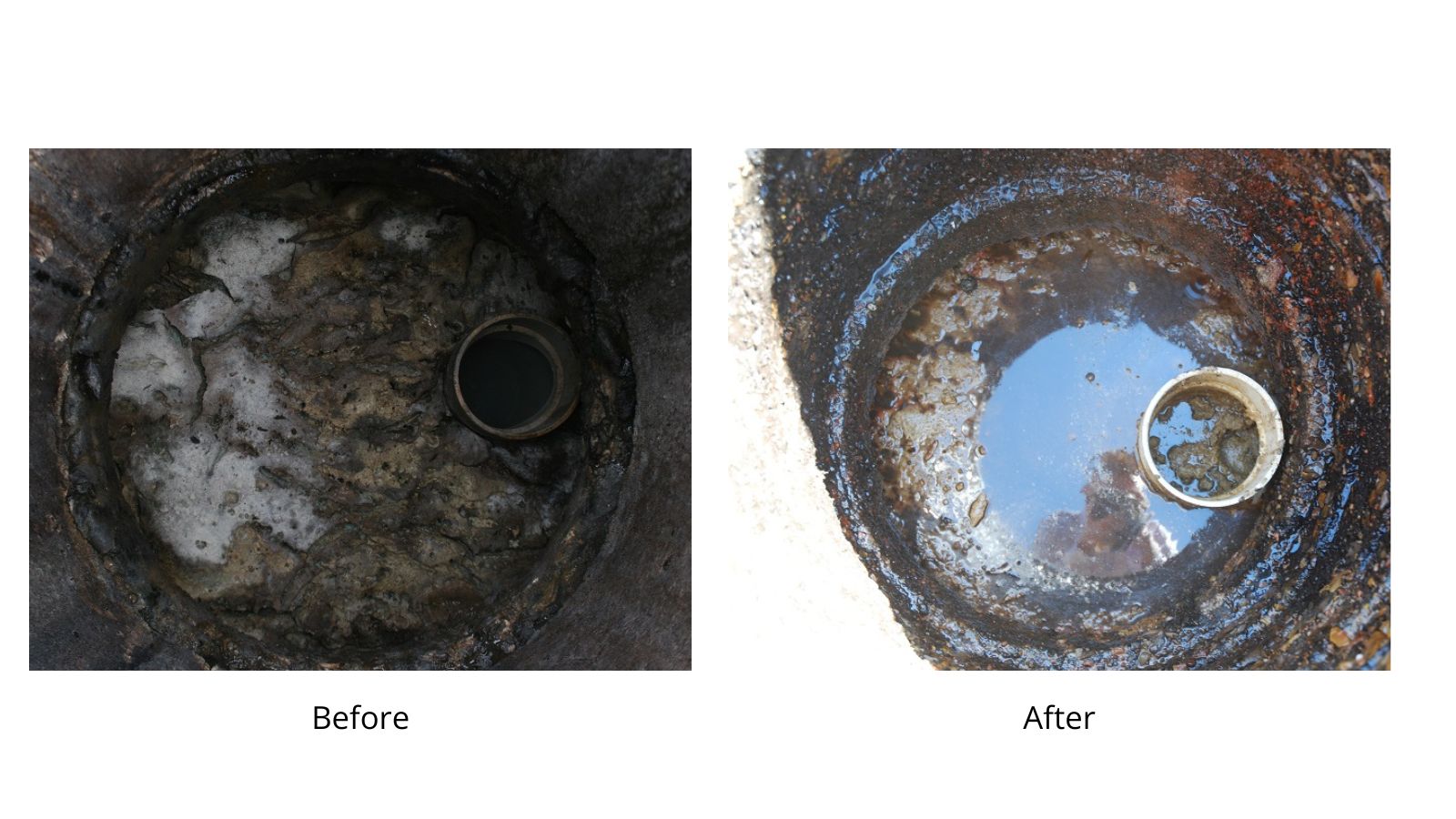
Over the course of the eight-week evaluation, odor conditions steadily improved throughout the kitchen. By the conclusion of the trial, staff reported that persistent drain odors had been eliminated from all treated drains, and customer complaints regarding unpleasant odors had stopped.
Although the original objective was odor control, the restaurant also observed an unexpected operational benefit. Fluids drained more quickly than before treatment, suggesting that biological degradation had reduced accumulated organic material within the drain system.
The results demonstrated that addressing the source of the organic buildup—not simply masking odors with chemicals—provided a more effective long-term solution for maintaining commercial kitchen drains.
How Biological Drain Treatment Works
Commercial kitchen drains naturally accumulate fats, oils, grease (FOG), proteins, carbohydrates, and other organic materials during daily operations. As these materials build up along the walls of drain lines, they provide a continuous food source for odor-producing bacteria. LiquifyGT® uses Drylet's patented biological technology to introduce beneficial microorganisms that naturally digest these accumulated organic deposits. Supported by a unique porous mineral carrier, the microorganisms remain active within the drain system, gradually reducing the organic material responsible for recurring odors.
As organic buildup decreases, odors are reduced at their source rather than temporarily masked with fragrances or harsh chemicals. Understanding how bacteria break down organic waste helps explain why biological treatment can provide longer-lasting results than treatments that simply disinfect drain surfaces. Unlike chemical drain treatments that often require repeated applications and may disrupt biological activity, biological drain treatment works continuously by supporting naturally occurring microbial processes.
Why Biological Drain Treatment Is Different
Many commercial kitchens rely on caustic chemicals or disinfectants to control drain odors. While these products may temporarily reduce odor, they often do little to remove the layer of accumulated organic material attached to the inside of drain lines. Biological treatment addresses the underlying cause of recurring odors by continuously breaking down fats, oils, grease, proteins, and other organic deposits that fuel odor-producing bacteria.
When incorporated into a preventative maintenance program, biological drain treatment can help:
- Reduce recurring drain odors
- Improve drain flow
- Decrease organic buildup inside drain lines
- Reduce reliance on harsh chemical cleaners
- Support healthier plumbing and grease management systems
Conclusion
This eight-week field evaluation demonstrated how biological drain treatment eliminated persistent odors from sixteen commercial kitchen drains at a national steakhouse location.
In addition to eliminating odors and ending customer complaints, the restaurant also observed improved drain flow after treatment, suggesting that accumulated organic material had been reduced within the drainage system. Although every commercial kitchen operates under different conditions, this case study demonstrates how addressing the biological source of drain odors can provide longer-lasting results than relying solely on chemical cleaners.
Facilities evaluating long-term drain maintenance strategies may also benefit from understanding biological treatment instead of chemical treatment when comparing sustainable approaches to managing organic waste and recurring odor problems.
Frequently Asked Questions
Why do commercial kitchen drains develop odors?
Commercial kitchen drains accumulate fats, oils, grease (FOG), proteins, and food particles during normal operations. As this organic material decomposes, odor-producing bacteria generate gases that escape through floor drains and sink drains.
How does biological drain treatment work?
Biological drain treatment introduces beneficial microorganisms that naturally consume accumulated organic waste inside drain lines. As the organic deposits are reduced, odors decrease because their food source is removed.
Does biological treatment replace drain cleaning?
Biological treatment is most effective as part of a preventative maintenance program. While severe blockages may still require mechanical cleaning, biological treatment helps reduce the organic buildup that contributes to recurring odors and slow drainage.
Can biological drain treatment reduce the need for chemicals?
Many facilities use biological treatment to reduce their reliance on harsh chemical cleaners. Because biological treatment addresses the source of recurring odors, maintenance programs can often be adjusted based on operating conditions and system performance.
Is LiquifyGT® suitable for restaurants and commercial kitchens?
Yes. LiquifyGT® is designed for restaurants, food processing facilities, commercial kitchens, hospitality operations, and other facilities where fats, oils, grease, and organic waste contribute to drain odors and plumbing maintenance issues.
Continue Learning
Continue exploring biological drain treatment and FOG management.
- The Hidden Cost of Dirty Pipes in Meat Processing: Preventing FOG Buildup and Wastewater Failures
- What Is Bioaugmentation? How Beneficial Bacteria Improve Wastewater Treatment
Eliminate Drain Odors at the Source
Recurring drain odors are often a symptom of accumulated organic waste, not simply a housekeeping issue. If your restaurant, commercial kitchen, food processing facility, or industrial operation is experiencing persistent odors, slow drains, or FOG buildup, Drylet's technical team can help develop a biological treatment program tailored to your facility.
Request a Free Technical Assessment
Stay Ahead with S2: Systems & Solids
Receive practical insights on FOG management, biological treatment, wastewater optimization, and the latest Drylet case studies delivered directly to your inbox.
Subscribe to the S2: Systems & Solids Newsletter
Grow Your Business as a Drylet Distributor
Drylet is expanding its distributor network across food service, industrial wastewater, food processing, FOG management, and environmental treatment markets. Partner with Drylet to provide customers with proven biological solutions for odor control, drain maintenance, grease management, and wastewater performance.