
ManureMagic® Hog Farm Case Study: Improved Manure Management and Production Performance

Overview
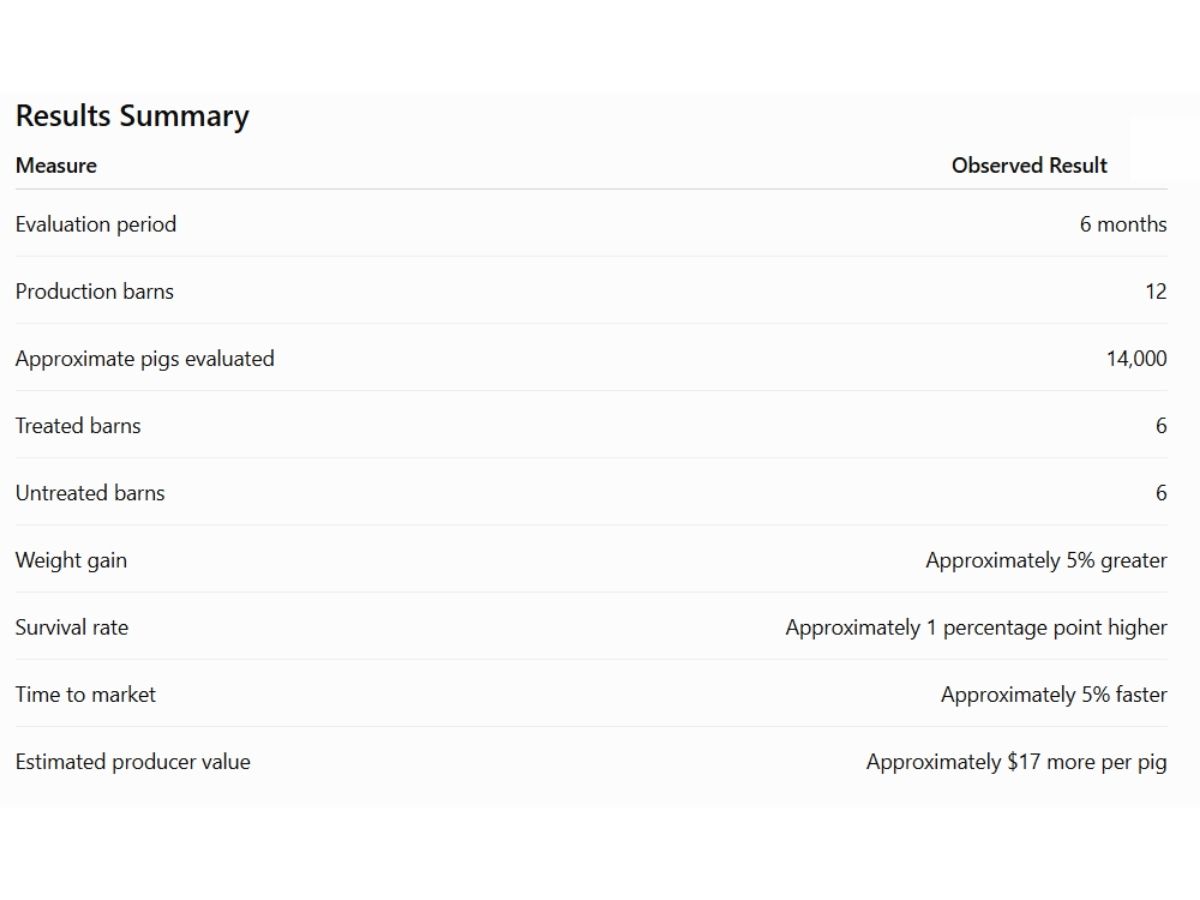
A six-month side-by-side field evaluation at a large commercial hog operation in Russia assessed the impact of improved manure management using ManureMagic®. While the original objective was to improve manure liquefaction and reduce odors, the producer also documented measurable differences in pig performance between treated and untreated barns. Barns treated with ManureMagic® demonstrated improved manure liquefaction, reduced pit odors, approximately 5% greater weight gain, an approximately 1% higher survival rate, and pigs reached market weight about 5% faster than those housed in untreated barns.
Based on the producer's economic analysis, these improvements represented an estimated $17 additional value per pig housed in the treated barns during the evaluation period. For readers unfamiliar with biological manure treatment, understanding how bioaugmentation improves biological treatment provides helpful background on how beneficial microorganisms support the breakdown of organic waste.
Key Results
- Six-month side-by-side field evaluation
- Approximately 14,000 pigs evaluated
- Twelve commercial production barns
- Improved manure liquefaction
- Reduced manure pit odors
- Approximately 5% greater weight gain
- Approximately 1% higher survival rate
- Approximately 5% faster time to market
- Producer estimated approximately $17 additional value per pig
The Challenge
A major hog producer wanted to improve manure management across multiple production barns while reducing odors and improving manure liquefaction within the pull-plug pit system. Each week, manure from the pits was discharged into a lagoon for storage and treatment. Like many swine operations, accumulated solids and inconsistent manure consistency made pit management more difficult and contributed to odor concerns. Rather than changing barn management practices, the producer elected to evaluate a biological treatment program under normal production conditions.
Side-by-Side Field Evaluation
The producer selected two production sites for the evaluation, each consisting of six nearly identical open-sided barns. Each barn housed between 1,000 and 1,200 pigs from the same genetic source and followed the same production practices throughout the six-month study. Three barns at each location received ManureMagic®, while the remaining six barns served as untreated comparisons.
In total, approximately 14,000 pigs participated in the producer-led field evaluation. Because the barns operated under similar conditions over the same production period, the producer was able to compare operational observations and production data between treated and untreated groups.
Operational Observations
Throughout the six-month evaluation, the producer observed noticeable improvements in manure liquefaction within the treated barns. Improved manure consistency made pit management easier and reduced the accumulation of thicker manure deposits that commonly contribute to odor generation and pumping challenges.
Reducing accumulated organic solids allows naturally occurring biological processes to function more efficiently. Understanding <strong>how bacteria break down organic waste</strong> helps explain why improving microbial activity can influence manure consistency and odor control. As the evaluation progressed, the producer also began noticing differences in overall production performance between the treated and untreated barns.
Weight Gain Results
At the conclusion of the six-month evaluation, production records indicated that pigs housed in the ManureMagic®-treated barns achieved approximately 5% greater weight gain than pigs housed in the untreated barns. While the evaluation was originally intended to measure improvements in manure management, the producer determined that the observed increase in weight gain represented one of the most valuable operational outcomes of the study.

Survival Rate Results
Production records also showed a difference in survival between the treated and untreated barns during the six-month evaluation. Pigs housed in barns treated with ManureMagic® recorded an approximately one percentage point higher survival rate than pigs housed in the untreated barns. A one-point difference may appear modest, but across a commercial operation involving approximately 14,000 pigs, even a small improvement in survival can represent a meaningful production and financial outcome.
The evaluation was not originally designed as an animal-health study, and the available records do not establish a direct biological mechanism between manure treatment and pig survival. However, the producer observed the difference consistently enough to verify the production records before accepting the result.
Improved manure liquefaction and reduced pit odors may contribute to a more manageable barn environment, but animal performance can also be influenced by ventilation, temperature, feed, genetics, disease pressure, stocking density, and other operational factors. For that reason, the survival results should be understood as an observed outcome of this producer-led field comparison rather than a guaranteed result of treatment.

Faster Time to Market
In addition to improved weight gain and survival, pigs housed in the ManureMagic®-treated barns reached market weight approximately 5% faster than pigs in the untreated barns. Reducing the time required to reach market weight can improve production efficiency by increasing barn turnover and lowering the number of days that feed, labor, utilities, and facility space are required for each production group.
The available case study information does not include detailed feed conversion, ration, or daily gain data, so the results should be interpreted as a producer-recorded difference in time to market rather than a controlled nutrition trial. Even so, the combination of greater weight gain, improved survival, and faster market readiness created a meaningful economic outcome for the producer.
Financial Impact
After reviewing production records from the treated and untreated barns, the producer estimated that the observed performance differences generated approximately $17 in additional value per pig housed in the ManureMagic®-treated barns. Across a large commercial hog operation, even modest improvements in survival, weight gain, and production cycle length can significantly affect overall profitability.
The producer initially questioned the results and reviewed the underlying records before confirming the differences between the treated and untreated barns. According to the original field evaluation, the recorded differences were statistically significant. However, because the complete statistical analysis and original study documentation are not available, this case study does not repeat the previously reported probability calculation.
Why Manure Management May Affect Barn Performance
Manure management is usually evaluated in terms of solids accumulation, crust formation, pumping difficulty, odors, and storage capacity. However, conditions within manure pits can also influence the overall barn environment. When manure remains thick or poorly liquefied, organic solids can accumulate and contribute to stronger odors and more difficult pit management. Improving biological breakdown can help maintain a more uniform manure consistency and support more predictable removal from pull-plug systems.
ManureMagic® is designed to enhance the activity of beneficial microorganisms involved in breaking down organic waste. The treatment supports manure liquefaction and solids reduction rather than acting directly on animal growth or health. Understanding how bacteria break down organic waste helps explain the biological processes behind improved manure consistency and odor management.
The production results observed during this evaluation may have been influenced by improved barn conditions, but animal performance is affected by many interconnected factors. The field results should therefore be viewed as a documented association within this specific operation, not a guarantee that every farm will experience the same outcome.
Conclusion
This six-month side-by-side field evaluation began as an effort to improve manure liquefaction and reduce odors in commercial hog barns. The treated barns demonstrated improved manure consistency and odor conditions. Production records also showed approximately 5% greater weight gain, an approximately one percentage point higher survival rate, and approximately 5% faster time to market compared with untreated barns.
Based on the producer’s calculations, the combined operational and production differences represented approximately $17 in additional value per pig housed in treated barns. Although these results were recorded at a specific commercial operation and should not be considered guaranteed outcomes, the evaluation demonstrates how better manure management can contribute to operational efficiency and potentially support broader production goals.
Frequently Asked Questions
What is ManureMagic®?
ManureMagic® is a biological manure treatment designed to support beneficial microbial activity in manure pits, storage systems, and lagoons. It helps improve manure liquefaction, reduce accumulated solids, limit crust formation, and support odor management.
How does ManureMagic® improve manure liquefaction?
ManureMagic® introduces beneficial microorganisms supported by Drylet’s patented porous carrier technology. These microorganisms help break down organic material, contributing to more uniform manure consistency and easier pumping and removal.
Did ManureMagic® directly cause the improved animal performance?
This producer-led field evaluation documented higher weight gain, improved survival, and faster time to market in treated barns. However, animal performance is influenced by many variables, including feed, genetics, ventilation, temperature, disease pressure, stocking density, and general barn management. The results represent observations from this specific operation and are not guaranteed outcomes.
Can better manure management influence barn conditions?
Improved manure liquefaction and reduced solids accumulation can make pits easier to manage and may help reduce odor conditions within the barn. Better manure management can support a more consistent production environment, although it is only one of many factors affecting animal performance.
Can ManureMagic® be used in pull-plug pits and manure lagoons?
ManureMagic® can be used in multiple manure-management systems, including pull-plug pits, deep pits, storage basins, and manure lagoons. Application programs should be based on system design, manure volume, operating conditions, and treatment objectives.
Continue Learning
Continue exploring biological manure management and wastewater treatment:
- How Bacteria Break Down Organic Waste in Wastewater Treatment Systems
- What Is Bioaugmentation? How Beneficial Bacteria Improve Wastewater Treatment
- Anaerobic vs Aerobic Wastewater Treatment
- How Biological Sludge Reduction Works in Wastewater Lagoons
Improve Manure Management at Your Operation
Every manure system behaves differently. If your operation is dealing with solids accumulation, crusting, difficult pumping, odors, or inconsistent manure liquefaction, Drylet’s technical team can help evaluate a practical biological treatment program.
Request a Free Technical Assessment
Stay Ahead with S2: Systems & Solids
Get practical insights on biological treatment, manure management, solids reduction, wastewater performance, and new Drylet case studies delivered directly to your inbox.
Subscribe to the S2: Systems & Solids Newsletter
Grow Your Business as a Drylet Distributor
Drylet is expanding its distributor network across agriculture, industrial wastewater, food processing, FOG management, and environmental treatment markets. Partner with Drylet and offer biological treatment solutions that help customers improve solids management, odor control, manure handling, and system performance.