South Deerfield WWTP Case Study: 78% Biosolids Reduction and 68% Sludge Hauling Cost Savings
Results at a Glance
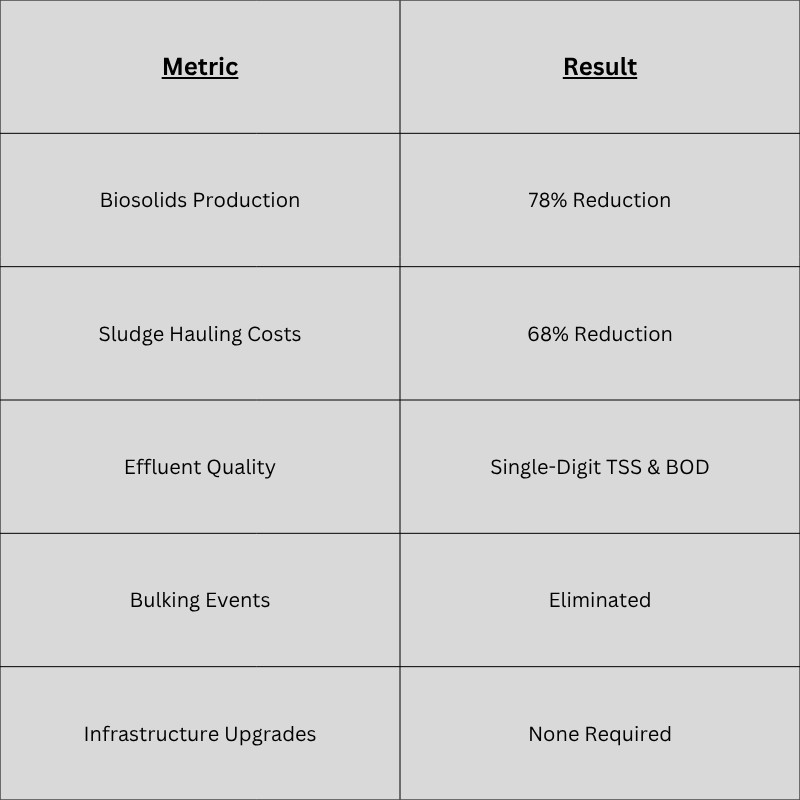
- 78% reduction in biosolids production year-over-year
- 68% reduction in monthly sludge hauling costs
- Single-digit effluent TSS and BOD
- Improved settling and elimination of bulking
- No infrastructure upgrades required
by Keith Milne, Chief Operator, Town of Deerfield Wastewater Division, South Deerfield, MA
Evaluate Biosolids Production at Your Facility
Every wastewater treatment plant accumulates solids differently depending on loading, process design, and operating conditions.
A technical sludge assessment can help identify opportunities to:
- reduce biosolids production
- stabilize treatment performance
- lower sludge disposal costs
Request a Technical Assessment
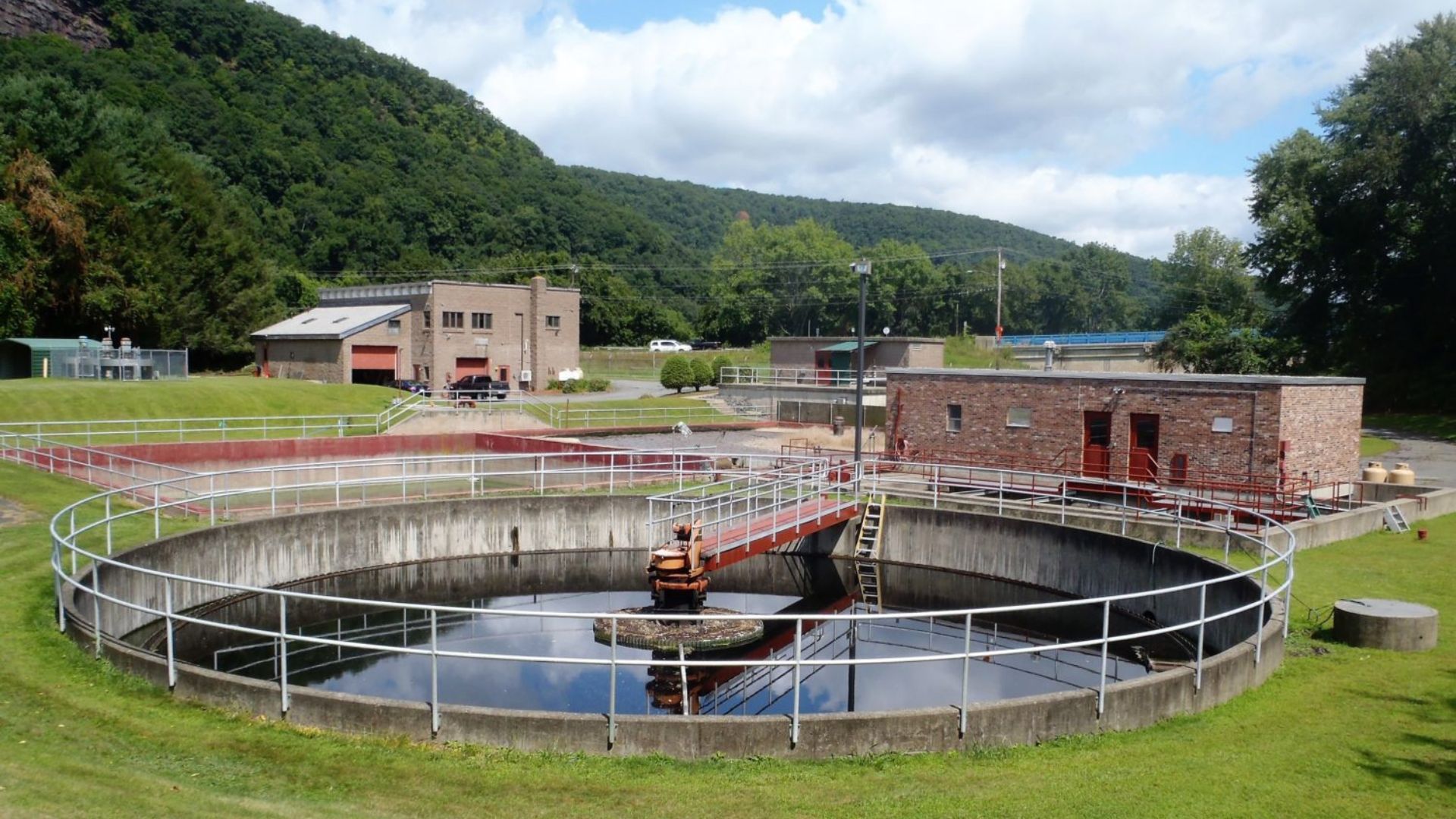
South Deerfield Wastewater Treatment Plant reduced biosolids production by 78% and lowered sludge hauling costs by 68% after implementing Drylet Aqua Assist. The 0.4 MGD extended aeration activated sludge facility also eliminated bulking events, improved settling characteristics, maintained single-digit effluent TSS and BOD levels, and achieved these results without capital upgrades.
Facility: South Deerfield Wastewater Treatment Plant
Location: South Deerfield, Massachusetts
Treatment Type: Extended aeration activated sludge
Average Flow: 0.4 MGD
The facility operates an extended aeration activated sludge wastewater treatment system, a common configuration used by small and mid-sized municipal plants across North America. Like many municipal wastewater treatment plants, South Deerfield faced steadily increasing biosolids production and rising sludge disposal costs. Landfill and incineration options in the region had become limited, and hauling costs had tripled in recent years, placing significant pressure on operating budgets.
According to Chief Operator Keith Milne, reducing biosolids production had become a priority.
“As more and more landfills and incinerators are becoming mothballed for numerous reasons, these costs are expected to escalate and I knew that I needed to do everything I could as Chief Operator to reduce those costs.”
Identifying a New Approach to Biosolids Reduction
Milne first learned about Drylet’s Aqua Assist biological treatment technology through an article in Treatment Plant Operator Magazine highlighting innovative wastewater treatment solutions. Although he had evaluated biological products in the past, he had remained skeptical.
“I had considered other products in the past professing similar results but had never tried them mainly due to testimonials from other operators who had tried them and were disappointed.”
However, one factor stood out. Aqua Assist had received the WEF 2017 Innovative Technology Award, which suggested the technology had undergone a higher level of evaluation than many biological additives on the market. After reviewing additional information and speaking with Drylet’s technical team, the plant agreed to conduct a three-month pilot trial.
Trial Setup and Treatment Implementation
The trial began on November 12.
Drylet provided dosing recommendations based on:
- plant size
- average flow
- treatment configuration
- operating history
The facility initially applied:
- 2 pounds per day of Aqua Assist
- reduced to 1 pound per day after several weeks
Treatment was applied at the splitter box where influent and return activated sludge (RAS) meet, allowing the biological culture to enter the aeration basin.
Early Operational Observations
%20(1200%20x%20800%20px).png)
During the first several weeks of treatment, the plant did not observe dramatic changes.
However, gradual improvements began to appear:
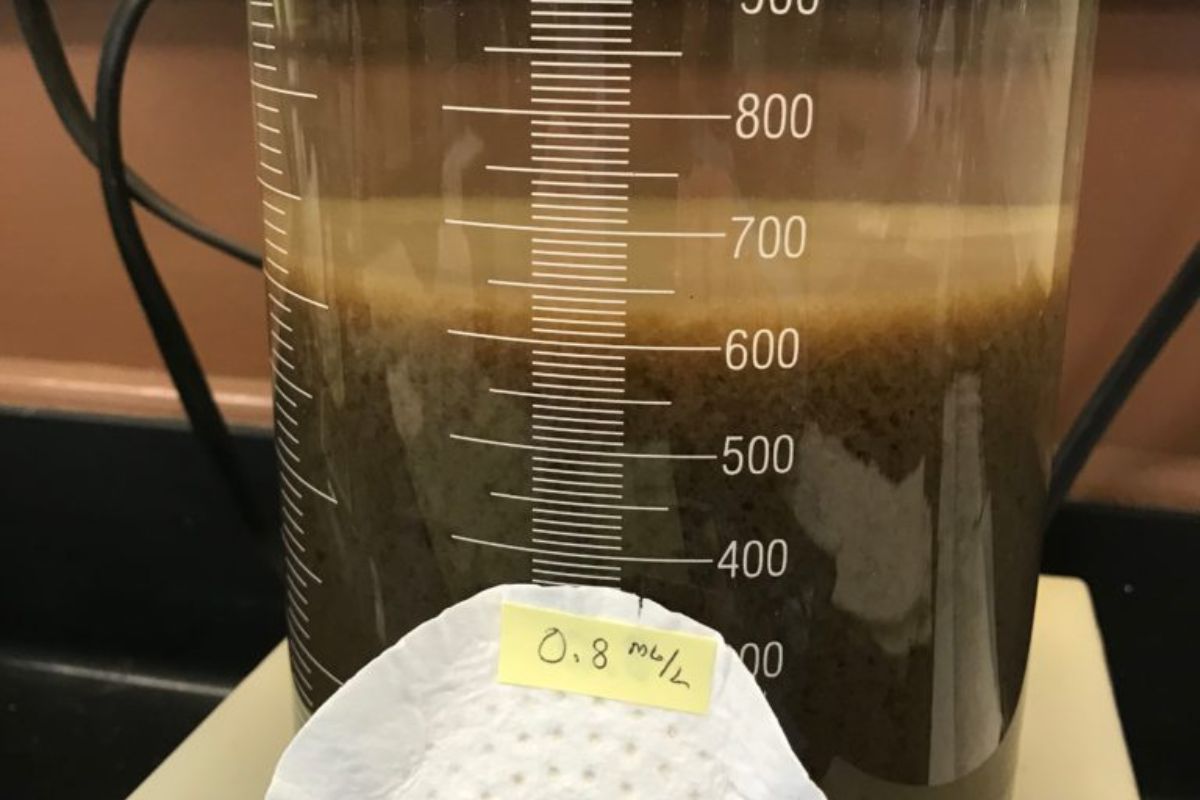
- improved sludge settling
- clearer effluent
- fewer bulking events
As treatment progressed, Drylet’s technical team recommended adjustments to operating strategy. Specifically, the plant was asked to allow Mixed Liquor Suspended Solids (MLSS) concentrations to increase beyond the plant’s traditional operating range.
Historically the facility operated at:
- 2,800–3,400 mg/L MLSS during warm months
- 3,400–4,000 mg/L MLSS during winter
Operators were asked to gradually increase MLSS levels to 4,000–5,000 mg/L. This initially pushed the plant outside its normal operating comfort zone.
“I had visions of coming in one morning and finding a three-foot blanket of sludge floating on top of my clarifier.”
However, with ongoing technical support and monitoring, the plant continued following the recommended operating strategy.
Biosolids Production Begins to Decline
Over the following months, measurable improvements began to occur. The plant gradually reduced sludge wasting events while maintaining stable clarifier performance.
Prior to implementing Aqua Assist, the facility generated an average of:
Seven 9,000-gallon sludge loads per month
Within several months of treatment:
- sludge hauling dropped to five loads per month
- wasting events were eventually reduced to once per week
- summer operations dropped to two loads per month
This represented a 78% reduction in biosolids production compared to historical averages.
Operational Changes Made During the Trial
One of the most important aspects of the South Deerfield project was that the results were not achieved through biological treatment alone. The facility also made several operational adjustments based on guidance from Drylet's technical team.
Initially, operators maintained Mixed Liquor Suspended Solids (MLSS) concentrations between 2,800–3,400 mg/L during warmer months and 3,400–4,000 mg/L during winter operations. As treatment progressed, the plant gradually increased MLSS concentrations into the 4,000–5,000 mg/L range while carefully monitoring clarifier performance and effluent quality. The facility also reduced sludge wasting rates incrementally rather than making abrupt changes. As settling characteristics improved and biosolids production declined, operators were able to extend the time between wasting events while maintaining stable treatment performance.
Another key adjustment involved maintaining a controlled sludge blanket within the final clarifier. This approach provided additional biological contact time and helped support further solids reduction without negatively impacting effluent quality. According to Chief Operator Keith Milne, operating at these higher MLSS concentrations initially pushed the facility outside its traditional comfort zone. However, ongoing technical support, performance monitoring, and weekly operational reviews provided confidence that the process could be managed safely and effectively.
These operational changes ultimately allowed the facility to maximize the benefits of the biological treatment program while maintaining excellent treatment performance, stable clarifier operation, strong denitrification, and single-digit effluent TSS and BOD levels throughout the trial period.
Cost Savings from Reduced Sludge Disposal
Before implementing Aqua Assist, the plant had already sent 86 sludge loads for disposal that year. At an average cost of $804 per load, monthly disposal costs averaged:
$5,762 per month
After treatment was implemented, sludge production dropped significantly.
In August of the following year:
- only two loads were hauled
- compared to nine loads the previous August
After accounting for the $500 monthly Aqua Assist program cost, the plant realized:
$4,635 in net monthly savings
Treatment Performance Improvements
In addition to biosolids reduction, operators observed several operational improvements.
The facility reported:
- elimination of sludge bulking
- improved settling characteristics
- stable clarifier operation
- strong denitrification performance
- single-digit effluent TSS and BOD
These improvements occurred without any infrastructure upgrades or capital projects. “This has been a very simple solution to our escalating sludge hauling problem and has made a significant positive impact on controlling those costs.”
Operator Perspective
Milne credits both the biological technology and the ongoing technical support provided during the trial.
Drylet’s program included:
- plant performance modeling using historical data
- weekly technical review calls
- operational guidance during MLSS adjustments
- continued performance monitoring
“Your weekly conference calls will help calm your nervousness about things like MLSS concentration levels and other concerns.”
When Wastewater Facilities Should Evaluate Biosolids Reduction
Wastewater treatment plants experiencing the following conditions may benefit from evaluating biological solids reduction strategies:
- increasing biosolids production
- rising sludge hauling costs
- declining treatment capacity
- persistent bulking issues
- aging treatment infrastructure
Early evaluation can help operators stabilize treatment performance and extend the operational life of existing infrastructure. Facilities operating activated sludge, oxidation ditch, sequencing batch reactor (SBR), or lagoon systems all face the same challenge: managing excess solids while maintaining treatment performance.
Request a Technical Wastewater Assessment
Every wastewater treatment system accumulates solids differently depending on loading conditions, treatment design, and operational history.
A technical sludge assessment can help identify opportunities to:
- reduce biosolids production
- improve treatment stability
- lower sludge disposal costs
- extend the life of existing treatment infrastructure
Request a Technical Assessment
Operator Recommendation
“I cannot think of anything else I could do or add into our treatment picture for such a small monetary outlay that would also reduce our biosolids this significantly. This has been a very simple solution to our escalating sludge-hauling problem and has made a significant positive impact on controlling those costs, while giving us no more bulking, no rising solids in our clarifier, excellent denitrification, very low nutrient numbers, and single digit TSS and BOD values without any infrastructural changes or additions whatsoever."
Drylet’s program included:
- plant performance modeling using historical data
- weekly technical support calls
- operational guidance during MLSS adjustments
- continued performance monitoring
“This whole experience has been pretty remarkable. It's taught me – and allowed me the latitude – to operate differently and in a way that reduces our overall operational cost significantly. I am highly recommending Aqua Assist. It is working amazingly well at our ancient, in-dire-need-of-upgrading, extended aeration plant. Even with all the rags, grit, and other trash all swirling around these amazing bugs, they are still getting the job done well enough for me to want to recommend it to you. If you're on the fence, all I can say is “go for it, and give it a try.” I'm certain that you won't be disappointed."
Download the Complete Operator Case Study
Read the full first-person account from Chief Operator Keith Milne, including operational changes, MLSS adjustments, sludge hauling reductions, and treatment performance improvements.
Download the Full South Deerfield WWTP Case Study PDF
