
Swine Farm Lagoon Solids Reduction Case Study

Results at a Glance
- Main lagoon served five swine barns with a combined capacity of 10,000 head
- Severe floating solids accumulation was present before treatment
- ManureMagic was introduced as a biological solids management treatment
- Visible lagoon conditions improved following treatment
- Floating solids accumulation was reduced as biological treatment progressed
Facility Overview
Facility Type: Large commercial swine production operation
Herd Size: 10,000 head
Barns Served: Five large swine barns
Waste System: Manure lagoon
Primary Challenge: Severe floating solids accumulation
The facility's main manure lagoon received waste from five large barns housing approximately 10,000 head. Managing this volume of manure requires consistent biological activity to break down organic material and maintain effective lagoon conditions. Over time, floating solids had accumulated across the lagoon surface, creating a significant manure management problem and indicating that organic solids were accumulating faster than they were being broken down. The facility implemented biological treatment to improve the degradation of organic material and address the severe floating solids accumulation.
The Challenge: Severe Floating Solids Accumulation
The facility's primary challenge was extensive floating solids across the surface of its main manure lagoon.
Swine manure contains organic material that must be biologically degraded as it moves through the manure management system. When solids accumulate faster than biological processes can break them down, persistent solids can develop within the lagoon.
At this operation, the main lagoon was receiving manure from five large barns housing approximately 10,000 head. The continuous organic loading placed significant demand on the lagoon's biological treatment processes.
The extensive floating solids indicated that organic material was accumulating within the system and required a more effective solids management approach.
Rather than relying solely on physical removal, the facility evaluated biological treatment as a way to increase the breakdown of organic material within the existing lagoon system.
The ManureMagic Treatment Approach
The facility implemented ManureMagic as a biological treatment program to address the accumulation of organic solids within the manure lagoon. ManureMagic is designed to support the biological processes responsible for breaking down organic waste in manure management systems. By improving the conditions for biological degradation, the treatment program helps increase the breakdown of biodegradable solids within the existing system.
At this operation, the primary treatment objective was to reduce the extensive floating solids that had accumulated across the lagoon surface while supporting more effective management of the continuing manure load from the five barns. The program was implemented within the facility's existing manure management system without requiring new lagoon infrastructure.
Observed Lagoon Improvements
Following implementation of the ManureMagic treatment program, the facility observed visible improvement in the condition of the manure lagoon.
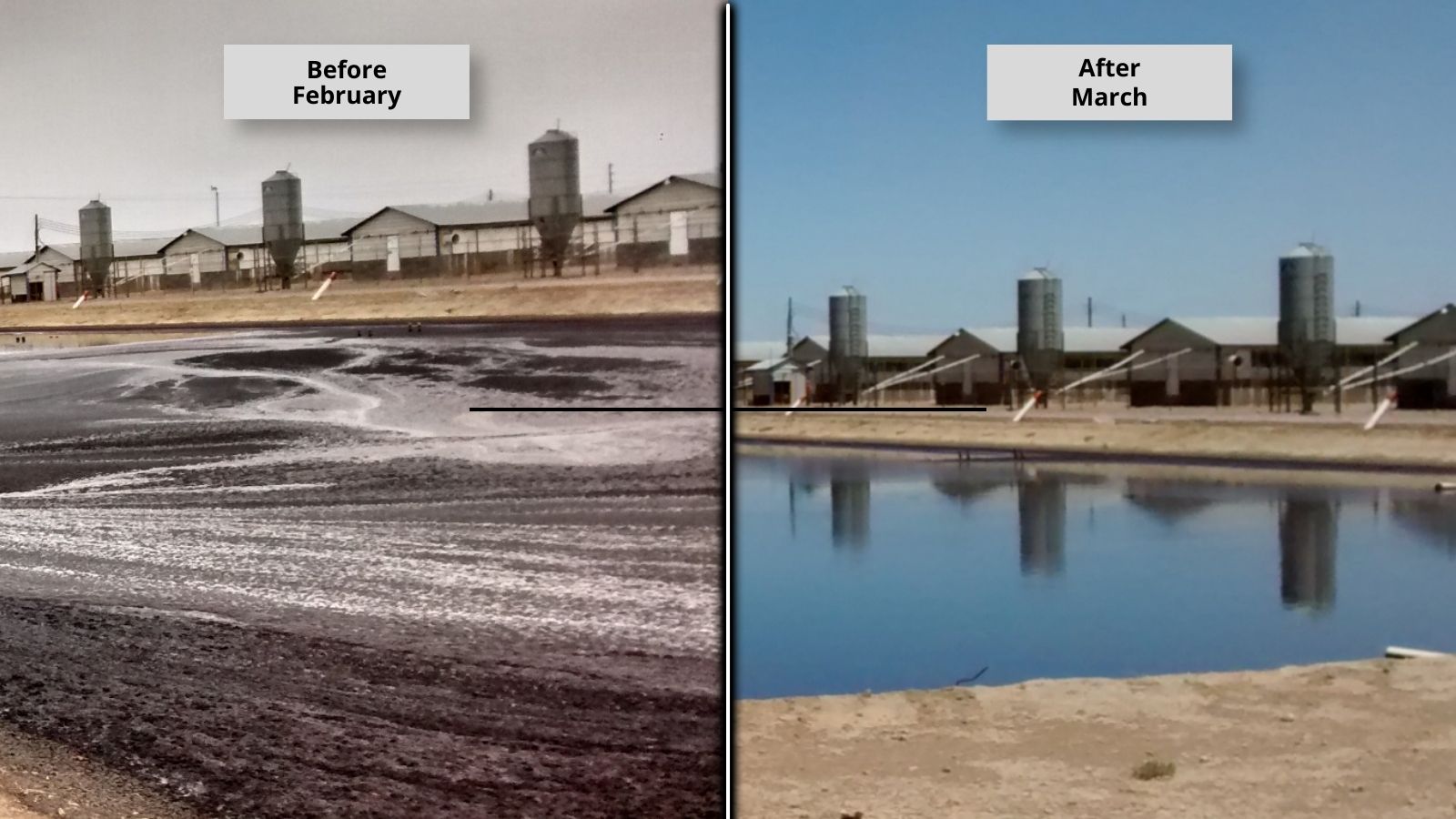
The extensive floating solids that had covered the lagoon surface were reduced as treatment progressed, indicating improved breakdown of accumulated organic material.
For an actively loaded lagoon serving five barns and approximately 10,000 head, the visible reduction in floating solids demonstrated a meaningful change in lagoon conditions while the manure management system remained in operation.
Although this evaluation did not provide a quantified sludge reduction percentage, the observed improvement showed that biological treatment was affecting the persistent organic solids that had created the original lagoon problem.
Why Floating Solids Develop in Swine Lagoons
Floating solids can develop when organic material entering a manure lagoon accumulates faster than biological processes can break it down. Manure characteristics, organic loading, temperature, retention time, microbial activity, and lagoon operating conditions can all influence how effectively solids are degraded.
In swine manure systems, accumulated organic material may form floating mats or crusts at the lagoon surface. These conditions can interfere with normal lagoon operation and indicate that biological degradation is not keeping pace with the incoming solids load. For large operations receiving manure from multiple barns, maintaining effective biological activity is especially important because new organic material is continually entering the system. Supporting biological degradation can help reduce biodegradable organic solids and improve overall solids management within the lagoon.
Operational Significance
For manure lagoons receiving continuous organic loading, persistent floating solids can be a sign that solids are accumulating faster than the biological system can effectively process them. At this operation, reducing the extensive floating solids represented an important improvement in lagoon conditions while the system continued serving five barns and approximately 10,000 head.
The results demonstrate several practical considerations for swine producers:
- Lagoon surface conditions can provide visible indications of changing solids accumulation
- Biological treatment can support the breakdown of biodegradable organic material within an existing manure management system
- Large manure lagoons require ongoing solids management as new organic material continually enters the system
- Monitoring lagoon conditions over time can help identify developing solids problems before they become more difficult to manage
For producers dealing with persistent floating solids, evaluating the biological condition of the lagoon can help identify opportunities to improve long term solids management.
When Swine Producers Should Evaluate Lagoon Solids
Lagoon solids problems often develop gradually, making routine observation and monitoring an important part of manure management.
Swine producers may want to evaluate lagoon conditions when they observe:
- Persistent floating solids or surface crusting
- Increasing sludge accumulation
- Changes in lagoon appearance or consistency
- Reduced available lagoon volume
- Difficulty managing solids during manure pumping
- Changes in lagoon treatment performance
- Solids accumulation that continues despite routine manure management practices
The presence of these conditions does not necessarily identify a single cause. Lagoon design, manure loading, temperature, retention time, biological activity, and operating history can all influence solids accumulation.
Evaluating the lagoon before solids become a larger operational problem can help producers determine whether changes in biological treatment, solids management, or other operating practices are appropriate. Environmental conditions such as temperature can also influence biological activity and sludge digestion within lagoon systems. Early intervention can help restore lagoon capacity and extend the operational life of manure storage systems.
FAQ: Swine Manure Lagoon Solids
What causes floating solids in a swine manure lagoon?
Floating solids can develop when organic material accumulates faster than biological processes can break it down. Manure loading, temperature, retention time, microbial activity, and lagoon operating conditions can all influence the formation of floating solids and surface crusts.
Are floating solids the same as lagoon sludge?
No. Floating solids and settled lagoon sludge are different forms of solids accumulation. Floating solids remain at or near the lagoon surface, while sludge consists of material that has settled and accumulated at the bottom. Both can indicate that organic solids are not being fully degraded within the system.
Can biological treatment reduce floating solids?
Biological treatment can support the breakdown of biodegradable organic material under appropriate lagoon conditions. In this case, the facility observed a visible reduction in extensive floating solids following implementation of the ManureMagic treatment program.
Does biological treatment require ongoing lagoon management?
Yes. Biological treatment should be part of an ongoing manure solids management strategy. Manure loading, lagoon conditions, seasonal changes, and treatment performance should be monitored over time so the treatment program can be managed according to the needs of the operation.
Evaluate Solids Conditions in Your Manure Lagoon
If your operation is dealing with persistent floating solids, sludge accumulation, or changing lagoon conditions, Drylet can evaluate your manure management system and help identify opportunities to improve biological solids management.
Request a Technical Assessment
Stay Ahead of Manure Solids Management Challenges
Get practical insights on biological treatment, lagoon performance, solids reduction, and manure management with Systems and Solids, Drylet's free monthly newsletter.