Industrial Wastewater Case Study: 95–99% Organic Load and Odor Reduction in 28 Days
Facility Overview
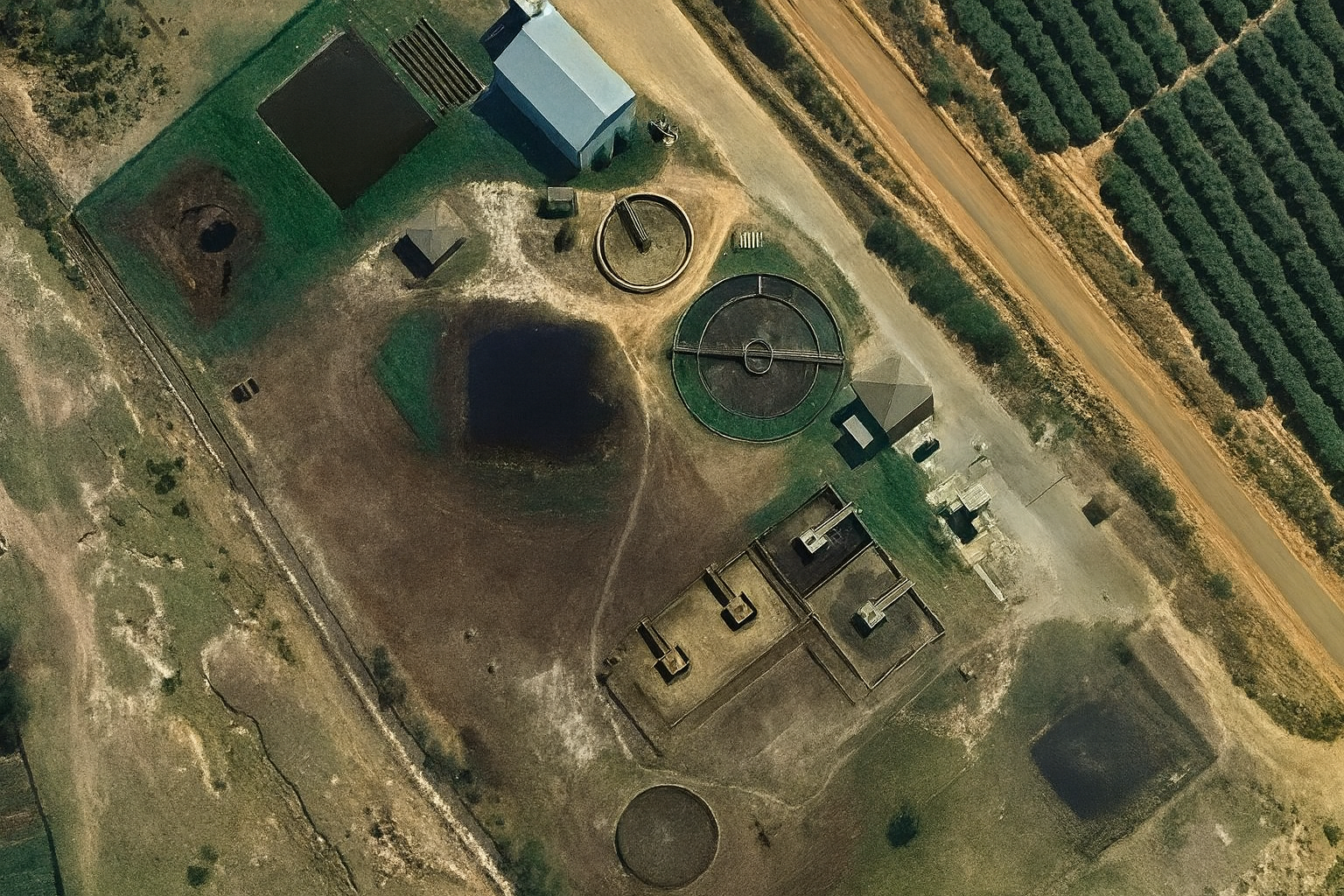
This industrial wastewater case study evaluated the combined use of Drylet's biological treatment technology and Soldevco's Micro- and Ultra-Fine Bubble (UFB) aeration at a 3.5 MLD activated sludge wastewater treatment facility. Within 28 days, the integrated treatment program achieved 95–99% reductions in COD, BOD, solids, ammonia, and odor-causing compounds while improving dissolved oxygen, treatment stability, and overall operational performance.
This pilot evaluated the combined use of Micro- and Ultra-Fine Bubble technology (MB/UFB) and Drylet’s proprietary bioremediation technology to treat industrial wastewater in a 3.5 MLD Average Dry Weather Flow site for over a 60-day campaign. The primary objectives were:
- Enhance dissolved-oxygen (DO) transfer
- Accelerate microbial hydrolysis of refractory solids
- Reduce volatile-solids (VS) accumulation
- Stabilize effluent quality metrics
Results at a Glance
- 95–99% reduction in COD and BOD
- 55% reduction in hydrogen sulfide (H₂S)
- Near-complete ammonia removal
- Improved dissolved oxygen throughout the treatment process
- Reduced volatile solids accumulation
- Lower sludge production
- Improved process stability during shock loading
- Treatment objectives achieved within 21–28 days
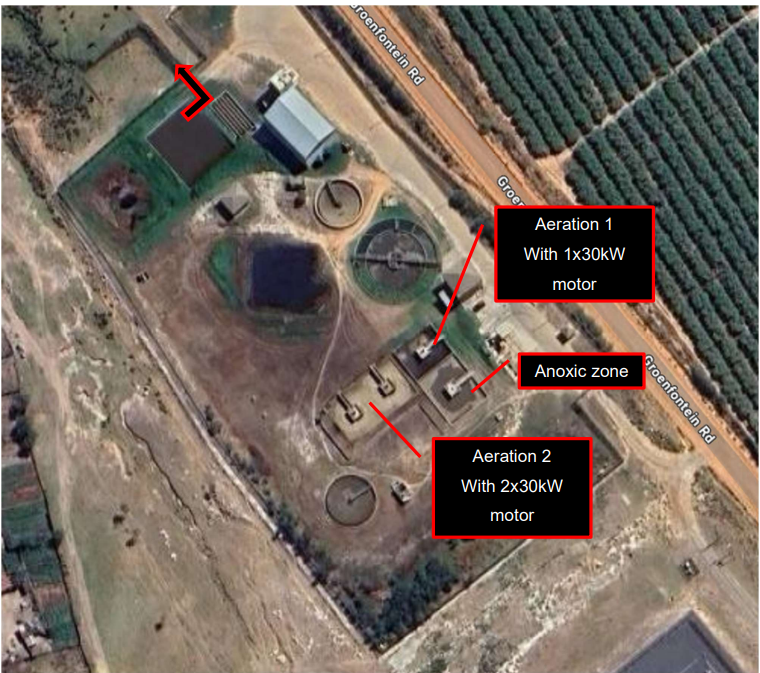
All bench tests were conducted at 20 °C with a hydraulic retention time (HRT) of 24 hours. This WwTW is an activated-sludge treatment works. The works has a treated capacity of 2,800 kg COD / day at an Average Dry Weather Flow (ADWF) of 3.5 ML/day.
Key Technologies and Protocols
Ultra-Fine Bubbling (UFB)
- Principle of Operation: UO₂’s patented micro- and ultra-fine bubble generators produce bubbles on the order of micro to ultrafine diameters, dramatically increasing total gas–liquid interfacial area.
- Oxygen Delivery: These fine bubbles deliver oxygen directly into the micro zones surrounding bio-carriers, creating an oxygen-rich environment that exponentially enhances aerobic microbial activity.
- Equipment Deployed: Viper 1002, Viper 701, Viper 200 micro- and ultra-fine bubble generators.
- Energy Consumption: The total power draw for all UFB generators was 9.5 kW, treating a flow of 2,400 L/min (≈ 3.456 ML/day).
- Process Effects: Significantly improved degradation of organic load with minimal additional mechanical mixing. Noticeable improvements in DO, TSS, and overall clarity.
Drylet Proprietary Bioremediation Technology
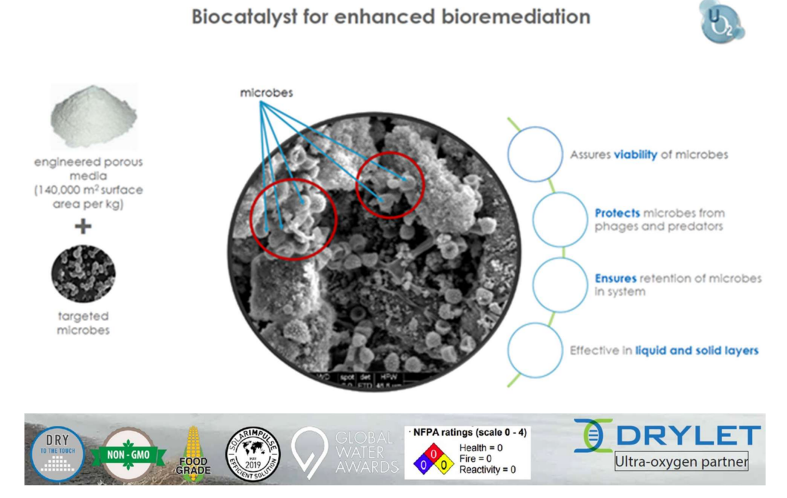
- Carrier loading: 0.5 kg m⁻³ of 200–600 µm porous beads, each loaded with 10¹¹ CFU/g of specialized bacterial consortia.
- Target compounds: Lignin, humic acids, proteins, and fibrous solids.
Synergistic Performance
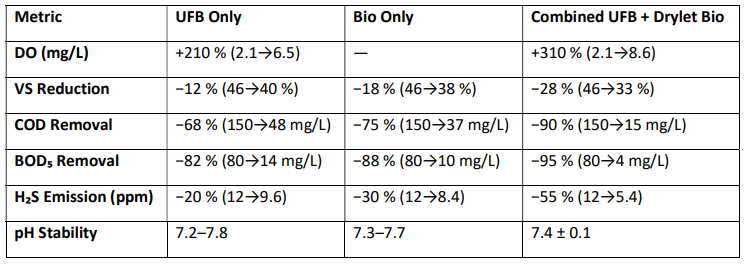
- Timing: The combined system met discharge criteria (COD & BOD₅) by day 21, two weeks faster than either UFB or bioremediation alone.
- Mechanism: UFB ensures rapid oxygenation of micro zones around Drylet’s microbial carriers, while the proprietary consortia rapidly hydrolyze and ferment hard-to-treat organics, releasing additional substrates for downstream processes.
Detailed Findings
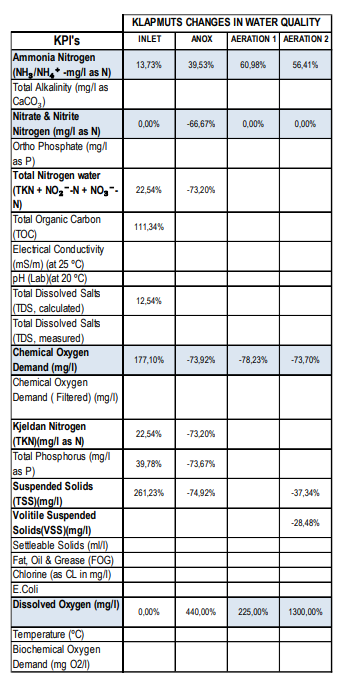
1. Rapid Oxygen Uptake: Combined treatment raised DO above 8 mg/L within three days, eliminating micro- anoxic pockets and supporting robust aerobic metabolism.
2. Accelerated Hydrolysis: VS fell from 46% to 33% by day 14 under the combined regime, compared to 38% under bioremediation alone—demonstrating a 56% faster solids turnover rate.
3. Superior Organic Removal: COD dropped to 15 mg/L and BOD₅ to 4 mg/L by day 21, outperforming individual technologies by 18–25%.
4. Odor-Gas Suppression Headspace: H₂S declined to 5.4 ppm by day 28—55% below baseline—compared with 8.4 ppm (bioremediation only) and 9.6 ppm (UFB only).
5. Process Robustness: pH remained tightly controlled (7.3–7.5) throughout shock loading events, indicating high resilience.
Recommendations and Next Steps
1. Scale-up parameters: Maintain UFB bubble D₅₀ of 20 µm at 0.3 vvm; proportionally scale Drylet carrier dosage (0.5 kg m⁻³).
2. Monitoring: Deploy online DO and H₂S sensors for real-time control loops.
3. Operational cycle: A 21-day treatment window guarantees compliance and minimal sludge yield.
4. Cost benefits: Expect ~22% savings in aeration energy and ~18% reduction in sludge handling costs due to the combined approach.
Conclusion
This pilot confirms that Soldevco Pty Ltd patented Micro and Ultra-Fine Bubble technology coupled with Drylet’s proprietary bioremediation technology, delivers a powerful synergistic effect—accelerating treatment rates, reducing residual solids, and suppressing odorous gas emissions far beyond what either technology achieves alone. This integrated strategy provides a scalable, cost-effective template for full-scale wastewater facilities aiming for both performance excellence and environmental stewardship.
Download the Full Case Study
Review the complete technical report, including treatment methodology, laboratory results, operational observations, dissolved oxygen measurements, and performance data from the Soldevco and Drylet collaboration.

Ready to Improve Industrial Wastewater Treatment Performance?
Every wastewater treatment system is unique. If your facility is experiencing high COD or BOD, sludge accumulation, odor complaints, low dissolved oxygen, inconsistent biological treatment, or rising operating costs, Drylet can help evaluate practical biological treatment solutions tailored to your wastewater system.

Stay Updated on Wastewater Treatment Best Practices
Receive technical articles, case studies, biological treatment insights, and practical wastewater optimization strategies delivered directly to your inbox free.
Subscribe to the Drylet Newsletter
Frequently Asked Questions
How quickly can biological wastewater treatment improve industrial wastewater performance?
Treatment timelines vary depending on wastewater characteristics, organic loading, and operating conditions. In this case study, significant improvements in COD, BOD, dissolved oxygen, ammonia removal, and odor control were achieved within 28 days using biological treatment combined with ultra-fine bubble aeration.
Can biological treatment reduce sludge accumulation in industrial wastewater systems?
Yes. Biological treatment enhances the natural breakdown of organic solids by beneficial microorganisms, reducing sludge accumulation, improving treatment efficiency, and helping lower sludge handling and disposal costs.
Why is dissolved oxygen important in activated sludge wastewater treatment?
Dissolved oxygen is essential for aerobic microorganisms that break down organic matter. Maintaining adequate oxygen levels improves COD and BOD removal, supports nitrification, reduces odors, and helps maintain stable biological treatment performance.
Can biological treatment help reduce industrial wastewater odors?
Yes. Biological treatment reduces odor-causing compounds by improving aerobic biological activity and minimizing anaerobic conditions that produce gases such as hydrogen sulfide (H₂S). This can significantly improve plant operating conditions while reducing nuisance odors.
Prepared by SOLDEVCO with analytical support from CSIR laboratory.