
95–99% Organic Load & Odor Reduction in 28 Days at 3.5 MLD Industrial WWTW
Introduction
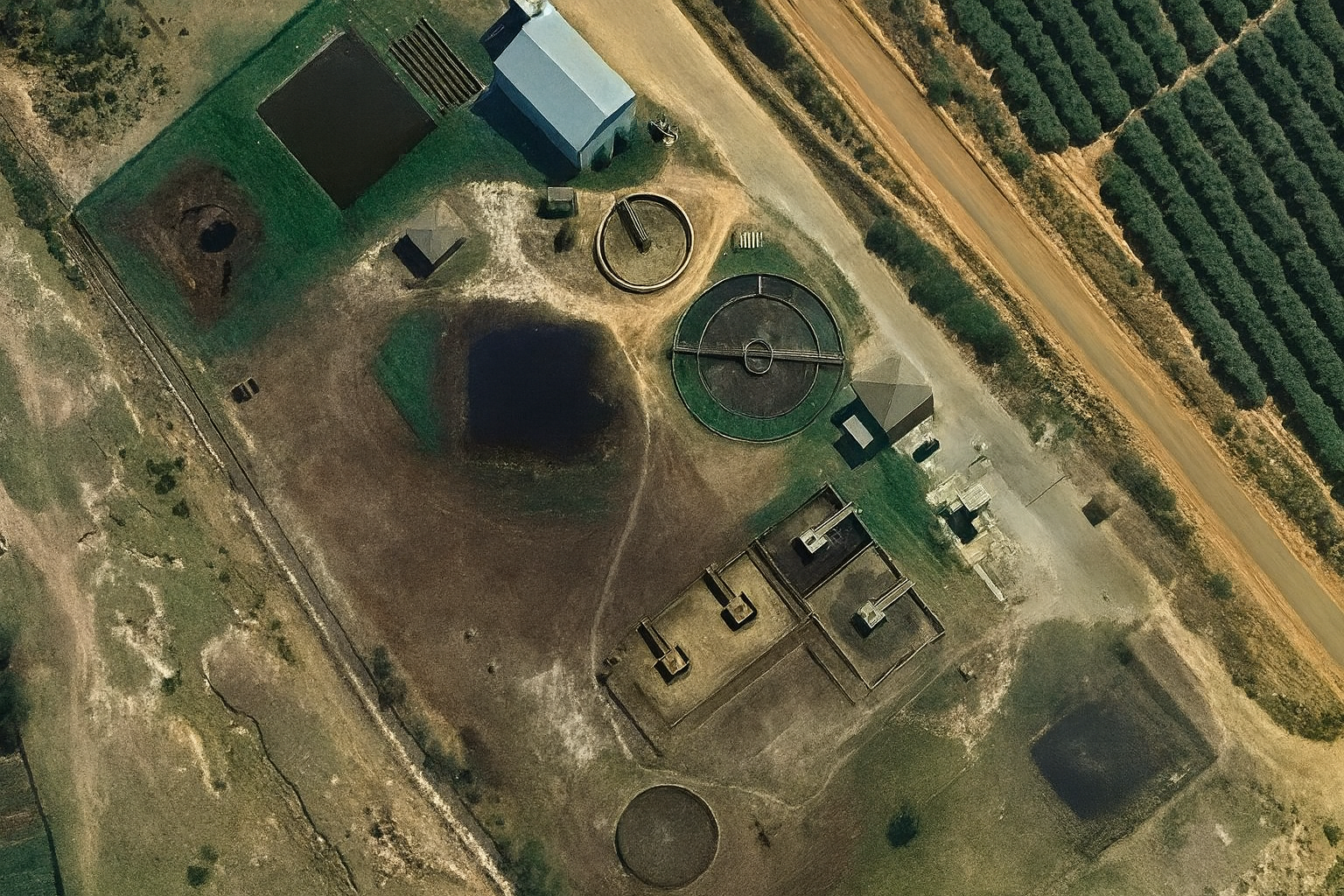
This pilot evaluated the combined use of Micro- and Ultra-Fine Bubble technology (MB/UFB) and Drylet’s proprietary bioremediation technology to treat industrial wastewater in a 3.5 MLD Average Dry Weather Flow site for over a 60-day campaign. The primary objectives were:
- Enhance dissolved-oxygen (DO) transfer
- Accelerate microbial hydrolysis of refractory solids
- Reduce volatile-solids (VS) accumulation
- Stabilize effluent quality metrics
All bench tests were conducted at 20 °C with a hydraulic retention time (HRT) of 24 hours. This WwTW is an activated-sludge treatment works. The works has a treated capacity of 2,800 kg COD / day at an Average Dry Weather Flow (ADWF) of 3.5 ML/day.
Key Technologies and Protocols
Ultra-Fine Bubbling (UFB)
- Principle of Operation: UO₂’s patented micro- and ultra-fine bubble generators produce bubbles on the order of micro to ultrafine diameters, dramatically increasing total gas–liquid interfacial area.
- Oxygen Delivery: These fine bubbles deliver oxygen directly into the micro zones surrounding bio-carriers, creating an oxygen-rich environment that exponentially enhances aerobic microbial activity.
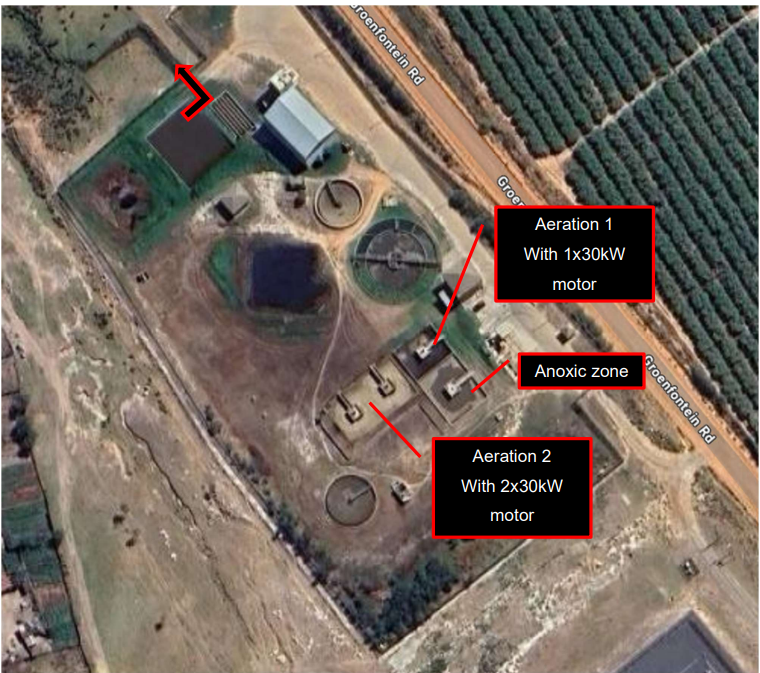
- Equipment Deployed: Viper 1002, Viper 701, Viper 200 micro- and ultra-fine bubble generators.
- Energy Consumption: The total power draw for all UFB generators was 9.5 kW, treating a flow of 2,400 L/min (≈ 3.456 ML/day).
- Process Effects: Significantly improved degradation of organic load with minimal additional mechanical mixing. Noticeable improvements in DO, TSS, and overall clarity.
Drylet Proprietary Bioremediation Technology
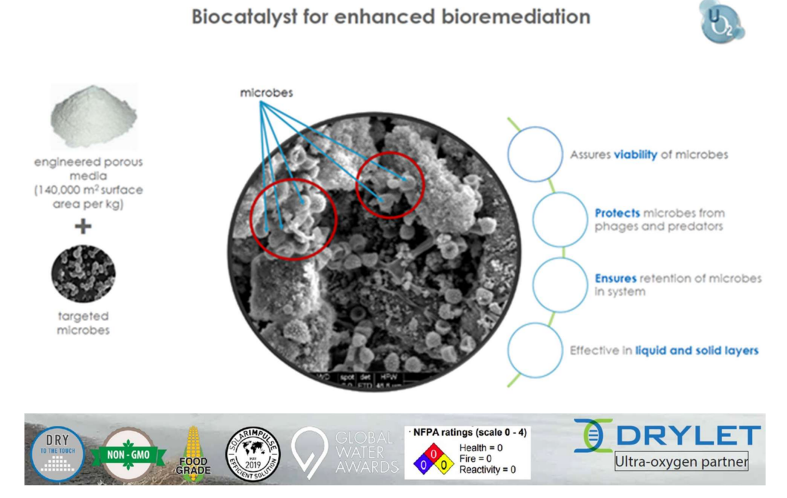
- Carrier loading: 0.5 kg m⁻³ of 200–600 µm porous beads, each loaded with 10¹¹ CFU/g of specialized bacterial consortia.
- Target compounds: Lignin, humic acids, proteins, and fibrous solids.
Synergistic Performance
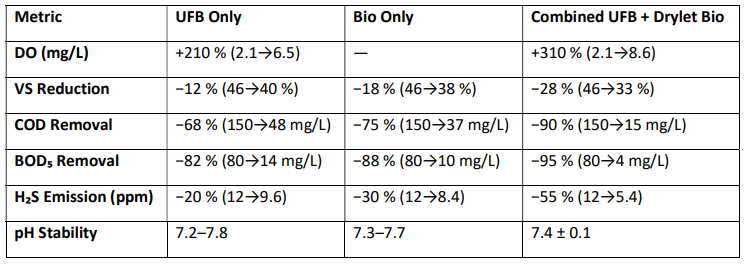
- Timing: The combined system met discharge criteria (COD & BOD₅) by day 21, two weeks faster than either UFB or bioremediation alone.
- Mechanism: UFB ensures rapid oxygenation of micro zones around Drylet’s microbial carriers, while the proprietary consortia rapidly hydrolyze and ferment hard-to-treat organics, releasing additional substrates for downstream processes.
Detailed Findings
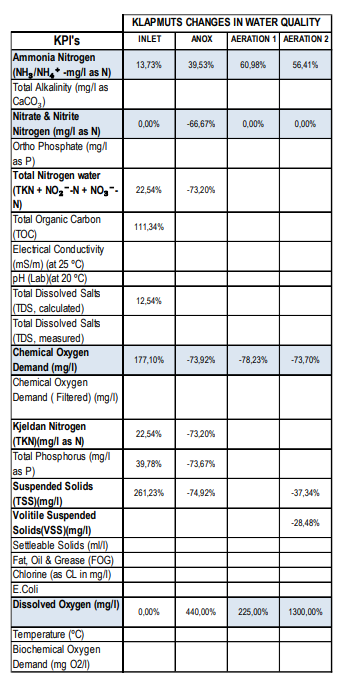
1. Rapid Oxygen Uptake: Combined treatment raised DO above 8 mg/L within three days, eliminating micro- anoxic pockets and supporting robust aerobic metabolism.
2. Accelerated Hydrolysis: VS fell from 46% to 33% by day 14 under the combined regime, compared to 38% under bioremediation alone—demonstrating a 56% faster solids turnover rate.
3. Superior Organic Removal: COD dropped to 15 mg/L and BOD₅ to 4 mg/L by day 21, outperforming individual technologies by 18–25%.
4. Odor-Gas Suppression Headspace: H₂S declined to 5.4 ppm by day 28—55% below baseline—compared with 8.4 ppm (bioremediation only) and 9.6 ppm (UFB only).
5. Process Robustness: pH remained tightly controlled (7.3–7.5) throughout shock loading events, indicating high resilience.
Recommendations and Next Steps
1. Scale-up parameters: Maintain UFB bubble D₅₀ of 20 µm at 0.3 vvm; proportionally scale Drylet carrier dosage (0.5 kg m⁻³).
2. Monitoring: Deploy online DO and H₂S sensors for real-time control loops.
3. Operational cycle: A 21-day treatment window guarantees compliance and minimal sludge yield.
4. Cost benefits: Expect ~22% savings in aeration energy and ~18% reduction in sludge handling costs due to the combined approach.
Conclusion
This pilot confirms that Soldevco Pty Ltd patented Micro and Ultra-Fine Bubble technology coupled with Drylet’s proprietary bioremediation technology, delivers a powerful synergistic effect—accelerating treatment rates, reducing residual solids, and suppressing odorous gas emissions far beyond what either technology achieves alone. This integrated strategy provides a scalable, cost-effective template for full-scale wastewater facilities aiming for both performance excellence and environmental stewardship.
Prepared by SOLDEVCO with analytical support from CSIR laboratory.